This article delves into the 11th and final day of the pilgrimage journey along the Via Palma route during the Middle Ages, similar to the Santiago pilgrimage. It explores the trek through the Judean Mountains from Abu Gosh to Jerusalem.
Day 11: from Abu Gosh to Jerusalem
On this final day of pilgrimage, our journey culminates as we approach the holy city. We begin by exploring the churches of Abu Ghosh. The Crusaders identified Abu Gosh with Emmaus, where the resurrected Jesus appeared to two disciples, imparting wisdom from the scriptures. Consequently, a magnificent church was erected on this sacred site. Since the 16th century, Abu Gosh has also been recognized by the Franciscans as Anat, the birthplace of the prophet Jeremiah.
Our itinerary includes a visit to the Church of Our Lady of the Ark of the Covenant, the Saxum visitor center, and the Crusader Benedictine monastery. We’ll then meander through the charming streets of the village, making our way to the Hemed interchange. Along the southern edge of the village, a grand mosque funded by the Chechen government stands tall, boasting four golden minarets reminiscent of those found in the Caucasus. It’s noteworthy that the people of Abu Ghosh trace their origins back to the Caucasus, having migrated here as part of a population exchange during the Ottoman Empire era.
As we reach the Hemed interchange on the village’s eastern side, two paths lie before us. The first, a shorter route, takes us eastward along the Nahal Kisalon valley, passing by the serene water spring known as “Ein Mesayaat,” a perfect spot for a refreshing dip. After about a kilometer, we ascend one of the tributaries of Nahal (Wadi) toward the Mevaseret Zion neighborhood. Alternatively, we may opt for the second route, which entails exploring the nearby Crusader sites nestled in the Judean Mountains. We’ll journey past the junction en route to Acqua Bella, where a Crusader edifice stands, before ascending to the Belmont Citadel near Kibbutz Zuba. Our path continues to the Castle Citadel and onward to Mevaseret Zion.
From Mevaseret Zion we’ll descend through the picturesque Nahal Khalilim to the Arazim valley within Nahal Sorek. Navigating the city park’s well-maintained network of roads, we’ll ascend to the village of Lifta and proceed to the chord bridge at Jerusalem’s entrance. For a comprehensive exploration of the Crusader “Via Palma” sites, a detour from the route is recommended at this juncture. Devote two to three hours to ascend through the Ramot neighborhood to the Nebi Samuel site. This site served as a vital rest stop for pilgrim caravans before entering Jerusalem during the first Crusader kingdom, earning it the moniker “Mount of Joy.” Though challenging, the ascent to Nebi Samuel promises rich rewards.

Church of Our Lady of the Ark of the Covenant
The first destination on our itinerary for the day is the Church of Our Lady of the Ark of the Covenant, situated atop the hill of Kiryat Yaarim above Abu Gosh. This ancient Tel, dating back 10,000 years to the Neolithic period, derives its name from the surrounding forests. It holds significant biblical importance as the resting place of the Ark of the Covenant for several decades, as documented in 1 Samuel 7:1-2: “So the men of Kiryat Yaarim came and took up the ark of the Lord. They brought it to Abinadab’s house on the hill and consecrated Eleazar his son to guard the ark of the Lord. The ark remained at Kiryat Yaarim a long time—twenty years in all.”
Founded by Sister Josephine Rumb in 1869, the church stands as a testament to her dedication and the mission of the order of the sisters “Saint Joseph of the Apparition.” This order, serving Arab populations across North Africa and the Middle East, continues to oversee a myriad of Christian charitable institutions in Israel, maintaining a prominent presence in the region’s Catholic community.
Upon her arrival in Israel, Josephine quickly formed a profound bond with the “Holy Mountain.” In 1901, her long-held dream became reality when the world mother of the order visited Israel and approved the purchase of the site. However, the allocated funds for the monastery’s purchase were insufficient. Miraculously, when the wallet containing the funds was checked, there was more money in it than expected. This unexpected surplus was interpreted as a divine intervention, facilitating the acquisition. With the assistance of Baron de Piellat, the Dominican Fathers, and the White Fathers from Santa Ana, the acquisition was made possible. This miraculous intervention not only enabled the purchase but also served as a testament to divine favor and support for Josephine’s vision and mission.
Nevertheless, it would be another decade before significant progress was made. In 1911, the cornerstone of the monastery was laid, and by 1912, the first building was completed. Forced to leave during World War I, Josephine returned in 1919 and initiated the construction of the church adjacent to the monastery between 1920 and 1923. Built upon the remnants of a Byzantine church, the structure incorporates ancient mosaics and artifacts unearthed during excavations. Notably, a sacred stone with an empty mosaic ear plate, now housed in the apse, was discovered during these excavations, signifying divine approval of the project. Josephine passed away in 1927, and her final resting place lies in a dedicated chamber south of the apse.
It’s important to note that Mary, the mother of Jesus, was raised in the temple in Jerusalem, making her, for Christians, a representation of the Ark of the Covenant. Just as the Ark of the Covenant housed the Shekinah, Mary carried divinity within her. This is why the church is dedicated to Mary of the Ark of the Covenant, with an impressive statue of Mary standing atop the Ark, holding Jesus in her arms. Flanking the Ark are two Cherubim, with Mary gazing towards Jerusalem and her head slightly bowed, perhaps to hear our prayers.
The church’s ceiling is adorned with angelic figures and pink beams forming geometric patterns. Though unrelated to the building’s structure, these decorations hold symbolic significance. Among the angels are equal crosses that morph into 12-pointed crosses at the edges, interspersed with slanted thin crosses, creating a division into eight around the central crosses. Each element carries symbolic meaning. Near the church entrance stands a statue of King David, who famously brought the Ark of the Covenant from Kiryat Yearim to Jerusalem. Additionally, Jesus’ lineage, through Joseph, traces back to King David.
In the church courtyard, there’s a vantage point overlooking the village of Abu Ghosh, where a statue of Miriam, depicting her appearance in La Vong Vietnam at the end of the 18th century, stands in one corner. Mary has appeared in different forms throughout history in various places worldwide, underscoring her role as the mother of all mankind, not just Jesus. Pilgrims from Vietnam, moved by their faith and grateful for the Mother of God’s assistance during their community’s difficult times, sought to honor her. With approval from the monastery nuns, they erected the statue as a testament to her universal maternal presence.
Saxum Center
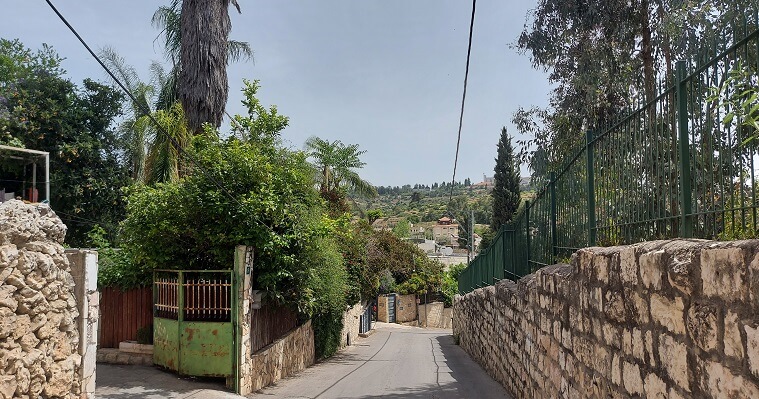
From Tel Yearim and the Our Lady of the Ark of the Covenant monastery, we descend to Abu Gosh’s main road, proceeding along it for a few hundred meters until we reach the turnoff to Mount Adar and Netaf settlement. Close to this turn, Situated on a hill north of Abu Gosh stands a newly constructed and magnificent visitor center belonging to the Catholic Opus Dei order, unveiled in 2019.
Josemaría Escrivá, the order’s founder (1902-1975), authored “Camino,” outlining a new Christian path rooted in the belief that we are all brothers and children of God, capable of achieving holiness amidst everyday life. Escrivá, of Spanish descent, was inspired by the heritage of the Camino de Santiago pilgrimage route and aspired to undertake a pilgrimage to Jerusalem. Regrettably, he passed away before realizing his dream, but before his death, he designated Alvaro del Portillo, known as “Saxum” (Latin for “rock”), as his successor.
Saxum’s pilgrimage to Israel at the age of 80 marked the culmination of his life’s journey. On March 23, 1994, he offered prayers in the Last Supper room on Mount Zion before promptly departing for the airport in Lod. Tragically, shortly after his arrival in Rome, he collapsed and passed away a few weeks later. This pilgrimage, occurring on his 80th birthday, seemed almost fateful, leading the Opus Dei order to name their pilgrim center in Israel after him.
Opus Dei’s spiritual ethos underscores prayer as a pathway to God, alongside acts of self-denial and minor sacrifices. While the order also practices bodily mortification, this aspect has garnered negative attention, notably depicted in “The Da Vinci Code.” Nonetheless, Opus Dei boasts an international membership of nearly 100,000 individuals, each contributing to varying degrees of involvement and dedication.
The Saxum Center champions a walking trail from Abu Gosh to Emmaus Nicopolis, intersecting with the Via Palma pilgrimage route and intersecting an ancient Roman road linking the Lowlands to Jerusalem, a path potentially traversed by Jesus during his lifetime. Jews traditionally journeyed to Jerusalem annually, and it’s plausible that the Holy Family followed this route during Passover pilgrimages. The center features multimedia presentations highlighting Christian pilgrimage sites in Israel, showcasing significant historical events from Abraham’s era to the present day, including the pivotal moments in Jesus’s life.
The Benedictine monastery at Abu Ghosh
From the Saxum Center, we’ll make our way back to the village of Abu Ghosh, navigating through its winding alleys to reach the Crusader church nestled near the water spring at its center. This church stands out as one of the nation’s best-preserved and most stunning examples of Crusader architecture. Erected in a Romanesque style around 1160, it was a collaborative effort between the Hospitallers, Queen Melisinda, and King Fulk of Anjou. However, with the fall of the Crusaders and their expulsion from Jerusalem in 1187, the church was abandoned.
In the late 14th century, the Franciscans established a monastery on the site of the ruined church, transforming it into a pivotal stop along the pilgrims’ route to Jerusalem. Despite this resurgence, the decline of the pilgrim movement ensued with the Ottoman expansion into the Middle East and the conquest of Israel in 1517. Subsequently, the monastery fell into disuse once again, succumbing to abandonment and destruction.
In 1873, Sultan Abdulaziz bestowed the church as a gift to the French Republic. However, it wasn’t until 1901 that French Benedictine monks resettled there and revived the monastery. Adolphe Moreau, a French Benedictine monk, arrived in Israel in 1889 with a mission to establish Benedictine institutions in the region. He collaborated closely with Baron de Piellat in the construction of the Benedictine monastery and guest house on the Mount of Olives in Ras al-Amud, as well as the monastery in Abu Gosh.
Baron de Piellat hailed from a wealthy family in southern France. As a young man, he explored various interests but felt a strong pull towards religion. Seeking clarity and purpose, he embarked on a pilgrimage to the Holy Land at the age of 23, believing it would provide him with answers. His journey proved transformative, and upon his return, he dedicated his life to establishing French Catholic institutions in Israel. De Piellat’s final resting place is in the Church of Peter in Gallicantu in Jerusalem, one of the institutions he played a pivotal role in establishing.
When de Piellat journeyed through the village of Abu Ghosh on his quest for answers as a young pilgrim bound for Jerusalem, he was captivated by the area’s beauty and sanctity. Later, he played a significant role in establishing the Benedictine monastery there. Today, the monastery is home to approximately 20 monks and nuns, belonging to the Benedictine Olivetan order.
The monastery’s church stands as a sturdy cruciform structure, featuring reconstructed ancient frescoes. Its crypt holds a natural spring, covered by a large capstone, lending a special ambiance to the site. The flowing water from the rock symbolizes the emergence of spirituality from the material world, akin to the resurrection of Jesus. Indeed, the church is dedicated to the resurrection of Jesus and his appearance to two disciples in Emmaus. While Abu Ghosh was historically identified with Emmaus until the 19th century, today the identification has shifted to a site near Latrun.
Adorning the outer wall near the entrance to the crypt is a stone bearing an inscription of the Roman legion that once occupied the area: “The expeditionary force of the tenth legion Paratensis.” In the monastery’s courtyard lies a picturesque garden, culminating in a souvenir shop and monastery workshop at the far end.
Aqua Bella and Zuba
From the Crusader Church of Abu Gosh, we’ll proceed along the main street of the village towards the Hemed interchange. After crossing Road Number 1 to the south, we’ll arrive at Ein Hemed Aqua Bella National Park. Nestled amidst gardens and water springs, this park houses remnants of a Crusader rural settlement, including a Crusader mansion typical of those found elsewhere in Israel. Researcher Ronnie Ellenblum has highlighted the significant Crusader presence in the countryside, with the Jerusalem mountains serving as a prime example.
At the heart of the Crusader feudal estate in Israel stood the manor house, functioning as an administrative hub akin to the one encountered in Ein Afek. Typically overseen by representatives of the nobleman who owned the land but resided in the city, these houses managed the estate’s affairs, including tax collection from locals and estate management. Taxes were often paid in the form of goods delivered to the manor house, which typically boasted flour mills and furnaces for communal use, requiring payment for their services. The Crusaders established a system of courts and registries centered around these manor houses, which, while not fully fortified, could be defended against local bandits if necessary.
In Aqua Bella, there stands a structure dating back to the time of Fulk of Anjou, constructed between 1140-1160 along with compounds in Zuba and Abu Ghosh. It was under the ownership of the Hospitallers and fell under the oversight of the castle of Zuba, known as Castellan Belmonte. Unlike a typical mansion, this structure comprises a large complex of buildings surrounding a courtyard, reaching a height of two stories.
Opinions regarding its original purpose vary. Some believe it served as a mansion, while others speculate it may have been the remnants of an Augustinian or Benedictine nunnery. Some even suggest it functioned as a hospital. Researcher Pringle’s discovery of an apse facing east within the building lends weight to the religious nature of the site. However, Pringle identifies it not as a monastery but as a hospital operated by members of the Hospitaller Order. Here, they cared for their sick and wounded while adhering to their religious lifestyle. Pringle suggests that the structure was erected by the same individuals responsible for constructing the enclosures in Zuba and Abu Ghosh, with the support of Fulk of Anjou during the aforementioned period.
Perched atop Mount Zuba, the Hospitaller citadel overlooks the surrounding landscape. It stands upon the remnants of a Jewish settlement dating back to the days of the First Temple, as well as other settlements established over the generations, particularly during the Byzantine period. Serving as a hub for an estate that included the Aqua Bela manor house, Abu Ghosh monastery, and the Colonia site, these structures were constructed during the peak of power for the knightly religious orders, particularly the Hospitallers. In 1187, the citadel fell into the hands of Saladin, who subsequently destroyed it. Later, an Arab village was erected on the site, but it was eventually abandoned. Today, visitors can glimpse the remaining traces of the Crusader citadel.
To the west of the citadel lies Kibbutz Zuba, where recent discoveries include a cave containing a large mikveh from the Second Temple period. Some speculate that this cave may have been used by John the Baptist during his seclusions in the area. Access to the cave is by prior arrangement with Zuba guesthouse. Exploring the Citadel of Zuba and the Cave of John the Baptist can be a noteworthy addition to the itinerary of the tenth day, complementing a visit to the Castel Citadel on the journey to Mevaseret Zion.
The Castel Citadel
The Crusaders strategically positioned a chain of citadels around the mountains encircling Jerusalem, one of which stood prominently two kilometers east of Zuba near road number 1. Known as Castellum Belvoir, it lent its name to the Arab village established in its vicinity, called “El Castell.” This site later became a significant battleground during the War of Independence.
The village of El Castell obstructed the route to Jewish Jerusalem, leading to significant challenges for the Israeli army in gaining control of it. The village changed hands multiple times, reflecting the unwavering Israeli determination to access the city at all costs. Presently, a national park occupies the site, preserving the remnants of the Arab village’s fortifications and war trenches, with no trace left of the Crusader citadel.
Ein Karem Bypass
From Zuba Fortress, one can opt to journey to Ein Kerem instead of Kastel, exploring the picturesque village and its churches, such as the Church of Saint John the Baptist, the Church of the Visitation, and the Sisters of Zion covenant. Nestled in the nearby Sorek River valley lies the stunning St. John in the Wilderness Monastery. From Ein Kerem, a route via Mount Herzl to Jerusalem, leading to Jaffa Street and onward to the Old City, is possible. This route, rich in churches and Christian tradition, is lengthier and less dramatic in terms of entering Jerusalem compared to the direct path.
The Crusaders erected various monasteries and churches in Ein Kerem and its vicinity, including one promoted by St. Bernard of the Cistercian order. This underscores the significance of Ein Kerem, as it was one of only two locations in Israel boasting such monasteries. The other was in Khirbet Tanur, near Moshav Mata in the mountains, believed by some to be the burial site of Goliath, showcasing his large sword taken by King David.
From Ein Kerem, travelers can proceed to the Colonia site and reconnect with the “Via Palma” in the Cedars Valley (Nahal Sorek), or ascend towards Mount Herzl to intersect with the “Via Palma” at the Chords Bridge.

The road from Aqua Bella to Jerusalem
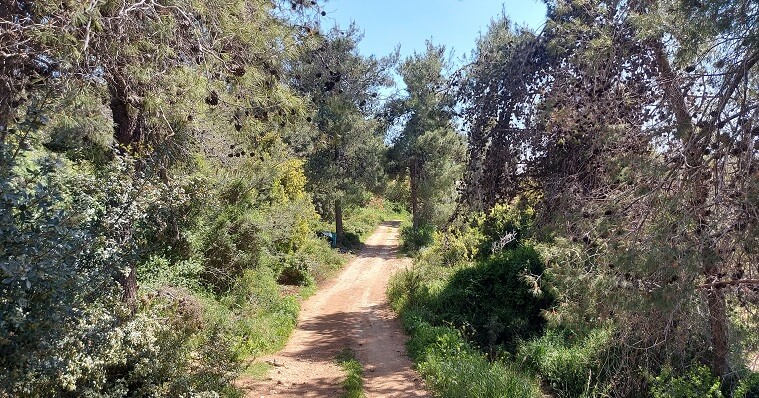
The main route of the Via Palma leads us from the serene lawns and flowing waters of Aqua Bella back to the bustling main road, number 1. We’ll traverse the road on the bridge to the north, then head east along the dirt roads at the foot of Beit Nekofa village toward Ein Mesayaat water spring, boasting a picturesque water pool. From there, we’ll venture into the Nahal Kesalon valley to the northeast, trekking along the dirt road for a few hundred meters until we reach a Wadi that ascends eastward toward the Mevaseret Zion neighborhood. Another dirt road within leads us to the neighborhood, weaving between streets and houses towards Halilim Park and the entrance to Nahal Halilim.
Halilim Wadi, a short brook, features tube caves along its length resembling flutes—a relic of ancient stream flow routes. Some say these caves produce melodic tunes in the wind. The route through the Wadi is enchanting, passing caves on both sides that are open for exploration. In the distance, the houses of Jerusalem and the city’s cemetery in Givat Shaul come into view. The Wadi descends into the expansive valley of Nahal Sorek, now home to the sprawling urban park known as the “Valley of Cedars – Emek Haarazim.” Here, visitors can enjoy sculptures, picnic spots, walking and biking trails, bridges, and recreational facilities, catering to the enjoyment of the general public.
To the north of the confluence of Nahal Halilim with the Sorek Valley lies Einot Telem (Telem Water Springs), recently restored to their natural beauty. Nearby, one can find spectacular recreational spots adorned with stone game boards, tables, and a row of rocks inscribed with narratives about nature, landscape, history, and Jewish heritage. Continuing through the park along the bicycle path, we pass under the bustling road and traverse the Nahal Sorek channel via a system of breathtaking hanging bridges designed for pedestrians. Eventually, we arrive at the picturesque abandoned village of Lifta nestled at the foot of Jerusalem’s urban area.
Lifta, believed to be an ancient Jewish settlement between the tribes of Judah and Benjamin, sprawls across the southern slope of the Sorek Valley, spanning over 100 meters in elevation. Its deserted houses, nestled amidst the lush greenery, offer a charming vista integrated into the natural landscape. At the village’s summit lies a water spring with a large swimming pool, overlooking the main entrance to the new city of Jerusalem, including the iconic Chords Bridge and central bus station. Ascending through the village’s alleys to the junction at the entrance to Jerusalem, we cross the road near the Chords Bridge, finding ourselves on Jaffa Street, the city’s bustling main thoroughfare.
Side track to Nebi Samuel
The mountain Nebi Samuel stands as the highest peak in the Judean Mountains, earning the pilgrims’ affectionate moniker, the “Mount of Joy.” This title stems from the exhilaration felt upon catching sight of the old city of Jerusalem after a perilous and arduous journey. During the First Crusader Kingdom of Jerusalem, the majority of pilgrims embarked on their pilgrimage from Lod and Ramla, traversing the Beit Horon ascent, the principal historical route to Jerusalem, until they reached Nebi Samuel.
Arriving at Nebi Samuel, a strenuous day’s journey from Ramla, and beholding Jerusalem from afar for the first time, their hearts swelled with joy. Nebi Samuel served as the final waystation before the pilgrims entered Jerusalem. Atop the summit of this towering peak, a fortress stood sentinel, overlooking wide stone surfaces hewn from the rock below. Terraces were erected to accommodate the pilgrims’ camps, where they rested and celebrated the culmination of their pilgrimage journey on the eve of their arrival in Jerusalem.
The route of the “Via Palma,” ascending to Jerusalem via Latrun and Abu Gosh, gained prominence during the Second Crusader Kingdom after the fall of the First Kingdom to Saladin. In the 13th century, amidst the insecurity of the roads and territorial changes under Crusader control, it became a vital passage. Today, the historical Beit Horon ascent is inaccessible due to security concerns; fences marking the border of the West Bank now intersect its path. Thus, the only viable pilgrimage route to Jerusalem is through the “corridor” of Latrun Abu Gosh.
Despite these challenges, the significance of the Nebi Samuel site and its historical role in pilgrimage warrant consideration. For those with the interest, stamina, and time, I recommend incorporating a sidetrack to Nebi Samuel on the final day’s journey. This detour, lasting approximately three hours, leads from the valley of Cedars through the Ramot neighborhood to Nebi Samuel and back. It’s essential to note the substantial elevation change of nearly 300 meters, with Mount Nebi Samuel rising to 884 meters, making it a demanding ascent.
The prophet Samuel held significant importance for pilgrims on the “Via Palma,” often associated with the Tabernacle in Shiloh. Thus, many made an effort to visit his tomb, located near Gibeon, where the Tabernacle stood before Jerusalem’s establishment. Some identified Nebi Samuel as Shiloh, the site of the Tabernacle for over 300 years, while others linked it to Mizpah, where Samuel lived and worked.
Knights undertaking the conquest of Israel from the Muslims were deeply familiar with biblical tales. Upon arriving in Ramla en route to Jerusalem, they purportedly discovered the bones of Samuel the prophet, believed to have been brought there by the Philistines after a victory against the Israelites. Acting swiftly, they relocated the bones to their rightful place, “Shiloh” or Mizpah, believed to be Nebi Samuel, where they remain to this day. This act symbolized the prophet’s return to his hometown.
Presently, some archaeologists maintain that Nebi Samuel is the location of Mizpah. Moreover, beneath the mountain and to its east lies a striking round mound, likely the site of Gibeon, the city associated with King Saul’s family and the Tabernacle following Shiloh’s destruction. In light of this, the knights’ actions were not entirely misplaced.
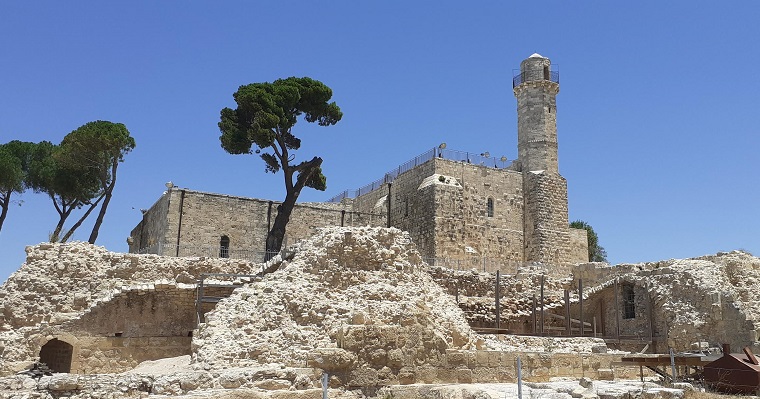
Nebi Samuel boasts a substantial Crusader structure atop the mountain, now partially repurposed as a mosque. Within its walls lie expansive Crusader halls, formerly integral parts of the Crusader church. The basement houses the revered tomb of the prophet Samuel, a revered Jewish holy site and pilgrimage destination, particularly during the annual Hillula (day of rejoicing) festivities. Outside, extensive stone platforms, carved into the rock, once served as parking areas for pilgrims.
On the southern and western slopes, archaeological excavations reveal remnants of streets and houses dating back to the Second Temple period, as well as structures from the First Temple era, suggesting the presence of an ancient Jewish settlement, possibly Mizpah. The archaeological park also features pot furnaces from the Muslim period and remnants of a Crusader quarry. To the north lies a biblical garden, terraces adorned with plants from biblical times, and the picturesque “Hana Spring,” complete with a serene pool.
In essence, Nebi Samuel stands as a multifaceted national park, narrating the rich history of the region. Its panoramic vistas offer breathtaking views of the surrounding mountains, providing a glimpse of the new Jerusalem seemingly within arm’s reach. Ascending the roof of the Crusader building, albeit via narrow and steep stairs, rewards visitors with an unparalleled perspective, making the climb well worthwhile.
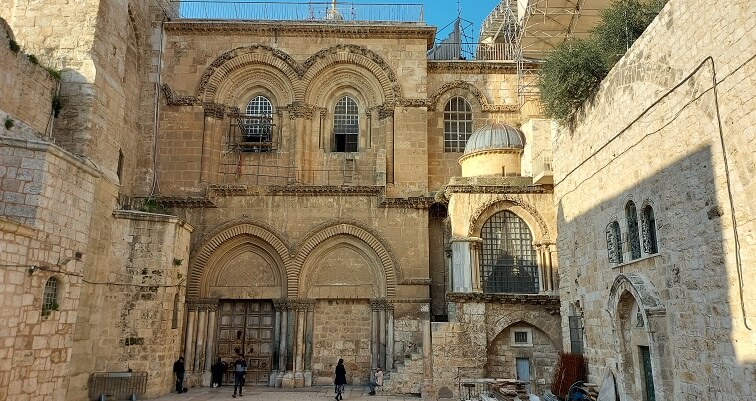
From the Chords bridge to the Church of the Holy Sepulchre
Whether we opt for a visit to Nebi Samuel, a detour to Ein Kerem, an exploration of the castle and fortresses in Zuba, or remain on the main track of the Via Palma, our journey culminates at the Chords Bridge, an imposing yet oft-overlooked monument at the entrance to Jerusalem. Adjacent to the Chords Bridge lies the central bus station of Jerusalem and the train station, marking the beginning of Jaffa Street, which leads to the Old City. Our stroll along Jaffa Street traverses religious neighborhoods, the bustling Machaneh Yehuda Market, the city center, and City Hall. The street is serviced by the Light Rail Transit and adorned with numerous cafes, shops, and restaurants. In less than an hour of leisurely walking, we’ll arrive at the Old City.
Historical accounts diverge on the pilgrims’ entry point into the Old City. Some suggest they entered through the eastern gate, formerly Saint Stephen’s Gate and now Lions’ Gate. Others contend they entered via the western gate, known as Jaffa Gate, turning first to the Church of the Holy Sepulchre.
We will make our entry through either the Jaffa Gate or the New Gate, heading straight to the Church of the Holy Sepulchre—the ultimate goal of our pilgrimage. This sacred site marks the spot where Jesus was crucified and, three days later, resurrected, serving as the Axis Mundi that connects the realms of the Underworld, earth, and heaven. Here, pilgrims would traditionally be greeted by the Knights of the Order of the Holy Sepulchre and local priests, who would ceremonially wash their feet—a symbolic transition marking the end of one journey and the beginning of another. The entry into the Old City of Jerusalem is a momentous occasion, filled with joy and solemn ceremonies.
At the close of the 11th day of our pilgrimage, we finally arrive at our destination—the Church of the Holy Sepulchre, typically open until late evening. If we’ve refrained from taking any detours, such as to Nebi Samuel, we should reach it by early afternoon, affording us ample time to fully immerse ourselves in its profound significance. In my view, it’s imperative to visit the church on this day itself rather than postponing until the next, as the energy of our arrival and initial encounter promises an unparalleled experience.
I strongly recommend making subsequent visits to the Church of the Holy Sepulchre, as its vast and intricate complex cannot be fully appreciated in a single tour, especially considering how its atmosphere evolves throughout the day. Following our visit, we can easily find lodging in one of the many hostels within the old city, allowing us to revel in the sights, sounds, and aromas of this ancient locale. Sleeping within the old city offers a wholly unique experience compared to accommodations outside its historic walls—an opportunity not to be missed.
This is not the End
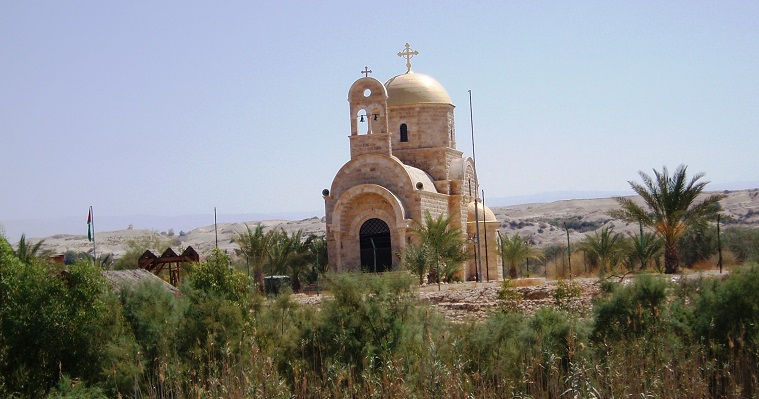
Arriving at the Church of the Holy Sepulchre marked the culmination of the pilgrimage along the “Via Palma,” yet it did not signify the end of the journey. After taking respite and spending several days in Jerusalem, the pilgrims pressed onward to the Baptismal site along the Jordan River, where they collected a palm tree leaf. Similar to how pilgrims walking the Camino de Santiago conclude their journey at the Cathedral in Santiago, where the remains of St. James are interred, but this is merely a waypoint. After a period of rest, they continue their pilgrimage to Finisterre, the westernmost point in Europe, where the cliffs meet the Atlantic Ocean at the continent’s edge, and gather a shell to carry back home.
The pilgrims traveling the “Via Palma” typically spent several days in Jerusalem, immersing themselves in the sacred sites, embarking on day trips to places like Bethlehem, Ein Kerem (if they hadn’t visited previously), the Monastery of the Cross, and other Christian landmarks in the vicinity. They participated in prayers at numerous churches, engaged with fellow pilgrims from their homeland, and met representatives from various Christian sects and orders. Additionally, they likely indulged in the markets, bathhouses, medical treatments, and other amenities that weren’t accessible along their journey.
After their sojourn in Jerusalem and its surroundings, they proceeded to the baptismal site near Jericho along the Jordan River to be baptized and spiritually reborn. This marked the culmination of their pilgrimage, symbolized by the presentation of a palm tree leaf, hence giving rise to the name “Via Palma” for the pilgrimage route to Jerusalem. The palm tree represented Jesus’ triumph over death and the pilgrims’ attainment of new life following their journey, arrival in Jerusalem, and baptism in the Jordan River.