
This is a rudimentary translation of articles from my book “Touching the Sacred” While it is far from ideal, it serves a purpose given the significance of the topic and the distinctiveness of the information contained. I have chosen to publish it in its current state, with the hope that a more refined translation will be available in the future.
Part three: Moses’ revolution
Moses was raised as an Egyptian prince, yet he led a group of slaves out of Egypt into the desert. The man, who stuttered, conveyed God’s word to the people. It appears that not many people had experienced such a dramatic transformation in their life as Moses. At the age of 80, he found himself standing before Pharaoh, in the palace where he was brought up, demanding the release of the Israelite slaves in the name of a then-unknown God named Jehovah. It’s likely that, while Moses was a prince in Egypt, mastering the art of chariot warfare, he could never have envisioned that one day he would submerge those very chariots in the sea.
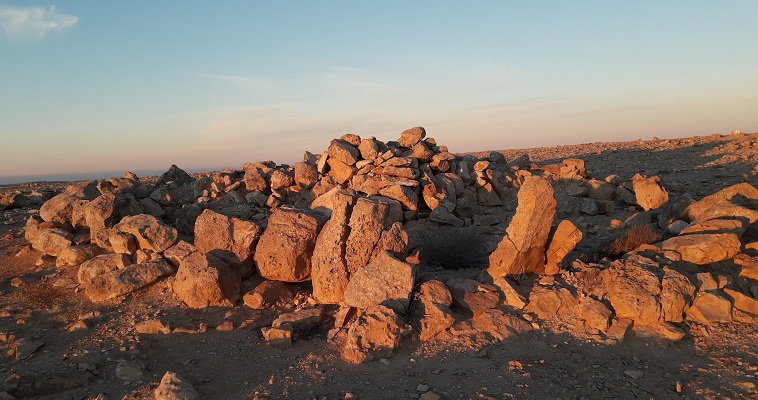
The pivotal moment in Moses’s life occurred as he stood before the burning bush. Alone in a foreign territory, engaged in a profession viewed disdainfully by the Egyptians (shepherding), and residing among a people deemed barbaric by Egyptian standards (the Midianites), he found himself in an uneasy and unfamiliar circumstance. In this moment, God posed to Moses the same question He asked Adam in the Garden of Eden: “Where are you?” Unlike Adam, Moses did not hide his perceived shortcomings but presented himself before God, declaring, “Here I am.” It was from this point that his destiny unfolded.
This narrative illustrates that occasionally, one must find themselves at the lowest point in their life and accept it fully, coming to peace with their circumstances. Only then can an unforeseen transformation occur, leading to a connection with one’s fate and purpose in the world. For this reason, commentators across the three monotheistic religions have viewed Moses as an exemplary figure. Through the transformation he underwent, he transcended ordinary existence, making him suitable to receive God’s word on Mount Sinai.
The transformation Moses experienced personally mirrors the ideological shift he introduced to the world, arguably the most significant revolution in the history of religions and beliefs. This revolution, in one of its aspects, marks a transition from a magical understanding of religion, prevalent in Egypt as previously mentioned, to a mystical understanding. In this new view, humans have the potential to connect with a God who lacks both title and name, thus allowing for His manifestation in anything. Another facet of this revolution is its moral dimension.
The mystical approach to religion introduced by Moses is rooted in the belief that God resides within us, compelling us to love Him with all our heart and soul. As a result, external circumstances become secondary to one’s internal feelings and thoughts. This spiritual perspective is coupled with a moral code that originates from the understanding that the God within us created humanity in His image, and therefore resides in every human, making life sacred. This principle is encapsulated in the foremost commandment, “Thou shalt not kill.”
The moral code of the Jewish faith forms the cornerstone of Western ethical principles to this day. Before the advent of Judaism, the laws that governed human behavior stemmed from societal needs, magical beliefs, attempts to appease gods, and often from the whimsical decisions of rulers. The mystical approach to religion introduced the idea of morality as an inherent force within individuals, based on an internal conscience that understands right from wrong.
Bible scholars note that the Laws of the Torah introduced by Moses represent the first instance in history of a written legal system grounded in principles of justice and equality for all. This foundation enabled the formation of a democratic society among the Israelite tribes during the early period of the judges. In the Mosaic law, there is a clear separation of civil, religious, and legislative authorities. Kings, judges, and prophets each have their roles, made possible by the adherence to moral laws that apply universally to all individuals. Modern laws are fundamentally rooted in the Ten Commandments, which primarily consist of prohibitive (negative) laws, thereby allowing individuals the freedom to make choices based on their internal conscience. The three “positive” commandments are: acknowledgment of God, honoring one’s parents, and observing the Sabbath as sacred. These serve as broad guidelines that provide room for interpretation.
Moses introduced the concept of monotheism to the Jewish people, teaching about a singular, supreme God who is invisible and beyond human comprehension. Unlike other deities of the time, Jehovah did not die or resurrect, and there are no tales of mythological battles with other gods. He is detached from the worldly desires and lusts that characterized the gods of Greek and Canaanite cultures, and is not associated with the magical practices attributed to the Egyptian and Mesopotamian gods. The worship of the Jewish God is fundamentally distinct from that of pagan deities. This difference in the nature of God directly influences the nature of the religion and its followers. A prime example is the view on sexuality; since Jehovah is not involved in earthly desires, sexuality holds a more reserved role in Judaism, unlike in Greek culture where, following the deities’ behaviors, it gained prominence, eventually contributing to a decline in societal moral standards.
The revelation at Mount Sinai introduced high moral values and the potential for a union with God, paving the way for humanity to correct the world. This is depicted in the spiritual light shining from Moses’s face as he descends from the mountain.
It has been proposed by some, including Freud, that Moses’s concept of monotheism was inspired by Egyptian traditions. Indeed, Egypt had spiritual traditions, like Akhenaten’s, that highlighted the unity of God with the universe and advocated for the study of sacred texts, similar to Judaic practices. High moral ideals were also present in Egypt, embodied by the principle of Ma’at, which involved weighing a person’s actions on a scale of truth after death. Nonetheless, Egyptian culture primarily embraced magical, rather than mystical, elements.
Moses encountered the seeds of monotheism in the desert at the burning bush, standing vulnerably before it. Yet, he fully received the principles and foundation of monotheism upon ascending Mount Sinai. This was a novel concept, and one manifestation of this new faith was the construction of the Tabernacle and the dwelling of the Shekinah within it. Despite prior discussions on the universality of sacred appearances and the parallels between the Temple in Jerusalem and other temples, the Tabernacle incorporated wholly new elements. These aspects will be further explored in subsequent chapters, following a deeper dive into the revelation at Mount Sinai and its significant meanings.
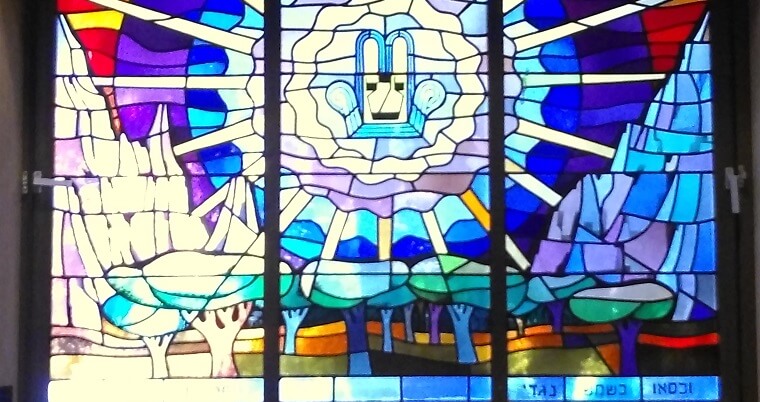
Mount Sinai revelation
The revelation at Mount Sinai stands as the most crucial event in Jewish history and religious tradition, marking a decisive turning point in humanity’s path from downfall to redemption. This moment triggered one of the most significant shifts in human culture: a movement away from the magical understanding of religion, which was prevalent among the Mesopotamian and Egyptian cultures, towards a mystical concept of religion that came to define the newly formed Israelite tribes.
In magical beliefs, our emotions and thoughts are influenced by external encounters, positing a world where energies can be manipulated through spells and magical rites. In this worldview, everything possesses a spirit—be it inanimate objects, plants, animals, humans, or even gods and goddesses—that exerts influence over us. However, monotheism shifts the focus inward, emphasizing the significance of what resides within us. The commandment “You shall have no other gods before me” underscores this perspective, suggesting that our primary reference should be the divine presence within, and that the existence of external influences ought to be disregarded.
The scripture teaches, “Hear, O Israel: The Lord our God, the Lord is one. You shall love the Lord your God with all your heart and with all your soul and with all your might” (Deuteronomy 6:4-5). This portrays God as an omnipresent force that, despite being beyond the capacity to be named, watches over and protects us. This allows for the development of a personal relationship with God, enabling a direct connection to the divine. This principle is central to monotheism, which places the onus of world stewardship on humanity, urging individuals to seek inner guidance. The goal is to attune to God’s guiding voice, which requires quieting both external and internal distractions. Achieving this, one may find within themselves a guiding presence, illuminated by spiritual light.
For those of us accustomed to a secular perspective, it might be difficult to grasp, yet according to the monotheistic religious view, there is indeed divine oversight. Events unfold for a reason, each person has a destiny to fulfill, and there are tasks to be completed to mend the world. God is subtly at work, causing the rain to fall and the dew to form, with everything occurring by His decree. However, the methods by which He acts are beyond our understanding, leaving us to inwardly listen and attempt to decipher where the divine intentions lie and what God expects from us, what He is attempting to communicate. Intriguingly, the belief in an external God leads to a deeper engagement with one’s inner self.
Contrary to the deities of other cultures, the God of Judaism does not possess a human shape; He is not anthropomorphic, nor does He exhibit human traits. He is the creator, yet it is impossible to depict Him in art or describe Him in the manner typical for the gods of Egypt, such as Osiris or Ptah. He is described as “I am that I am,” signifying His omnipotence, omnipresence, and universality. The monotheism introduced by Moses marked a profound shift, presenting not merely an extension of existing religious practices but a fundamentally different concept of divinity. This concept posits a God present in all things and places, yet suggests that the true search for Him should be internal.
On the third day of the revelation at Sinai, God descended upon the mountain amid smoke and fire, causing the people to tremble in awe. Their senses operated in an extraordinary manner, enabling them to “see the voices” (Exodus 20:18), and they experienced a direct encounter with God, reminiscent of the Garden of Eden. Overcome by fear, the people stood back, prompting Moses to approach the enveloping cloud alone—a cloud later described as the mystical cloud of unknowing. Within this cloud, Moses received the commandments and laws from God, and a covenant was established between God and the people.
Moses, along with Aaron, Nadab, Abihu, and seventy of Israel’s elders, ascend the mountain and witness a divine vision. They see God, and beneath His feet, “there was something like a pavement made of sapphire, clear as the sky itself” (Exodus 24:10). Moses then continues up the mountain, leaving the elders behind, with Joshua accompanying him part of the way. Moses spends 40 days within the cloud, receiving detailed instructions for constructing a Tabernacle as a dwelling place for God, along with a vision of it. These instructions cover the priesthood, their garments, rituals of worship, offerings, construction of the Altar, creation of anointing oil and incense, among others. At the conclusion of his time on the mountain, God designates Bezalel ben Uri as the craftsman for the Tabernacle’s vessels, reemphasizes the significance of observing the Sabbath, and finally, gives Moses the two stone tablets inscribed by God’s own finger.
God’s revelations unfold in three distinct stages. Initially, the Ten Commandments are presented, serving as universal truths accessible to all people. Following this, Moses, positioned at the mountain’s base within sight of the cloud, receives comprehensive laws addressing the conduct expected of the Jewish nation, including directives for theft, murder, adultery, and more. These laws are then communicated to the Israelites by Moses. The final stage involves Moses receiving both a vision and detailed instructions for the construction of the Tabernacle during his 40-day stay within the cloud. This progression suggests that the Tabernacle’s creation represents the Torah’s innermost aspect, reserved for those drawn closer to the sacred. The Tabernacle, with its specific structure, dimensions, and materials, contains hidden meanings, and the keys to unlocking these mysteries are provided to Moses during his subsequent second ascent up the mountain.
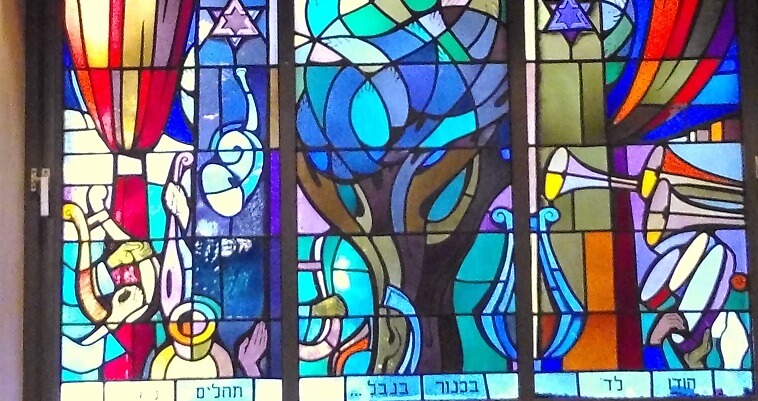
Secrets on the Mountain (Kabbalah)
At the conclusion of Moses’ initial period on the mountain, he is given two stone tablets inscribed by God’s own hand. Upon his return to the Israelite camp, he encounters the worship of the golden calf and, in a moment of divine indignation, shatters the tablets, declaring, “Whoever is for the Lord, come to me,” thereby restoring order. Following this, he establishes a tent outside the camp, known as the “Tent of Meeting,” where he communes with God. During one of their consultations, Moses expresses a desire to see God’s glory. God responds that seeing His face is impossible for anyone who wishes to live, yet He offers an alternative. God states: “nd He said: ‘Thou canst not see My face, for man shall not see Me and live. And the Lord said: ‘Behold, there is a place by Me, and thou shalt stand upon the rock. And it shall come to pass, while My glory passeth by, that I will put thee in a cleft of the rock, and will cover thee with My hand until I have passed by. And I will take away My hand, and thou shalt see My back; but My face shall not be seen.” (Ex. 33:20-23).
God instructs Moses to carve two new stone tablets and ascend the mountain once more. Moses is to stand in a rock cleft, where God will pass by, allowing Moses to see His back. This occurs as described: God covers Moses’ face with His hand, then removes it, and Moses sees God’s back. The text recounts: “And the Lord passed by before him, and proclaimed: ‘The Lord, the Lord, God, merciful and gracious, long-suffering, and abundant in goodness and truth; keeping mercy unto the thousandth generation, forgiving iniquity and transgression and sin; and that will by no means clear the guilty; visiting the iniquity of the fathers upon the children, and upon the children’s children, unto the third and unto the fourth generation.'” (Exodus 34:6-7).
This intriguing narrative conceals profound secrets, including the mystery of the number ten: it’s widely recognized that human hands have ten fingers. Less known, however, is the fact that the length of a person’s palm constitutes one-tenth of their body height, mirroring the length of their face, which also measures one-tenth of the body height. In ancient times, the face and hands were viewed as portals to an individual’s inner essence, leading to the development of face reading and palmistry, disciplines that found resonance within Kabbalah. No other living being has a face as expressive as that of humans, nor possesses hands as evolved—hands that enable the crafting of tools beyond the capability of any other species. The advancement of the hands spurred the development of the human brain, with the nervous system controlling them taking up more brain space than any other organ. Similarly, the human face is unparalleled in its expressiveness among animals, facilitating non-verbal communication. It’s noteworthy that biblical depictions of God often reference the power of His hand and the length of His nose (Erech Aphaim in Hebrew), underscoring their significance. Remarkably, in ancient times, measurements such as the handbreadth and the cubit were based on the human hand and arm, respectively.
The intriguing episode where God covers Moses’ face with His hand carries a profound esoteric significance related to the number ten, as highlighted in the dimensions of the hand and face relative to the body’s height. The number ten symbolizes the structure of the celestial realms, or Sefirot, within Kabbalistic teachings. When God showed Moses His back during the second ascent on Mount Sinai, it was a revelation that the universe—what God leaves in His wake—is constituted of ten forces, energies, or Sefirot. These are the ten divine attributes through which God manifests and which Moses invokes after God passes by, as recorded in Exodus 34:6-7.
When God covers Moses’ face with His hand, Moses is granted insight into the Torah’s deeper meanings, unveiling how to observe God’s presence in the world and thus achieve unity with Him by witnessing His creation. Directly seeing God is impossible, as He is beyond titles and names, but His presence can be discerned through His creations: in flowers, birds, humans, and the entirety of nature. God’s existence is perceptible in the underlying order that structures the natural world, represented spiritually by the Tree of Life or, alternatively, by the ancient spiritual figure Adam Kadmon, encompassing the ten Sefirot. Moses uncovers that the world was fashioned through a process of diffusing divine light and channeling it through ten filters, vessels, or containers, each with its own essence and interrelation. The foundation of everything in this world lies within these ten energetic forms, and the path to reuniting with God traverses these ten emanations.
In the moment Moses stands within the cleft on the mountain as God passes by, he discerns humanity’s purpose on Earth: to recreate the spiritual likeness of God as it originally was, resembling the ancient spiritual archetype known as Adam Kadmon, which is composed of ten Sefirot. This divine image is to be constructed within each individual as an intrinsic aspect of their being. However, the initial step towards this goal involves the collective effort of the Israelites in building the Tabernacle. The significance of the Tabernacle’s construction lies in its enabling God to reside amongst the Israelite community. Indeed, after proclaiming the ten names as God passes by, Moses appeals to God to make His dwelling among the people of Israel.
Following these extraordinary events, Moses becomes imbued with spiritual illumination, the primordial spiritual light that existed before the cosmos was formed. Thus, when he descends from the mountain, his face shines brightly—the very face upon which God had placed His hand. The physical garment of skin, given to humanity as a result of the original sin in the Garden of Eden, is, in Moses’s case, transmuted into a garment of spiritual light, marking the initial step towards rectifying the world. Moses grasps the manifestation of God in the world through the ten Sefirot and shares this profound insight in confidence with Joshua and the elders, laying the foundations of the Kabbalistic tradition that would be transmitted orally across generations. This arcane wisdom is disseminated in two additional manners: firstly, through the meticulous directives God provides for the construction of the Tabernacle, and secondly, within the esoteric layers of the Torah, particularly in certain passages like the first chapter of the Book of Genesis.
Genesis story
In the first chapter of Genesis, it’s noted that God created light on the first day of Creation, yet the sun wasn’t created until the fourth day. This raises the question: what type of light was created on the first day? The answer lies in the concept of spiritual light.
Similarly, on the first day, God is said to have created the sky and later separated the water on earth from the water above in the sky, leading to the creation of the firmament on the second day. This prompts the question: what kind of sky was created on the first day before the firmament was established? The response is a spiritual sky, or energies.
The narrative of human creation in Genesis presents two distinct descriptions: In the first account, Genesis 1:27 portrays God creating humans in His image, as male and female simultaneously, implying an equal and collective creation in the divine likeness. However, the second story, as detailed in Genesis 2:7 and further in Genesis 2:22, unfolds differently. Initially, God forms man from the dust of the ground, indicating a creation of the male alone. Only after it becomes apparent that man requires a companion does God create a woman from man’s rib. This contrast poses a question regarding the method of human creation: was it in the unified image of God as male and female, as mentioned in chapter one, or through a two-stage process from the earth as described in chapter two, with the woman created from the man’s rib?
Kabbalistic teachings explain that the act of Creation began with the emanation of the spiritual light formed on the first day. This light was channeled through ten vessels of energy, known as “sefirot,” which collectively constitute the spiritual realm. In the first chapter of Genesis, the phrase “And God said” recurs ten times, signifying the creation of each Sefirah. Collectively, these sefirot comprise the Tree of Life, which can also be viewed as the ancient spiritual archetype, Adam Kadmon. This perspective highlights a profound connection between the spoken word of God in Genesis and the foundational structure of the universe as understood in Kabbalah.
Indeed, one might view the biblical text as an amalgamation of various sources compiled together, which could explain the differences in narratives, as suggested by scholarly research. Some may even dismiss these stories as mere superstitions, questioning how such seemingly implausible tales have remained central to faith for millennia. However, the mystical lens of Kabbalah breathes new life into these texts, transforming them into an invitation for an inner quest toward the Sacred. Experience has shown that when the Torah is approached from this mystical standpoint, an inherent logic emerges within the text, challenging the notion of it being simply coincidental.
Kabbalah interprets the two creation stories as reflecting the dual nature of humanity. The individual described in chapter one is seen as a spiritual being, Adam Kadmon, embodying the structure of the spiritual realms. This figure represents our spiritual essence, where both man and woman stand as equals, mirroring the divine image in which they were both created. The narrative of chapter two introduces the physical aspect of humanity, focusing on the creation of our bodily form from the earth. Into this form, God breathes life, infusing the physical with the spiritual essence of Adam Kadmon. This process is mirrored in human development, where at a certain moment in the womb, the soul—our spiritual self—enters the physical body. Upon death, this soul departs from the physical form.
The divine light, according to Kabbalistic teachings, initially flowed through ten vessels, screens, or Sefirot, each bearing a distinct name and quality: Keter (Crown), symbolizing the supreme point of energy; Chokhma (Wisdom) and Bina (Understanding), representing the two hemispheres of the brain; Chesed (Kindness) and Gevurah (Discipline) corresponding to the right and left hands respectively; Tiferet (Glory) associated with the heart; Netzach (Victory) and Hod (Splendour) linked to the right and left legs; Yesod (Foundation) signifying the male essence; and Malkhut (Kingdom), representing the feminine aspect. These ten energies align to form the figure of a spiritual being, Adam Kadmon, with each Sefirah correlating to a different body part. When envisioned as inverted, with the head planted downwards, this figure resembles a tree, thereby earning the alternate designation of “the Tree of Life.” This metaphorical imagery underscores the concept of the Sefirot as the structural framework of both the universe and the human form, embodying the interconnectedness of all creation.
Within us reside two distinct components: the physical body, derived from the earth, and the spiritual essence, crafted in God’s image and composed of ten Sefirot. The primary purpose of our physical aspect is reproduction, characterized by the act of creation, with the highest expression being the union of female and male. In contrast, the spiritual aspect’s core is its reflection of the divine, manifested through the ten energies that gave birth to the cosmos. This spiritual essence not only dwells within the physical form but also precedes its existence and can persist beyond it. The infusion of the spiritual into the physical is encapsulated in the scriptural passage, “and breathed into his nostrils the breath of life; and man became a living soul” (Genesis 2:7), signifying the moment the soul enters the body, animating it with divine life.
Initially, the image of the spiritual man was formed, mirroring how the universe was first conceived as energies, Sefirot, and spiritual luminosities. This condition reflects humanity’s existence in paradise, where souls reside in the spiritual realms alongside God. The physical world and humanity within it emerged after a cosmic event known as “the breaking of the vessels,” analogous to the fall in the Garden of Eden. Despite the transition to physicality, remnants of divine light persisted, and the endeavor to mend this fracture aims to restore the primordial spiritual states of the universe and humanity. This task of rectification falls upon humans, with a pivotal moment being the reception of the Torah by the Israelites at Mount Sinai, alongside the construction of the Tabernacle and the Temple, marking significant steps towards this cosmic restoration.

Why build a Tabernacle (Temple)?
The revelation at Mount Sinai stands as one of the rare historical moments where a human, Moses, encountered God, not face-to-face, but in a profound presence and communion, engaging in direct dialogue and visions for an extended period of forty days. One might expect such a significant encounter to focus on the profound mysteries of human existence, such as the essence of life, what occurs after death, or the structure of the human soul. However, the reality of this encounter diverges from such expectations. Rather than delving into these spiritual questions, God provides Moses with detailed instructions for constructing a sanctuary, essentially a set of carpentry directions for building a dwelling for the Divine Presence. Intriguingly, these instructions are reiterated four times within the Torah, highlighting the importance of this physical undertaking.
These observations prompt several critical questions about the necessity of the precise specifications for the Tabernacle, where God is meant to reside. The exactitude of measurements, such as whether the length should be 20 or 21 cubits, begs the question of its significance to a God without a name or form, who is beyond physical constraints. It is curious why God, with the option of instructing one of the numerous angels to communicate the construction details to Moses’ aides, chose instead to directly discuss with Moses the mundane specifics, like the type of wood needed for the Tabernacle. This preference for discussing logistical details over engaging in conversations about deeper subjects, such as the ephemeral nature of life, ethical conduct, the structure of the spiritual realm, or the essence of the human soul, hints at a deeper, perhaps symbolic, significance to the physical act of building the Tabernacle.
The essence of all spiritual inquiries and beyond is encapsulated within the detailed design of the Tabernacle. God’s fundamental desire was for His presence to reside within humans themselves, who are the true sanctuaries and temples. This concept was central to the revelation at Mount Sinai, as indicated by the command, “And let them make me a sanctuary; that I may dwell among them” (Exodus 25:8). Nevertheless, confronted with the overwhelming sight and sound of the divine, the people recoiled in fear, unprepared to commit their lives entirely to God and embrace His presence as Moses had. Given this hesitation, God resorted to a familiar medium for the Israelites, a physical temple, to serve as an intermediary for divine connection. With the Israelites’ background in the temple-filled and mystical culture of Egypt, God directed Moses to construct a Tabernacle. This Tabernacle, designed to reflect the human form and the structure of the spiritual realms, incorporates elements of sacred architecture akin to Egyptian temples. This strategy was God’s way of maintaining a direct link with His people, adapting to their level of spiritual readiness by presenting a tangible means of connection.
The divine mysteries embedded in the Tabernacle’s blueprint underscore the significance of its precise measurements, such as whether the length of the hall is 20 cubits or 21, and whether the planks are made of acacia or oak. The exact dimensions, shapes of the vessels, types of materials used, and the nature of worship conducted within its confines all carry profound symbolic and spiritual significance, to the point of being considered “magical.” The Tabernacle functions as a sacred mechanism, with the Ark of the Covenant serving as its core. For this “machine of Holiness” to operate effectively, it must be constructed with meticulous care and specificity. Beyond its symbolic and instructional roles, the Tabernacle is designed to facilitate the actual dwelling of God’s presence within it.
Moses, adhering closely to the divine directives, constructs the Tabernacle with the collaboration of Bezalel ben Uri, endowed with wisdom and insight, Oholiab ben Ahisamakh, the priests, Levites, and the entire community of Israel. Several centuries later, Solomon erects a Temple for God, drawing inspiration from the Tabernacle’s design but expanding its scale and incorporating additional features. He receives support from Hiram Abbif, secures materials from the King of Tyre, and involves the priests, Levites, and all the people in the construction effort. Tradition holds that even at the time of Mount Sinai, the eventual construction of the Temple was part of God’s plan, with the Tabernacle serving as a preliminary measure. Essentially, the Temple signifies the restoration of Mount Sinai’s sanctity, acting as a remediation or enhancement of the original act of Creation. This establishes a focal point for the world, a sanctified site where redemption is foreseen to unfold in the future.


