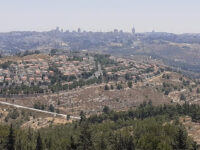
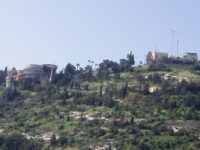
This article explores Christian sites on the Mount of Zion within the context of the Via Palma pilgrimage route from the Middle Ages, as well as in a broader sense. It covers notable locations such as the Room of the Last Supper, Dormition Church, Peter in Gallicantu Church, and St. James Cathedral in the Armenian Quarter.
Mount Zion
In Jerusalem, there are three main clusters of Christian sacred sites. The first is on the Mount of Olives, the second encompasses the Holy Sepulchre Church and the Via Dolorosa, and the third is in Mount Zion and the adjacent Armenian Quarter. The Mount Zion area holds significant events in Christian tradition, including the Last Supper, the trial before Caiaphas, Peter’s denial of Jesus, the celebration of Pentecost, the establishment of the first Christian community and church, and the dormition (death) of Mother Mary.
Mother of all churches
Mount Zion holds immense significance for Christians, particularly because it is associated with the Last Supper. According to the New Testament (Luke 22:10), Jesus instructed his disciples to seek out a man carrying a pitcher of water in the marketplace to prepare for the Passover meal at his house. This directive is significant because, at the time, it was unusual for men to carry water jugs, a task typically undertaken by women. The presence of such a man, identified as Marcus (St. Mark), likely indicates a connection to the Essenes, a group believed to have resided in the area and shared spiritual affinities with Jesus. Consequently, the Last Supper took place in this neighborhood on Mount Zion.
It’s believed that Essene families resided in the upper part of Jerusalem, known as the “Upper city,” alongside the neighborhood of the affluent priestly families. The Essenes were part of the priestly classes. According to Christian tradition, Mount Zion is associated with the house of Caiaphas, the high priest, where Jesus was brought after being arrested in Gethsemane to stand trial before the Sanhedrin.
Following the Last Supper on Mount Zion, Jesus descended to Gethsemane and was later brought back to Mount Zion by the high priest’s guards to Caiaphas’s house. It was here that Peter denied him three times, as foretold, until the rooster crowed. Subsequently, the Church of Saint Peter in Gallicantu, also known as the Church of Peter and the Rooster, was constructed on this site. The following morning, Jesus was taken to the seat of the Roman governor Pontius Pilate, situated near the Tower of David, according to Crusader accounts. Alternatively, later traditions from the Franciscans in the 14th century place the trial at the Antonia fortress north of the Temple Mount.
So, I presume that pilgrims commenced the 12th day of their journey by visiting the site of the Last Supper on Mount Zion, which is also where the disciples received the Holy Spirit at Pentecost. Following this, they descended to Gethsemane in the Jehoshaphat Valley, located in the Kidron Valley, to experience the events that unfolded there—the final hour of Jesus as a free man and the dark night of the soul. Subsequently, they ascended back to the house of Caiaphas the priest, following the chronological order of events described in the New Testament.
They visited the place where Peter denied Jesus three times and were moved by the sight of the prison room where he spent the night. They condemned the opulent residences of the corrupt priests, some of whom still endured. As they retraced Jesus’s steps to the governor’s palace, they carried prayers in their hearts, hoping to save their Lord and Messiah despite knowing the inevitable outcome. On Mount Zion, they also witnessed the spot where Mary fell asleep and where the first Christian community emerged. They marveled at an original painting by Luke, a member of the community and a disciple of Jesus, who depicted Mary and Jesus—whom he knew personally—for the first time on canvas. Continuing their journey, they reached the magnificent St. James Cathedral in the nearby Armenian quarter, where they paid homage to the tomb of the saint’s Head, whose body rested in Santiago de Compostela, Spain, as well as the tomb of James the Lesser, purported brother of Jesus and subsequent leader of the community.

Last Supper Room
According to the book “Acts of the Apostles,” Mary resided in the house of St. Mark on Mount Zion with the disciples. The Marian faith of that era maintained that Mary did not experience death but was instead assumed into heaven. According to tradition, when the time came for her “falling asleep,” she rested for a few days until Jesus came to escort her, body and soul, to heaven, where she was crowned queen and became an intercessor for humanity. Legend held that Mary “fell asleep” on Mount Zion, was buried in the Kidron Valley, and ascended to heaven after three days.
Pilgrims were familiar with hymns and prayers to Mary, composed by figures such as Bernard of Clairvaux. When they visited Mount Zion, they sought to see the room where Mary lived and the place (the basement) where she fell asleep. Today, a grand German church called the Dormition stands over this site, designed in the style of a castle reminiscent of the legendary German king Charlemagne from the 8th century.
Adjacent to the Dormition Church is the Last Supper room, located on the second floor of a three-story building. Below lies David’s tomb, while above is a mosque, illustrating the diverse tapestry of Jerusalem. This large room features characteristic Crusader cross arches and was used as a mosque during Ottoman rule, evident from its mihrab and minbar. However, today it is under government control and serves as a Christian pilgrimage site.
The Last Supper room was not only where Jesus shared his final meal with his disciples but also where the nascent Christian community gathered after his death and ascension. Led by Jesus’s mother, Mary, and his brother James, they formed a close-knit community, practicing the first sacraments of Eucharist and baptism, and striving to live according to Jesus’s teachings. It was during this time, on the Jewish holiday of Shavuot, that they experienced a profound miracle. The Holy Spirit, symbolized by tongues of fire, descended upon them, granting them the ability to speak in tongues, heal the sick, and perform miracles—a testament to the enduring presence of Jesus’s spirit within Christianity, even after his earthly departure, and a sign of hope for his eventual return.
The traditional site associated with the Last Supper, situated on Mount Zion, has a complex history. Initially, it was part of a Byzantine church dating back to the 5th century. However, this structure was destroyed by the Persians in the 7th century. The Crusaders later reconstructed the church in the 12th century, largely shaping its current appearance. When the Crusaders arrived in Israel, they found the church in ruins and undertook its restoration, also identifying David’s tomb within its lower floor. During the Second Crusader Kingdom in the 13th century, they erected a substantial cloister, incorporating what is now recognized as the Last Supper room. Beneath this room lies David’s tomb, while a Muslim mosque occupies the roof above, illustrating Jerusalem’s diverse and layered history.
Inside the Last Supper room, visitors can admire delicate marble cruciform pillars adorned with intricate carvings of pelican birds, symbolizing Jesus in medieval iconography. The pelican, known for piercing its breast to feed its chicks with its blood, represents Jesus sacrificing himself to spiritually nourish his disciples and humanity. This symbolism aligns with the biblical narrative of the Last Supper, where Jesus offers his blood as a covenant for the forgiveness of sins (Matthew 26:27-28).
Following the re-occupation of Jerusalem by Muslims, the Crusader church, known as the “mother of all churches,” was largely destroyed. Despite this, a Franciscan presence persisted in the surviving parts of the complex. However, in the 16th century, the Franciscans were expelled from Mount Zion, and the Last Supper hall came under the custody of the Dejani family. They transformed it into a Zawiya, a Sufi spiritual center, and established a mosque, featuring a mihrab and stained glass windows adorned with verses from the Quran, which remain visible to this day.
After the War of Independence, the hall was returned to the Christians and is now part of the Christian complex of the Cenaculum on Mount Zion, maintained by the Israeli government. Inside the hall, visitors can find an alcove with a copper statue depicting an olive tree, flanked by vines and wheat ears. The olive tree symbolizes Jesus, the Messiah of Israel, traditionally anointed with olive oil, while the vine and ears symbolize the wine and bread of the Eucharist.
Visiting the “mother of all churches,” the site of the early Christian community, was a profound experience for pilgrims, connecting them to the ideals of Christian community life. It’s crucial to recognize that pilgrimage was not only a physical journey but also a spiritual and educational one. Each site offered unique lessons, and pilgrims, many of whom were intellectually curious, sought to enhance their religious lives both individually and communally. Reflecting on the events of Jesus’ life and the lives of the saints, pilgrims pondered their personal significance and allegorical dimensions. At Mount Zion, the lesson centered on living an authentic Christian life within a community, in a manner conducive to the descent of the Holy Spirit.
The significance of the Cenaculum (the room of the Last Supper) on Mount Zion, believed to be where the Holy Spirit descended on the disciples at Pentecost, was intertwined with legends of King Arthur and the Brotherhood of the Round Table. This association also led to the identification of the ancient sarcophagus below the room as the tomb of King David, seen as a symbol of the Holy Spirit. By connecting David to Christian holy sites, a link was established to Bethlehem and the lineage of the House of David, from which Jesus descended. Pilgrims and Crusaders viewed themselves as the true Israelites, proud of their biblical heritage.
Church of Peter in Gallicantu
During Jesus’ time, Mount Zion was enclosed within the walls of the Old City. However, by the Crusader era, it lay outside the city limits. Pilgrims following the “Via Palma” route would venture beyond the city walls to visit Mount Zion’s significant sites, notably the “Mother of the Churches,” which housed the Last Supper room. Additionally, pilgrims frequented another church on the mountain’s slopes, marking the reputed location of the house of the high priest Caiaphas. This site doubled as the meeting place of the Sanhedrin and served as the setting for Jesus’ trial, overnight imprisonment, and Peter’s threefold denial. Known as “St. Peter’s of the Rooster Call” or Peter in Gallicantu, this church held immense significance for pilgrims on their journey.
Today, Peter in Gallicantu stands as one of Jerusalem’s most exquisite churches, nestled within a complex of antiquities and buildings belonging to the French Assumption Order. Renovated in 1990, the site features a model of Byzantine Jerusalem, ancient staircases illustrating Jesus’ descent to Gethsemane as a free man and subsequent ascent while bound, and dungeon chambers beneath the house where Jesus was held captive. The church’s overarching message centers on repentance, embodied by Peter and others depicted in the artwork. Images of Peter, sometimes with a halo and sometimes without, reflect his actions, while paintings of figures associated with repentance adorn the central apse and its flanks.
At the church entrance, a Byzantine mosaic featuring Gaia, the Goddess of the Earth, serves as a unique relic, blending ancient pagan imagery within a Christian context. Beneath the main hall lies another prayer space, where a poignant painting depicts Peter weeping, resting on a rock. On one side, he denies Jesus three times, while on the other, Jesus questions him thrice about his love after their resurrection encounter on the shores of the Sea of Galilee. Descending further, visitors reach the dungeon where Jesus spent the night before facing Roman authorities the next morning. Exiting this level, one encounters archaeological excavations showcasing remnants of houses from the Second Temple period, including those belonging to Jewish high priests, evident from the presence of Mikvehs, and stairs leading from the upper city to the Kidron Valley.
Dormition Abbey and The Descent of the Holy Spirit Mystery
The Holy Spirit descended on the disciples in the room of the Last Supper, also known as the Upper Room, where Passover and Shavuot were celebrated. While the exact location of the room is uncertain, it was part of a larger church called “The Mother of All Churches” during the Byzantine and Crusader periods. Today, its remains are found in the basement of the nearby Dormition Abbey. Since we’ve already visited the Last Supper room, we’ll now head to the crypt of the Dormition Church. Here, in the southern chapel dedicated to the Descent of the Holy Spirit, we can connect to this pivotal event.
The beautiful church, built at the beginning of the 20th century, deeply embodies Marian beliefs. Mary’s role in enabling Jesus’ earthly arrival is central. Without her, the Son of God could not have appeared in the world. She symbolizes the earthly realm that sustains the heavenly kingdom. Even after Jesus’ death, Mary’s role as the mother of God continues. Metaphorically, she gives birth to Jesus again, this time spiritually, as the leader of the young Christian community and guardian of the faith. This spiritual rebirth occurs at Pentecost. Mary gathers all the disciples under her wing, facilitating the birth of the Holy Spirit within them, connecting them to the essence of Jesus.
The captivating painting in the chapel of the Descent of the Holy Spirit, found in the crypt of the Dormition Church, vividly portrays Mary seated at the head of the table, surrounded by the twelve apostles. Above them, the Holy Spirit descends in the form of a dove and flames of fire. Adjacent to the scene stands an altar dedicated to John the Baptist, flanked by reliefs of female figures who witnessed the crucifixion of Jesus. Each figure emits a distinct sound when touched, despite sharing similar facial features. This chapel, situated in the southern extension of the crypt, holds profound symbolism, located closest to the room of the Last Supper.
In 1905, German Emperor Wilhelm I arrived in Jerusalem and obtained extensive plots of land from the Ottoman Sultan, alongside permission to erect a religious complexes for the people of his kingdom. Germany, emerging as a dominant power and a key supporter of the Ottoman regime, was divided between the Catholic South and the Protestant North. Consequently, Wilhelm constructed the Church of the Redeemer near the Church of the Holy Sepulchre for Protestants, and the Church of the Dormition on mount Zion, affiliated with a Benedictine Abbey, for Catholics. These two edifices became prominent features of the Jerusalem skyline.
The German architect Heinrich Renard modeled the Church of Dormition after the castle church of Charlemagne in Aachen. Charlemagne embodies the ideal king in Germanic tradition, credited with ushering in a cultural and religious revival at the close of the 8th century. He established the first Christian empire in Europe, facilitating the transfer of the title of Holy Emperor from the Byzantine Emperors to the kings of the Holy Roman Kingdom. Charlemagne led this new kingdom, which governed territories spanning Germany, France, and parts of Europe. His era witnessed a flourishing of culture, the codification of laws, and the emergence of feudal society and chivalric ideals.
Charlemagne and his knights played a decisive role in stopping the Muslim expansion into Europe, in strengthening Christianity and the papacy, and in the Christianization of Northern Europe. According to the legend, Charlemagne did not die, but fell asleep and sleeps to this day in the basement of his castle in Aachen, waiting for the moment when Germany will need him again, when he will return and reestablish a kingdom of justice on earth, which will herald the coming of the kingdom of heaven. This tradition parallels the Jewish tradition about King David, who according to legend is still alive and found in caves under Mount Zion. But in the basement of the Dormition Church we will not find Charlemagne sleeping nor King David, instead there is statue of Mary sleeping (reminiscent of sleeping beauty).
According to Mariological belief, Mary’s body was sanctified even before the Annunciation, and certainly with the pregnancy and childbirth of Jesus. Therefore, when it was her time to die, an angel appeared before her and told her that she would not die. Instead, when her time came, she would fall asleep for three days, after which Jesus would come and take her body and soul to heaven. And so it was. Mary fell asleep in the place of the Dormition, which was part of the ancient Christian community house on Mount Zion.
The statue of the sleeping Mary is situated under a dome supported by six pillars, each symbolizing six holy biblical women depicted on the ceiling of the dome: Yael, Eve, Esther, Deborah, Ruth, and Yehudit. Positioned between them, and above the statue of Mary, is the figure of Jesus. All these figures are depicted within circles. The face and hands of the statue of Mary are crafted from ivory. Encircling the image of Jesus on the ceiling is an inscription from the Song of Solomon (2:13): “Arise, my love, my fair one, and come away.” This inscription reflects the Marian perception prevalent in the late Middle Ages of the mystical union between Jesus and Mary.
The circle formed by the dome and the six columns is encircled by 12 additional columns representing the 12 apostles. Surrounding them is an ambulatory corridor. Within the open walls, there are six small apses dedicated to Mary in her various roles. These are, clockwise: Mary as the daughter of her people, Mary the Queen of the Pilgrims, Mary the Queen of the Monks, Mary the Queen of the West, Mary the Queen of the Prophets, and Mary the Queen of the Fathers.
Inside the six apses are six altars donated by six nations venerating Mary. The Austrian altar (the first) was erected in honor of Engelbert Dollfuss, the Austrian prime minister murdered by the Nazis. It is dedicated to Jacob, Philip, Lazarus, and Simon the Elder, with their statues positioned beside the central statue of Jesus. Austrian saints are depicted in a mosaic resembling stars illuminating the sky. The Hungarian altar is dedicated to Simon and Thaddeus, two apostles featured in the enamel relief at the altar’s center. Saint Stephen, whose remains were initially housed in the church on Mount Zion, is also depicted. Maria is depicted in the mosaic as the Patron saint of Hungary alongside Saint Stephen, the first Catholic king of Hungary, and other Hungarian monarchs. The other four countries with altars in the crypt are Venezuela, Brazil, the United States, and Ivory Coast.
The crypt is constructed in a circular design, with the simulated “tomb” containing the sleeping Mary surrounded by two concentric circular spaces. Above the basement floor, the church building also follows a circular layout, featuring concentric circles on the floor that expand outward. The circle symbolizes perfection, with no beginning or end, and represents the cycles of birth and death associated with the feminine principle. It also signifies awareness, with different events unfolding within its confines compared to outside.
Above the Dormition Church, a conical roof ascends. While a dome might seem fitting given the church’s circular interior, the designers opted for a cone, adding a dynamic element to the structure. Despite its circular interior, the church’s exterior is not circular. Supported by four towers on its sides and a larger tower adjacent to the monastery buildings, the exterior exudes a masculine appearance reminiscent of a medieval castle. In contrast, the interior embodies feminine, mysterious, and dark Marian spirituality.
In the central hall of the church, a large apse contains a mosaic depicting Mary and the child Jesus, with Jesus holding an open book bearing the words: “I am the light of the world.” The concentric circles on the floor symbolize Christian cosmology: at the center, three intertwined circles bear the words “Holy, Holy, Holy,” surrounded by representations of the four gospel writers in the form of animals and the names of the four main prophets who foretold Jesus’ coming. Further out, another circle features the 12 zodiac signs alongside the names of 12 secondary prophets from the Old Testament and the 12 apostles. Finally, an outermost circle lists 26 saints.
This intricate design illustrates the flow of divine light into the world: beginning with Jesus, it emanates through the four evangelists, spreads to all corners of the earth via the 12 apostles, and is exemplified by the 26 martyrs who gave their lives for the faith. Moreover, the floor design signifies the successive revelations of spiritual light: from the Holy Trinity at the center, through the prophetic light represented by the four main prophets and the four animals in Ezekiel’s vision, to the religious life embodied by the 12 secondary prophets and apostles, or the Christian community enlightened by the Spirit.
In the main hall, six chapels line the walls. Starting from the left, the first chapel is dedicated to St. Boniface, an English Benedictine saint and patron of Germany. The second chapel on the left honors John the Baptist. Moving to the third chapel, Saint Joseph, the father of Jesus, is venerated, with medallions depicting Jesus’ ancestors and symbols of knightly orders that contributed to the altar’s construction.
On the right side, the first chapel is dedicated to Saint Benedict, founder of the Benedictine order, depicted holding his monastic rule book resembling Moses. Ivory carvings and reliefs behind his statue depict miracles attributed to him, while medallions of Benedictine saints adorn the edges of the chapel. Next is the chapel of St. Willibald, the first English pilgrim to Israel and later a German bishop. The mosaic features St. Willibald and Bavarian patrons worshipping Mary, with symbols of Bavarian knightly orders on the sides. An inscription reads: “All the patrons of Bavaria prayed for us.” Finally, the third chapel on the right honors the Three Magi, with a mosaic depicting patrons, bishops, and church founders from Cologne, where the Magi’s remains are said to be housed.
The Dormition Church presents a dynamic interplay between masculine and feminine elements, with the upper part evoking a stronger masculine presence through its figures, conical roof, and mosaic floor, while the crypt below exudes a more feminine essence. This balance is symbolized by Jesus appearing in the dome above the statue of sleeping Mary. A spiral staircase connects the upper and lower levels, enhancing the sense of unity and continuity within the sacred space. The church’s exceptional echo hints at its construction according to sacred proportions and suggests hidden depths waiting to be discovered.
The image of Mary presiding over the Last Supper table in the crypt, coupled with its proximity to the Last Supper room, renders the Dormition Church, particularly the crypt, an ideal setting for contemplation of the Mystery of the Descent of the Holy Spirit. While the upper part of the church emphasizes spiritual light symbolized by the Holy Spirit, it is in the crypt, with Mary’s presence, that this divine light descends upon humanity, enabling its transformative action in the world.
St. James Church in the Armenian Quarter
The pilgrimage tradition in Europe experienced significant development, particularly with the popularity of the pilgrimage to Santiago in Spain, which became one of the most frequented pilgrimage sites. Despite Jerusalem’s unparalleled importance from a Christian perspective, Santiago gained prominence due to its accessibility within the European world. However, with the Crusades, Jerusalem’s significance became more tangible and attainable for pilgrims. The tradition of pilgrimage to Santiago served as inspiration and encouragement for those embarking on pilgrimages to Jerusalem. It’s probable that many pilgrims who journeyed to Jerusalem also visited Santiago or Rome, further enriching their spiritual experiences.
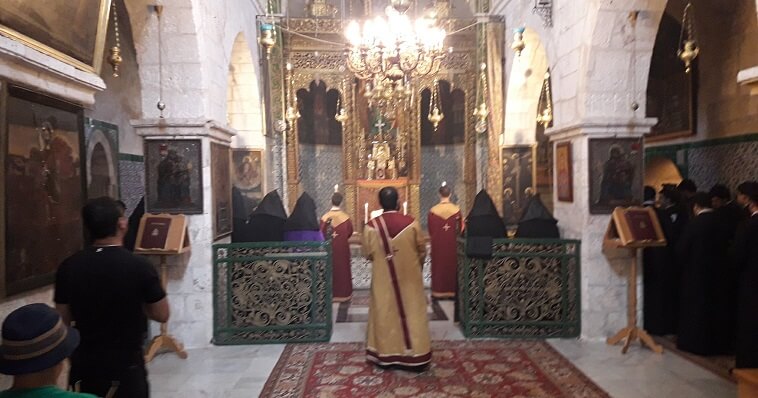
In Santiago, pilgrims revered the body of St. James, believed to have miraculously arrived there from the pier in Jaffa. However, his head remained in Jerusalem, housed in the Church of St. James in the Armenian Quarter. Thus, pilgrims desiring to see both the body in Spain and the head in Jerusalem would visit the Cathedral of St. James. This church held immense intrigue and significance for pilgrims. Alongside St. James the Greater, one of Jesus’ closest disciples, the church also contained the head (and body) of another James—James the Lesser, Jesus’ half-brother, who played a crucial role in leading the early Christian community after Jesus.
St. James Cathedral traces its origins back to the 4th century, but it met destruction at the hands of the Persians in 614. However, it was later reconstructed. Over time, Armenian monks began to gather around the cathedral, forming a monastery that doubled as a lodging for pilgrims. During the Crusades, the Armenians collaborated with the Crusaders and obtained permission to establish their own quarter in Jerusalem around the church. In the 12th century, Queen Melisinda, who had Armenian heritage (her mother being an Armenian princess), oversaw the grand reconstruction of the church.
The St. James Cathedral was modeled after a 10th-century church from Gagpad, Armenia, featuring the characteristic Armenian architectural style of a dome atop a cross, showcasing original Armenian design. Within the church lie the tombs of the last king and queen of Little Armenia, which fell in 1382 to the Mamluks. Despite Jerusalem’s conquest by Muslims, the church remained active due to the amicable relations between Armenians and Muslims.
In Armenian church architecture, the symbolism of light is accentuated by the dome and the abundant lamps. Unlike in other churches, Armenian churches do not feature an icon screen; instead, a curtain may be used to delineate the sacred space. Traditional icons are replaced by Khachkars, elaborately carved stone or wooden crosses representing the tree of life, each unique in design. Adorning the churchyard walls are twenty-two Armenian Khachkars of varying sizes, each engraved to commemorate specific events such as the founding of a church or significant historical occurrences. Among them, the oldest Khachkar, dating back to 956 AD, is positioned above the entrance.