This is a rudimentary translation of articles from my book “Touching the Sacred” While it is far from ideal, it serves a purpose given the significance of the topic and the distinctiveness of the information contained. I have chosen to publish it in its current state, with the hope that a more refined translation will be available in the future.
Part one: What is the Sacred?
In the initial section of this book, we aim to delineate the concept of the Sacred and what characterizes a Sacred place. From my perspective, numerous locations deemed Sacred do not truly merit this designation. Some contend that the notion of a Sacred place does not exist; for instance, Yeshayahu Leibowitz, a preeminent Jewish Philosopher of the 20th century, argued that the Western Wall is not Sacred and that venerating the stones equates to idolatry. Many share his view. However, based on my extensive research in both the practical and academic realms, I believe certain places can profoundly impact visitors, evoking a sensation of the Sacred in those receptive to it. It is these unique locations that genuinely embody the essence of a Sacred place.
People often label a place significant to them as Sacred, leading to a mix-up of ideas. A place that holds importance for an individual or their community isn’t inherently Sacred, much like how mere desire differs from love due to its selfish aspects, whereas love involves selflessness. While desire may evolve into love, it does not equate to the highest ideal of love. Similarly, jealousy and possessiveness are the antithesis of love. Likewise, the Sacred involves self-abnegation, a momentary dissolution of self in the presence of something awe-inspiring and grand. True religious sentiment is detached from personal identification or claiming a place for a specific national sentiment. Instead, genuine Sacredness reduces ego and blurs national divides, whereas false Sacredness can lead to conflicts over “Sacred wars” for territories [1].

The importance of a place regarding a national ethos doesn’t inherently render it Sacred, and buildings themselves aren’t naturally Sacred either. Sacredness is attributed to a place through its interaction with humans. If this interaction leads to an inner mystical religious experience, enabling individuals to fulfill their earthly roles by choice and thereby contribute to the act of Creation, the place is deemed Sacred, in light of the belief that humans were created in the image of God.
The Sacred is experienced when an individual confronts an overwhelming force, becoming enveloped yet simultaneously encompassed by it, sensing that this formidable power is benevolent and that one has returned home. Broadly, there exist two dynamics in the world: one gravitates towards the “I” as the focal point, while the other entails the dissolution of the “I” in the face of Creation’s grandeur, majesty, and boundlessness. This latter movement is the journey towards the Sacred.
Standing on a cliff in the Judean desert watching the sunrise, the sense of “I” vanishes, and one is overwhelmed with emotions like awe, admiration, excitement, and exaltation in the presence of something far greater, majestic, and beautiful—so immense it feels beyond containment. As the poet expressed, “My eyes are small, but they perceive enormous things.” The Sacred is an encounter with the marvel of Creation, fleeting yet seeming eternal. In such moments, time transforms, infusing life with profound meaning.
Temples and Sacred places were constructed not merely for rituals and worship but to fill visitors with awe and wonder, elevating them from the mundane to the Sacred realm. The essence of all rituals, processions, sacrifices, and prayers lies in connecting with the divine within; without this connection, these practices lose their significance. However, experiencing the Sacred is not guaranteed; the profound feelings of awe and wonder foundational to religious experience do not emerge spontaneously in everyone who kneels before the Temple. The Temple serves as an opportunity for such experiences, with individuals encountering the Sacred according to their own capacity.
The term “Sacred” in Hebrew derives from the root “Kadesh,” relating to action, specifically “to sanctify,” transforming objects, situations, and individuals from ordinary to holy. This concept underscores that the emergence of religious feelings—awe, wonder, exaltation, enchantment—experienced during moments like a sunrise in the desert or a visit to the Temple, connects individuals to the understanding that there is an order in the world. It guides them towards fulfilling their role within this order, urging them to commit to goodness and choose a life of moral devotion. When one experiences these profound religious emotions, there’s a compelling desire to dedicate oneself and one’s life to a higher, inner religious purpose, to something far greater than oneself.
The prerequisite for encountering the Sacred is the capacity to relinquish control and yield to something greater than oneself, a process facilitated by visits to the Temple. Encountering Sacred Holiness inevitably provokes a response; it’s impossible to remain unaffected by it. This might manifest as a profound humility, exemplified by Abraham’s declaration “I am dust and ashes” (Genesis 18:27) during his dialogue with God concerning the fate of Sodom’s inhabitants. It is after sensing the Sacred’s presence that individuals found themselves prostrating at the Temple’s steps, not before. This sequence underscores the transformative power of the Sacred, compelling a visceral acknowledgment of one’s humility and smallness in the face of the divine.
The Sacred represents a higher plane of experience, coexisting alongside the ordinary. It’s possible, at times, to tap into this realm, to feel and live through it. Once a person has experienced this profound connection, their life is altered, instilling a desire to revisit that profoundness repeatedly. This transformative experience is what propels Abraham to leave behind everything familiar and venture to an unknown land. Abraham’s journey is twofold: one, to an uncharted territory, and the other, an inward journey, which, at its simplest interpretation, could relate to his journey to Mount Moriah. This dual journey is underscored by the biblical command “Go” (as translated from Hebrew in “Go from your country…” (Genesis 12:1)), signifying a challenging directive. For Abraham to fulfill his destiny and become the progenitor of a great nation, he must navigate through moments of fear and uncertainty.
Part of encountering the Sacred involves what Otto termed “Mysterium Tremendum”: a confrontation with something unfathomable and overpowering, a force so intense that it jolts one’s very essence. Abraham, to fulfill his destined role, must endure “a great darkness falls upon him” (Genesis 15:12), a transformative trial that reshapes him fundamentally. Through this profound experience, the letters “Ha”, which represent the name of God, are added to his original name, “Abram,” signifying his evolution into “Abraham.”.
Rudolf Otto highlighted the link between words that describe God’s daunting and intimidating aspect, such as fearful and wrathful (“Haron Apo” in Hebrew), and those that convey His majestic and appealing aspect, including terms like wonderful, exalted, lofty, beautiful, magnificent. The jolt experienced from God’s formidable side assists in breaking through barriers and overcoming the ego, facilitating the realization that we are not the center of the universe. This realization opens the path to connect with majestic, numinous realities beyond ourselves, enabling an exalted experience of the Sacred.
The issue arises when individuals attempt to bypass the genuine process of encountering the Sacred, feigning an experience they have not truly undergone. This often stems from a reluctance to meet the necessary conditions: relinquishing the ego and enduring the daunting experience of the numinous, or divine, in a vulnerable state. This observation is not meant to pass judgment but to offer an analytical perspective on the psychology of fundamentalism. Within such a mindset, there is an absence of the awe-inspiring feelings associated with the Majestic aspect of the divine. Moreover, there’s no real surrender of the ego in the face of God’s overwhelming presence. Instead, there’s a tenacious grasp on the ego, with the Mysterium Tremendum interpreted merely as fear and terror. This misinterpretation can lead to a fear of divine retribution and result in extremist behavior.
Rephrased, some individuals are not prepared to confront the awe-inspiring power beyond themselves, to diminish their ego to the extent of becoming ‘dust’ like Abraham. Instead, they hold onto their ego, which breeds a fear of punishment—a sentiment entirely distinct from a genuine reverence for the divine. Conversely, there is an inherent human longing for a connection to the sublime, majestic, Sacred, and eternal, for without it, life seems devoid of meaning. However, when people find themselves unable (at times) to engage with experiences of beauty, splendor, sublimity, and majesty associated with the Sacred, they may seek substitutes for these authentic encounters. Consequently, they mislabel feelings derived from ownership, pride, and attachment as “Sacred.” Yet, true numinous experiences are fundamentally opposed to such notions. The Sacred entails being an integral part of Creation rather than claiming ownership over it.
In an authentic encounter with the Sacred, feelings of exaltation, joy, and wonder displace attachment, while magnificence and splendour supplant false pride. Awe and a sense of presence emerge, replacing submission and fear. However, the overwhelming nature of the Sacred experience can, in extreme cases, result in feelings of anger, fanaticism, obsession, and even hatred—emotions that starkly contrast with the essence of the Numinous. Unfortunately, these negative feelings can sometimes drive individuals to commit atrocious acts purportedly in the name of religion.
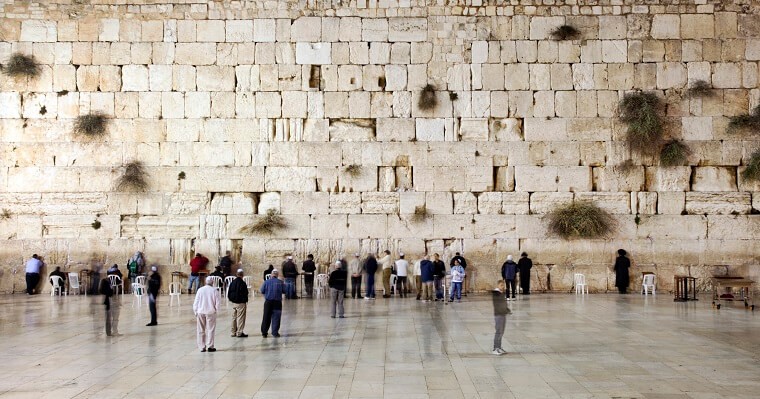
Pride stands in stark opposition to the Numinous, as it creates a divide between man and God. The feelings of national or personal pride differ markedly from the sense of wonder and awe intrinsic to an inner religious experience. It’s pride that leads individuals to declare places like the Kotel (Western Wall) or Temple as Sacred, not because they inherently possess such a quality, but because they are considered “ours.” While ego-centricity plays a crucial role in the personal development of an individual, and the sense of belonging to a community is a significant step towards self-transcendence, the true essence of the Sacred is captured in the awe and wonder inspired by the recognition of something vast and indescribable beyond ourselves, connecting us to the mystery of Creation.
The experience of the Sacred fosters a profound connection with others and, indeed, with the entirety of the universe, instilling a sense of universal unity. This experience unveils the presence of a higher order in the world, affirming that everything holds its rightful place within this structure. Hence, disputing the existence of others essentially amounts to contesting the world order itself, as well as the existence of the one raising such challenges. In the presence of the Most High, there is no room for self-centered emotions, especially those that aim to dismantle part of the Creator’s work.
Thus, anyone at the Western Wall proclaiming “Death to the Arabs,” or someone on the nearby Temple Mount throwing stones at worshippers below, is far removed from the Sacred, embodying its very antithesis. Such actions, challenging the existence of others for any reason, essentially deny the presence of divine providence, meaning, and order in the world. Leaning on biblical commands like “to erase the name of Amalek” to justify such actions must be unequivocally rejected from the moral, secular-religious standpoint I advocate. While the Bible contains elements of holiness, endorsing actions like the stoning of a man for gathering wood on the Sabbath (Numbers 15:36) cannot be considered sacred. The same applies to the Quran and the New Testament. Religion is a personal connection between an individual and God, rooted in the experience of the Numinous. Hence, so-called Sacred texts require interpretation and adaptation to align with this understanding.
This doesn’t imply that it’s unfeasible to regard the Bible as a sacred text, capable of being refined through interpretations such as Kabbalah, which may well align with its original intent, given that the Bible, like the Quran and the New Testament, cannot be fully understood at surface level. However, it’s crucial to acknowledge that these “Sacred” texts contain elements that are problematic and, unfortunately, are exploited by extremists. Therefore, it’s essential to discern the valuable from the worthless, recognizing that adherence to religious commandments (mitzvot) should follow and arise from the experience of the Sacred rather than being seen as a direct pathway to such experiences. As the saying goes: “Every prophet has qualities, but not everyone who has qualities is a prophet.”
I elaborate on this topic because, in addressing the Sacred—and considering the Temple as a locale where the Sacred might be encountered—it’s crucial to first delineate what is considered Sacred and what is not. We must start by disentangling all the historical associations linked to this term. Only after this clarification can we attempt to understand the experience of the Sacred and the way it is influenced by a place. This approach serves as our philosopher’s stone, through which we aim to unravel the enigma of the Temple.
The quest to engage with the Sacred represents a fundamental and central drive in human existence. Our continual search for a connection to the Sacred originates from a deep-seated, often subconscious yearning, which can be described as a desire to “return home.” Psychologically, this longing might be interpreted as a wish to return to the womb, while spiritually, it’s seen as the soul’s desire to revert to its pre-physical state of unity with God, a state it inhabited prior to descending into the body and experiencing birth. From the perspective of comparative religious studies, this longing is identified as a desire to escape the “Terror of History,” as Mircea Eliade elaborates in his work “The Myth of the Eternal Return.” It’s a desire to transcend the temporal and profane realms to experience the hierophany—the manifestation of the sacred.
The paradoxical expression of the desire to return home manifests as a drive toward a higher, transpersonal level of awareness. Individuals yearn to return home while also feeling evolutionary impulses pushing them to advance, develop, and connect with forces beyond themselves. Thus, finding home involves moving forward rather than backward. There’s an element in the human spirit, or more aptly, the soul, that seeks to rise to the skies and explore the earth’s depths. Humans are by nature inquisitive and observant, striving to reach a standpoint from which they can view all of Creation and bear witness. The Sacred experience is linked to the recognition that we are part of a broader consciousness and awareness existing on a different plane. When we engage with the Sacred, we transcend our ordinary existence (becoming akin to what some might describe as “angels”), and it is in this state that we truly feel at home. This is reflective of the experiences of some visitors to the Temple.

The appearance of the Sacred
We rely on our senses to interpret the world around us, and our perceptions form our reality, shaping our actions. Yet, there exists another dimension of reality beyond the tangible, a transcendent reality that manifests through and influences our sensory experiences—this is the numinous, or the Sacred. As Eliade describes, the Sacred represents a distinct plane of existence, a level of reality that reveals itself and is encountered through elements present in the mundane, ordinary, and everyday experiences of life.
Holiness requires a medium to manifest, and when it does so through a building or location, it renders that space Sacred. Essentially, a Sacred place acts as a portal through which the Sacred realm becomes accessible. The spirit necessitates a physical medium to manifest and interact within this world, akin to how the cloud in the Sinai desert required the Tabernacle as its anchor. In Jewish teachings, the interplay between spirit and matter is likened to the connection between a candle’s flame and its wick, or the blaze of a fire and the coal that sustains it.
The experience of the Sacred is not a simple, two-dimensional stimulus-response mechanism but is deeply intertwined with the perceptions of those who visit the place. Not everyone who visited the Temple in Jerusalem felt the Sacred presence; for instance, when Titus entered the Temple’s gates, his focus was solely on conquest and destruction. There’s a saying that a donkey in the marvelous market of Baghdad sees only the hay falling from the cart in front of it, illustrating how perception shapes experience. Thus, my argument is that for a place to be considered Sacred, the individuals visiting must possess the capacity to perceive and recognize it as such.
In the English language, there are two terms to describe the concept of the Sacred, each with its distinct meaning. “Holy,” akin to the Hebrew “Kadesh,” derives from the ancient English root “Hal,” signifying wholeness. This term suggests that humanity encompasses both physical and spiritual dimensions, and it’s through connecting with our spiritual aspect that we become whole. On the other hand, “Sacred,” originating from Latin, refers to a distinguished or separated space. This implies that for the Sacred to manifest in the world, a specific location through which it can emerge is required. Human beings do not exist in a void but are constantly interacting with their surroundings, walking, sitting, and sleeping on the earth’s surface. The Sacred experience occurs when a place, object, or space is imbued with a higher reality from another plane of existence, where eternal and continuous Creation unfolds.
Rudolf Otto described the numinous as a sensation of being created, of belonging to Creation at its most original and purest point of inception. Building on Otto’s insights, Mircea Eliade proposed that every Sacred place is a microcosm of the world, at whose heart lies a point where Creation is perpetually originated and rejuvenated, which he termed the “world axis.” According to this view, every dwelling, Temple, or habitation represents a microcosm of the world. Individuals sanctify their surroundings with the hope that such actions will facilitate the manifestation of the Sacred within these spaces. Eliade suggests that the emergence of the Sacred across various locations and times throughout history acts as a hierophany, leaving a lasting mark that consecrates these places.
In Hebrew, the word “Kadesh” encompasses the concept of “Holy,” suggesting that holiness entails serving God. Within this context, it’s pertinent to note that in Judaism, the Sacred is predominantly manifested through human qualities and the interactions between individuals themselves and God. The term “Sacred” is derived from the verb “kadesh,” which means to dedicate or to pursue a purposeful action in the world. This engagement with the eternal and Sacred enlightens individuals about their distinctiveness, their position within the framework of Creation, and their purpose on Earth. Consequently, this realization leads them to become servants of both Creation and God, and thus, those who dedicate themselves to serving Creation and God are deemed Holy.
Through the etymology of words and advancements in comparative religious studies, attempts can be made to elucidate the nature of the Sacred. Nonetheless, it ultimately remains an experience challenging to capture in language, as echoed by the poet’s sentiment, “When love arrives, I am embarrassed by everything I wrote about love.” Historically, the Temple served as a conduit for the manifestation of the spirit, the Shekinah, allowing one to perceive the Sacred within its confines. However, in today’s world, marred by electromagnetic frequencies, noise, pollution, and the pervasive emotions and thoughts of numerous individuals, experiencing the Sacred in Temples as in ancient times has become increasingly difficult. Yet, under the right conditions, and in certain tranquil, special places in nature, it is still possible to encounter the Sacred in a manner akin to those ancient experiences.
In summary, the experience of the Sacred transcends both time and space, forging a connection between an individual, the universe, and their destiny. It represents our fundamental and vital pursuit, rendering us complete. This experience is both personal and impersonal, involving the diminishment of the ego and enabling a connection to the higher aspects of our being, to our transpersonal Jungian “Self.” The encounter with the Sacred ignites sublime feelings within us and isn’t limited to specific acts like wearing white clothes or engaging in meditation. It can be accessed through various means—watching the sunrise from a cliff in the Judean desert, enjoying a Mozart concert by the Israel Philharmonic, participating in ecstatic dancing, among others. Essentially, each person has their unique pathway to Touching the Sacred. It is a fundamental experience, indispensable for self-fulfillment, as it links us to a higher realm of experience, the natural abode of our spiritual essence, accompanied by a spectrum of unique emotions critical for our mental and spiritual health.
Some may contend that peace, connection, feelings of Holiness, and the experience of the Sacred are found solely within oneself, and ultimately, this perspective holds truth. However, I believe it’s worth noting that encounters with a Sacred place can facilitate this process, serving as a catalyst. From my standpoint, this was the principal significance of the Temple.

The Religious person
In contemporary times, a notable number of individuals identify as atheists, a contrast to the past. Before the Enlightenment era, religion was a fundamental aspect of human existence. Even in the 17th century, when eminent figures like René Descartes began to prioritize rationality over faith with statements like “I think, therefore I am,” they still preserved a form of “Religiousness” by considering Reason as a form of divine revelation in the world, an idea aligned with deism. Secularism, as we understand it today, is a product of modern times. Presently, figures such as Richard Dawkins vehemently deny faith, exhibiting a kind of religious zeal in their atheism. This raises the question: Are religion and faith innate to humans?
Indeed, without any doubt, the answer is affirmative. The evidence lies in the fact that in every human society, across all epochs—including prehistory—there has been belief in spiritual beings, life after death, and various deities. Religious belief is a natural and integral component of the human condition, akin to art, music, and mythology, all of which are intertwined with the religious experience. These elements have been part of human society since our ancestors dwelled in caves and from the moment our cognitive processes began to diverge from those of other animals. The capacity for religious experience is rooted in the functioning of our brain, or more precisely, in the nature of our consciousness and our perception of the world.
Human beings, distinct from other animals, possess self-awareness and the capacity to reflect on their thoughts. As Pierre Teilhard de Chardin, one of the foremost prehistorians and theologians of the 20th century, articulated: “The animal knows, but man knows that he knows.” The psychology of religion suggests that our minds operate with two modes of perception: one is our sensory apprehension of reality, and the other is our interpretation of this reality. For instance, our senses might detect a lion moving in the grass, but our response to this situation is shaped by our interpretation of the scene. This interpretation is influenced by various factors: assessing whether the lion appears hungry, contemplating potential strategies to distract it (such as throwing a stone to one side to gain time to escape in the opposite direction), and so forth. Our physical perception is thus imbued with meaning through interpretation.
If time is of the essence, our reactions are instinctual, but given the opportunity, we engage in thoughtful planning and strategic action. Other animals, upon encountering a lion, will also react, yet their responses are not mediated by complex thought processes, resulting in more predictable outcomes. It is through thought that we construct an interpretation of reality, crafting an internal realm filled with meanings. This capacity for abstract thought and interpretation underpins the development of art, literature, and religion, distinguishing humans from other species.
This dual mode of perception leads to the distinction between the physical and the spiritual, as everything we perceive visually is interpreted through unseen elements. There’s the person speaking to us and their words, and then there’s the true meaning and intention behind what they’re saying, which can sometimes contradict the words themselves. This concept of duality is further reinforced through the experience of dreaming. In dreams, we encounter an alternative reality governed by different rules than those of our waking life, suggesting the existence of a hidden, miraculous reality. This other reality can also be accessed through trance rituals, which often involve music, drumming, and the use of psychedelic substances, opening up pathways to perceive and interact with dimensions beyond the everyday physical world.
A defining trait of our human nature is our capacity to experience other, extraordinary worlds, not only in our waking hours but also through dreams and trance states—phenomena that emerge from our dual mode of perception. This ability precedes and stands independently of the question of whether invisible worlds exist and, if they do, whether it’s possible to directly experience them. This innate capability hints at the depth and complexity of human consciousness, inviting exploration into realms beyond the immediately visible and tangible.
Even without affirming the existence of the spirit, certain aspects of humanity are intrinsically non-physical, such as feelings, values, and consciousness. For instance, the act of caring or the quality of attention are not tangible entities; they might manifest through physiological responses like hormonal changes, but these are merely outward expressions. To date, there’s no hormone pill that inherently increases one’s capacity to care. While there are medications that can aid in concentration, there’s a distinct difference between concentration and deeper aspects like awareness and attention. These elements reside within the domain of the unseen or, arguably, the spiritual. This underscores the dual nature of humans as beings composed of both body and soul, bridging the tangible with the intangible.
The realms of the body and the spirit are fundamentally distinct, making it challenging to bridge them through logical reasoning alone, as logic doesn’t fully apply in the spiritual dimensions—a fact evident in the nature of dreams. This highlights the critical role and significance of art and the direct experience of the Sacred. These elements act as portals to the spiritual aspects of our being, which are otherwise inaccessible. Engaging with these parts is not just beneficial but essential to our nature and mental health, underscoring the importance of ensuring we have ways to connect with them.
The direct experience of the Sacred cultivates faith, a cornerstone in religious life. Yet, faith can extend beyond traditional religious beliefs to encompass science, national identity, as in the State of Israel, or even familial bonds. Everyone holds belief in something, which in turn, fuels their motivation in life. The Sacred can manifest subtly, through significant moments and events that imbue life with meaning—be it a graduation ceremony or a family gathering. Thus, according to Mircea Eliade, humanity is intrinsically religious (Homo Religiosus), with even those identifying as secular engaging in the rituals and structures of religion and faith in their everyday lives. However, like love, faith exists on a spectrum, with desire at its most basic level. For some, the divine symbolizes the ego’s aspirations; for others, it reflects the beauty, wonder, and enchantment of Creation. What could be a profound and elevating encounter with the Sacred is often replaced by misplaced identity, materialism, and extremism.
In discussing secularism, it’s worth noting that contemporary culture might be the first in history to somewhat deny death by seldom addressing it or its aftermath in the normal discourse of life. In contrast, earlier cultures integrated death more prominently as a fundamental aspect of existence. For many in the 21st century, there’s a lingering sense of immortality, as if death will never come. Yet, as age advances and the reality of mortality becomes undeniable, altering one’s perspective on religion may seem too late. Consequently, we encounter individuals in their nineties who do not believe in an afterlife and identify as atheists. Such a stance was virtually unthinkable in the past, where religion provided solace and answers to the inevitabilities of death and the ephemerality of life.
The book before you posits that humans inherently possess religious frameworks and impulses, stemming from their dual perception of reality and the natural, sometimes subconscious, inclination towards the pursuit of personal and spiritual significance, and the quest to return to a place beyond time. Fundamentally, whether acknowledged or not, humans yearn to connect with the Sacred—a plane of experience and existence that transcends the mundane. Engaging with the transient world, humanity harbors the desire for eternal life, aspiring to dwell in a realm where death does not exist..
The belief in an afterlife is rooted in our perception of an alternate reality, as experienced in dreams, trances, and the inner religious sensation of the numinous—or the Sacred. This concept isn’t merely speculative; our phenomenology genuinely includes a different mode or plane of awareness that becomes accessible during special moments. Psychologist Abraham Maslow identified instances in life where individuals encounter feelings of perfection, fulfillment, and eternity, which he termed “peak experiences.” These moments signify a detachment from ego-centricity and an embrace of the universe at large, leading to a sense of unity within a harmonious continuum of existence. In such states, the fear of death diminishes, as individuals realize their participation in something eternal and transcendent, larger than themselves.
According to Maslow, an individual’s peak experiences in adulthood frequently align with religious experiences, linking them to a higher plane of consciousness he referred to as “the plateau experience.” This plane mirrors the Sacred dimension discussed by Eliade, existing concurrently with our everyday, mundane experiences. In essence, the religious experience uniquely provides profound and genuine responses to the transience and uncertainties of adult life. Consequently, it is vital for an individual’s mental health and development, extending beyond mere physical or egocentric concerns, and fostering a deeper, more holistic approach to life.
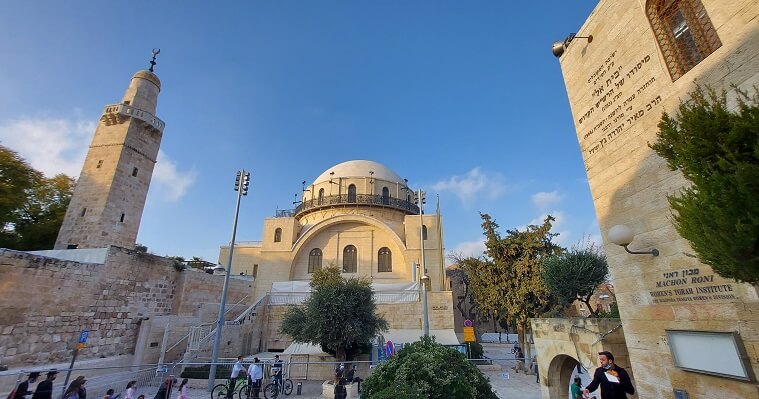
The Temple in Jerusalem held profound significance for its visitors, primarily through the experiences it provided. Visiting the Temple represented the culmination of an extensive pilgrimage process, lasting days or weeks, filled with worship, rituals, and immersion in the building’s majesty and splendor, among other aspects to be elaborated upon later. These elements elevated pilgrims to peak experiences, linking them to the Sacred and infusing their lives with purpose. People from thousands of years ago were much like us today, but their religious life was deeply nourished by the existence of Temples as places to encounter the Sacred directly. Such sites were revered as the locus of creation on one hand and the resurrection on the other. Humans need Sacred places and times to connect to the Sacred, a role served by the ancient world’s Temples, including the Temple in Jerusalem for Jews, up until two thousand years ago.
The Religious feelings
One outcome of our dual mode of perception is the emergence of two distinct sets of emotions: what we might term “worldly” and “Numinous” or “Religious.” This distinction leads us to classify them, without judgment, as lower and higher emotions. The worldly emotions are labeled as “lower” because they originate from our ego identification, the conceptual self referred to as “I,” and its interactions with the world. These include emotions like envy, anger, desire, pride, but also happiness. In contrast, there exists a category of “higher” emotions that don’t automatically manifest in humans and, to our knowledge, don’t share a basis with the emotions found in other animals. These higher emotions enable one to perceive oneself as part of a divine Creation, interconnected with everything. Religious traditions historically have focused on these higher emotions, describing them comprehensively. For example, Buddhism emphasizes compassion as a paramount religious emotion associated with enlightenment. Similarly, gratitude is a sentiment emphasized across all religions.
There are moments when the spiritual and physical realms intersect, creating an opening in space and time through which an abundance flows into our world. This interruption of the ordinary fills our hearts with gratitude, love, and other elevated emotions. Without this miraculous occurrence, escaping the grip of the ego becomes significantly more challenging. Gratitude lays the groundwork for other profound religious emotions such as wonder, awe, fascination, and exaltation. When one recites the Jewish morning prayer, “I thank You, living and eternal King, for You have mercifully restored my soul within me. Great is Your faithfulness,” they tap directly into these religious emotions. However, this connection requires mindful notation rather than rote recitation. Embedded within this prayer are also the deep religious emotions of compassion and faith, each acting as a broad gateway leading us on the mystical journey toward unity with Creation and God.
The most significant elevated emotion referenced across all religions and beliefs is love, although love itself is a ladder with its base grounded in the earth (and perhaps, one might argue, in the mire) and its top reaching toward the heavens. Not everyone who speaks or writes of love is referring to the same experience. True love is non-possessive, a concept often at odds with the prevailing views in Western culture today. The great Sufi poets, such as Rumi and Hafiz, have captured the essence of love more accurately than most, proposing that true religion is fundamentally a path of love. Similarly, in Judaism, the paramount commandment is to “Love the Lord your God with all your heart, with all your soul, and with all your might.”
Love stands as the singular force capable of bridging the divide between opposites, transforming the “I” into “we.” Yet, this transformation may necessitate navigating through stages of longing, helplessness, emptiness, and nothingness. This journey, often described by poets as “burning with the fire of love,” aims to dismantle the self-centered ego. Such a process is crucial for facilitating unity. The essence of this transformation lies in love’s ability to draw one out of oneself, primarily by focusing on the other. Consequently, a love preoccupied with the self, as in sentiments of abandonment like “you left me,” does not reflect mature love. The Persian poet Nizami captures this beautifully in his depiction of Majnun’s separation from Laila, where Majnun is consumed by the fire of love to the extent that he perceives his beloved in everything. This was not mere fantasy but a profound emotional state of transcending the self.
Loving God doesn’t mean we must turn away from the physical world, despite what some fundamentalists suggest. Rather, the beauty of the physical world can serve as a conduit to divine beauty. The harmony and aesthetic of our surroundings can broaden the soul, unveiling something far more profound, which one might call the magnificent. In these instances, a person may be utterly captivated by the beauty of the beloved, of Creation, or of an artwork they come across. Therefore, the Temple was designed to provoke religious feelings and emotions, much like the Song of Songs in the Bible, which metaphorically expresses God’s love.
Loving someone can pave the way to a religious experience, exemplified by Dante’s Beatrice, who transcends into a divine figure guiding the soul. The sacred dimension can manifest through the physical world, though it’s not a guaranteed outcome. While high emotions characterize the religious experience, they can also emerge in various aspects of human life. For instance, encountering a beautiful piece of music might evoke a sense of wonder and awe, emotions not strictly tied to religiosity, and the same holds true for art. What distinguishes the religious experience is its profound impact on one’s life, shaping their sense of destiny, ethical duties, and a sense of responsibility towards all life forms.
The core mystical experience involves a profound sense that there’s something overwhelming and marvelous out there, compelling our surrender to it. This feeling is accompanied by an intuitive recognition that this unfathomable entity is benevolent and intends good. When standing on a cliff in the Judean desert, one might find themselves surrendering to the beauty and force of nature, compelled to either sit on a rock or stand motionless, absorbed by the sanctity of the moment until it naturally concludes, even if continuing on was the initial plan. This occurs spontaneously, often unexpectedly, ushering us into a new level of experience. In a way this is akin to the experiences of those who visited the Temple.
The mystical religious experience begins with the perception of a profound presence that defies naming. When Moses encounters this presence in the form of the burning bush and inquires about its name, the reply he receives is “I am that I am.” This exchange follows the presence’s question to Moses, “Where are you?” to which he responds, “I am here.” Rather than fleeing in fear from this daunting encounter with the Sacred, Moses stands firm, reminiscent of Abraham’s dialogue with God over the fate of Sodom’s people, despite acknowledging his own mortality as “dust and ashes.” This moment illustrates that the profound religious emotion of recognizing oneself as a created being can lead to the dissolution of the ego in the face of an overwhelming divine presence. As one maintains their stance in this encounter, additional emotions such as excitement, glory, fascination, enchantment, exaltation, and majesty emerge. Understanding the religious emotions that arise from an encounter with the Sacred provides a crucial framework for grasping the significance of the Temple and connecting with its core essence.
The trap
In what might be considered the most pivotal section of the Torah—the Ten Commandments—it is stated: “for I, the Lord your God, am a jealous God, punishing the children for the sin of the parents to the third and fourth generation of those who hate me” (Exodus 20:5). This prompts a fundamental question: why should children, innocent of wrongdoing, bear the consequences of their ancestors’ sins, extending even to the third and fourth generations? There appears to be a discrepancy in this “legal order” that conflicts with fundamental moral principles.
In the Genesis narrative, after Adam and Eve consume the fruit from the tree of knowledge, God observes: “Behold, the man has become like one of us, knowing good and evil. Now, lest he stretch out his hand and also take from the tree of life, and eat, and live forever—” Consequently, God expels them from the Garden of Eden to till the soil from whence they came (Genesis 3:22-23). This passage raises several intriguing questions: Why would God be concerned with humans living eternally? It might seem more fitting for Him to desire this for them. Additionally, what issue does God have with humans discerning good from evil? And why does He ask Adam, “Where are you?” when, presumably, He should know Adam’s location?
One might either dismiss the stories of the Bible as mere superstitions, as atheists tend to do, or refrain from questioning them at all, in line with the perspective of orthodox religious followers. However, both approaches result in a dead end when it comes to understanding the Sacred, as they confine us to a two-dimensional understanding and prevent us from engaging in a dialogue with the Sacred realm. There is, however, a third approach to engaging with the text: the interpretive path commonly embraced by mystics. In this book, we will adopt this third path, but my analysis won’t be limited to Jewish sources. Instead, it will draw on a broader range of insights into the Sacred from religious studies and various esoteric traditions, making the significance of the Sacred in the Temple accessible to all.
Navigating the interpretation of the Temple presents a dual challenge: on one hand, taking biblical descriptions and commandments about the Temple at face value can lead to a fundamentalist perspective, be it Jewish or Christian. On the other hand, outright dismissing these narratives risks losing a vital component of our collective human and Jewish legacy. To avoid this dichotomy, it’s crucial to recognize that not everything in the Bible should be taken as literal “gospel,” so to speak, yet within its pages lies a wealth of beauty, light, humanity, hope, and profound insights. For instance, the Psalms contain expressions of human religious sentiment that are unparalleled. The sensible approach, then, is to distill the illuminating elements from the scriptures, identify the manifestations of the Sacred within, and present them in a manner that resonates even with contemporary audiences. But why undertake this endeavor at all? Why not let the Bible and the Temple fade into obscurity? The initial response mirrors that of Edmund Hillary, the first to summit Everest, when queried about his motives: “Simply because it exists.” A deeper rationale, however, is that these narratives, whether we embrace them or not, form an integral part of our heritage and influence our worldview.
Our contemporary interpretive approach acknowledges that certain elements of the biblical narrative may not align with modern values and sensibilities. For instance, the notion that a father could be deemed righteous for being willing to sacrifice his son, even if commanded by God, is untenable. In my view, Abraham’s willingness to sacrifice Isaac represents a failure, not a success, of his test. Similarly, the commandment in the Torah that prescribes stoning someone to death for gathering wood on the Sabbath is irreconcilable with contemporary moral standards. I find myself unable to accept such interpretations that have been traditionally justified within religious communities. Yet, this does not mean I wish to discard other parts of the Bible that I find valuable and meaningful.
The examples are numerous, and one could seize the moment to address the contentious issue of the Amalekites, who were subjected to a divinely commanded genocide in the Torah. The message is unmistakable: the Bible, as a seminal part of our collective human legacy, can only become an integral component of our spiritual heritage and daily lives if we critically engage with its content. To truly grasp the significance of the Temple, which stood as the epicenter of Jewish life for a millennium and retains its importance even today, we must, paradoxically yet thoroughly, sift through its narratives to remove those elements that clash with our innate sense of morality. Only by doing so can we begin to move forward.
To uncover layers of meaning in the stories of the Tabernacle and the Temple that can aid us in constructing our inner Temple, we must first take a bold and clear stance towards the simplistic aspects of the Torah. Rather than attempting to justify these elements scientifically, religiously, or allegorically, we should approach them with outright rejection, treating them with complete denial. If we do not, these unacceptable aspects will act as obstacles on our path, hindering our journey towards the true Temple. It is only after we have dismissed what conflicts with our inner spiritual essence that we can glean from the Torah, and the descriptions of the Tabernacle and the Temple, those illuminating insights that will support us in our personal quest to build the Temple within.
place and Holiness
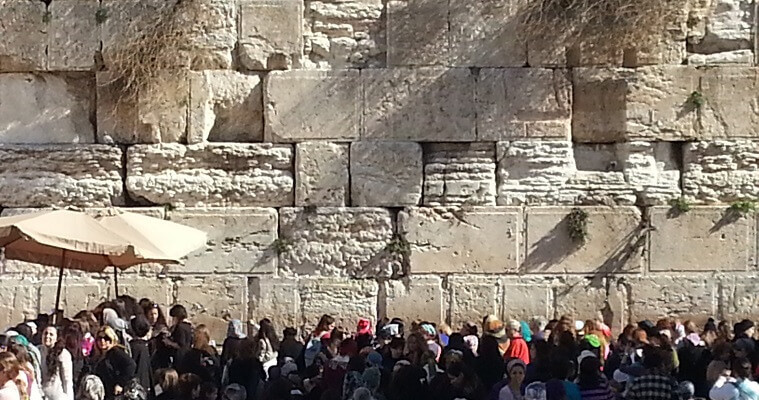
Is there an energetic presence in certain places on Earth? This question is significant. The Essenes, ascending the Judean desert cliffs in silence to watch the sunrise, were convinced of angelic presences. Nowadays, we’re more inclined to consider these experiences internal, though some alternative perspectives posit the existence of specific energies. Regardless, there are places that evoke a sense of the Sacred within us, while others do not. Not every place labeled “Sacred” will necessarily induce an inner religious experience, even if it bears a sign at the entrance declaring it as such. Much has been discussed and written about Sacred places without a true understanding of what makes a place Sacred, what sparks an inner religious experience, and the characteristics of a truly Sacred place. This chapter aims to address these points.
When we discuss a place, it might appear as though we’re referring to an external reality, but research has demonstrated that this perception is not entirely accurate. Our understanding of a place is mediated through our senses and is defined in relation to our body and our existence in space. The way we define our presence and being is primarily rooted in the body we inhabit, followed by the specific location we occupy. It’s crucial to acknowledge that humans do not exist in a vacuum; we are always situated within a place that significantly shapes our identity. Moreover, our perception of our surroundings is not fixed but continually evolves.
The essence of the place we occupy is essentially the aggregate of our potential actions within it. This concept was once described using the analogy of a “deer in a forest clearing,” for which the significance and dimensions of its location are defined by its ability to swiftly blend into the trees to escape a predator, such as a tiger. Currently, as I sit in my room writing this book, my perception of place extends to the kitchen, enhancing my comfort with the knowledge that I can, at any moment, decide to get up and make a cup of tea. Therefore, my immediate environment is not just the room where I write; it encompasses my house, delineated firstly by the boundaries of my body and then by the walls that not only help define this space but also contribute to my current identity. Furthermore, the computer on which I am typing, being the main focus of my activity, is another significant element that defines my identity at this moment.
Humans, being innately spiritual, imbue their living spaces with cosmic significance. Mircea Eliade suggested that individuals sanctify their surroundings. Thus, every home, temple, or dwelling acts as a representation of the universe (Imago Mundi), with people consecrating the spaces they occupy in anticipation of encountering a divine presence. This sanctification leads to a continuous recreation of Creation within these spaces, anchored by an Axis Mundi that bridges the earthly and the divine. In the age of caves, this axis was epitomized by the communal fire; today, it is often symbolized, albeit regrettably, by the television. Homes nurture and maintain various focal points for human activities, such as the kitchen for cooking, the living room for conversation, or a desk for study, each serving as a threshold to the sacred dimension.
In the 21st century, we’re often taught that location is inconsequential, with true significance lying in the emotions of the heart and the thoughts in the mind, suggesting that one can connect with God even atop a garbage heap. This view harbors a mystical romanticism rooted in the notion that we are liberated in our thoughts. Intriguingly, we can mentally transport ourselves to specific locations, yet imagining a sunrise does not fully equate to the experience of standing on a cliff in the Judean desert at dawn, feeling the morning breeze and the first sun rays on your skin, with the light soft and untouched.
In discussing the creation of Sacred places, it’s important to recognize a unique human trait: our bipedal movement that allows us to traverse various locations. While our stomachs may guide us towards areas abundant in food, our heads or souls compel us towards places that offer spiritual nourishment. Essentially, nourishment comes in different forms, including the intake of new experiences or impressions. The soul craves fresh visuals, sounds, and inspirations. Thus, paradoxically, the religious individual is often one who travels, embodying the essence of a pilgrim. Such journeys are vital for personal mental development, whether they are physical travels from one place to another or voyages of the imagination. In either scenario, the journey is meant to enrich the traveler with new experiences, emotions, and knowledge.
As people navigate through different locations, sometimes intentionally or due to unforeseen life events, they may stumble upon a place imbued with a unique sensation—a place that evokes feelings of tranquility, connection, and empowerment. Such locations are deemed Sacred by those who experience them. Essentially, whether consciously or not, everyone is on a quest for that Sacred space, both within and beyond themselves, that can spark an encounter with the Sacred. This quest is not a singular event that occurs once in a lifetime; rather, it is a continuous journey that recurs throughout one’s life. The pursuit of these special places and moments acts as a driving force in our lives, regardless of our awareness of it.
Our minds propel us to seek out experiences (spiritual nourishment), yet not all experiences carry the same weight. Among the myriad of stimuli we encounter, there are moments when the Sacred subtly makes its presence felt. Suddenly, a mere lit candle transcends its physical form, embodying the spirit of Shabbat. This phenomenon explains why certain graves of tzaddikim (righteous individuals) captivate visitors and become renowned, while others remain obscure. Similarly, there are synagogues where entering changes our internal state; we pause, adjust ourselves, take a deep breath, and, it could be said, tap into a different dimension of reality, unlike others that leave us unaffected. Even in the ancient world, there were Temples where one could sense the Sacred and divine, while others served merely as political symbols, like many of the Temples in Rome. The Temple in Jerusalem, however, was universally recognized as a dwelling place for God’s presence across various epochs. Before delving into its specifics, we’ll explore other Temples from the ancient world that predated and influenced it.
[1] Thus, someone who commits violence to safeguard the Dome of the Rock, for instance, possesses a misguided perception of the Sacred.