This is a rudimentary translation of articles from my book “Touching the Sacred” While it is far from ideal, it serves a purpose given the significance of the topic and the distinctiveness of the information contained. I have chosen to publish it in its current state, with the hope that a more refined translation will be available in the future.
Part Four: The Tabernacle
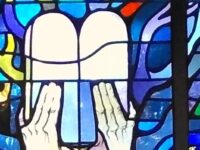
When Moses climbs the mountain, God commands him to construct a Tabernacle for Him, a simple structure of boards and fabric designed to be His dwelling, one that can be easily taken apart and transported should He wish to “move”. The cloud over Mount Sinai shows Moses the heavenly blueprint for the Tabernacle. After descending from the mountain, his face glowing and carrying the tablets, he assembles the Israelites to share what God has disclosed to him, including the specifics on how to erect the Tabernacle amidst the Israelite encampment.
The entire community participates in the work, with women playing a crucial and pivotal role. Designated individuals, like Bezalel son of Uri, endowed with wisdom, understanding, and expertise, along with Oholiab son of Ahisamach, take charge of crafting the Tabernacle’s vessels and the priestly garments. The Israelites contribute with eagerness and open hearts, diligently following every command and fulfilling all requirements, eventually producing more than necessary. They create the tools, garments, boards, skins, fabrics, and all elements of the Tabernacle. Together with Bezalel and Oholiab, they assemble the Tabernacle according to the divine design shown to Moses on the mountain.
Then, something miraculous occurs: the cloud engulfs the dwelling, and the divine presence so thoroughly permeates the Tabernacle that Moses is unable to enter. “Then a cloud covered the tent of the congregation, and the glory of the Lord filled the Tabernacle. And Moses was not able to enter into the tent of the congregation, because the cloud abode thereon, and the glory of the Lord filled the Tabernacle.” (Exodus, 40:34-35).
The Tabernacle stands at the heart of the Israelite encampment, enriching its surroundings. This marks the inaugural occasion of a divine presence dwelling on Earth. While God had appeared to individuals like Abraham and Moses previously, He had not established a permanent presence. The consecration of the Israelites as a chosen people makes it possible for God to reside among them. This represents a significant shift in the world’s destiny, facilitating prophecy, the guidance of humanity, sanctification, and redemption.
However,, a crucial aspect of God’s earthly presence remains unaddressed: He is not tied to any specific location. The Tabernacle is designed for mobility, a structure easily dismantled and reassembled. While a simple tent could have sufficed, the divine preference was for a more complex construction of wood and metal, yet it was fitting for a nomadic existence in the desert. This raises the question: Why did the Tabernacle continue in its original form for three and a half centuries after the Israelites reached the land of Israel, instead of being immediately replaced by a permanent Temple? The continuation of the Tabernacle in its desert configuration was not merely practical; it symbolized a phase in the nation’s spiritual development, a phase that was only transcended during the reigns of Kings David and Solomon.
In the subsequent chapters, we will detail the architecture of the Tabernacle, its spiritual significance, the array of sacred vessels utilized within, and the rituals conducted by the Priests and Levites. We will explore the symbolic meanings of the plants, animals, and inanimate elements featured in the Tabernacle, the emergence of artistry and craftsmanship, its impact on the environment, and more. While the descriptions may occasionally become technical, the unraveling mystery of the Tabernacle is sure to stimulate your imagination.
The Tabernacle embodies both the structure of the spiritual human and the spiritual organization and framework of the universe, reflecting two aspects of God’s manifestation that mirror each other. It reveals the spiritual form of humanity as it was in the Garden of Eden, indicating a possible return to our primal and elevated state. Simultaneously, it serves as a portal to other dimensions, a site where the supernatural manifests in varied forms, offering a path for the transformation of matter back into spirit. To grasp the essence of the Tabernacle, it’s crucial not to overlook its religious and miraculous dimensions while delving into the specifics of its construction, the rituals performed within, and the sacred objects used.
The structure of the Tabernacle
The Tabernacle, a sizable and extended hut, was overshadowed by the Shekinah cloud, yet the divine presence demanded a much broader space for containment. Thus, a courtyard known as “Ezrat” encircled the Tabernacle, integral to the sanctuary’s layout. This enclosure was bordered by a textile barrier upheld by 56 pillars, measuring 100 cubits (approximately 50 meters) in length and 50 cubits (around 25 meters) in width. This expanse was ample to accommodate the Shekinah and provided a setting conducive to worship.
Within the courtyard (Ezra) were positioned the Altar and the laver, where sacrificial rituals took place. The entrance to the Ezra faced east, spanning 20 cubits (approximately 10 meters) wide, and was concealed by a curtain. Entrance to the Ezra courtyard was strictly for worship activities. Likely situated to the east of the courtyard was the tent of meeting, where Moses and the elders convened, though sources on this detail vary, with some suggesting that the tent of meeting and the Tabernacle were one and the same.
The Tabernacle measured 30 cubits (approximately 15 meters) in length and 10 cubits (about 5 meters) in width, draped with four types of coverings: linen, goat hair, ram skins dyed red, and tahash skins. The identity of the tahash is uncertain. Some interpretations suggest it was a miraculous, pure animal, appearing solely for the Tabernacle’s construction and vanishing afterward, akin to how Manna, the miraculous sustenance, that emerged only during the desert wanderings and ceased thereafter. A single tahash skin was reportedly sufficient to cover all the Tabernacle’s textiles. Opinions vary, with some identifying the tahash as a giraffe, while others contend it was the mythical unicorn. Regardless, the Tabernacle’s vessels and the Ark of the Covenant were enveloped in tahash skins during transit.
The fabric that served as the Tabernacle’s initial covering (roof) was crafted from woven fibers made of twenty-four threads in four colors: blue, purple, crimson, and likely white. This fabric mirrored in color and composition the veil, a type of curtain that divided the sanctuary (Holy of Holies) from the Hall where worship occurred and where the sacred vessels were kept. Woven into this cloth were figures of cherubim, depicted as a lion on one side and an eagle on the other, visible from within the Tabernacle
By the very act of weaving the fabrics and setting up the Tabernacle’s four roof coverings, it was believed possible to harness energy, akin to the special tents utilized in shamanic traditions. I propose that the curtains enveloping the Tabernacle symbolize the heavens, which are said to comprise four spiritual layers or dimensions. In Kabbalistic thought, these curtains correspond to the four worlds involved in the creation of our realm: Emanation (Atzilut), Creation (Beriah), Formation (Yetzirah), and Action (Asiyah). The inclusion of eagles, lions, goats, stags, and Tahash in the designs and materials evokes the four creatures surrounding the throne of God, as witnessed by Ezekiel in his vision of the Merkabah (chariot).
The interior of the Tabernacle was segmented into two areas: the larger section was the hall, measuring 20 cubits (approximately 10 meters) in length and 10 cubits (about 5 meters) wide. At its entrance stood five pillars of wood overlaid with gold, resting on bronze bases, and it was enclosed by a fabric curtain. Within the hall were placed the Menorah, the Table of Showbread, and the Altar of Incense, where the daily rituals of the Priests took place. The second, more secluded part was the Holy of Holies – the Devir, a cubic space that contained the Ark of the Covenant. It was demarcated from the hall by a dense fabric curtain and four columns of wood, also overlaid with gold and set upon silver bases.
The Holy of Holies, a cubic space, stood at 10 cubits (about 5 meters) in height, width, and depth, housing the Ark of the Covenant, which was topped by two cherubim. Contained within the Ark were the two stone tablets of the covenant, Aaron’s rod, a jar of Manna, and possibly the first set of broken tablets. Adjacent to the Ark, a jar of the anointing oil was positioned.
Drawing a parallel between the Tabernacle and the human body positions the Holy of Holies as the head; here, the two cherubim atop the Ark of the Covenant symbolize Hokhmah – wisdom and Bina – understanding, akin to the right and left hemispheres of the brain, while the divine presence between the cherubim represents the Keter – crown sefira, situated above the head. The hall mirrors the body’s upper portion; the Menorah embodies the Hesed – Mercy sefira and the right hand (symbolizing giving), whereas the Showbread Table corresponds to the Din – Justice and judgement sefira and the left hand (denoting receiving). The incense Altar aligns with the Tife’ert – Glory sefira, reflecting the heart and lungs (the rhythmic components within us). The two pillars at the entrance are likened to the the two legs that represent Nezach – victory and Hod – splendour sefirot. Meanwhile, the act of coming in and going, worship and sacrifice in the courtyard represent the Yesod – foundation and Malchut – Kingdom sefirot, symbolizing the male and female aspects, respectively.
The division of humanד into body and soul, and of the universe into material and energetic realms, is mirrored in the contrast between the Menorah, symbolizing spirituality, and the Showbread Table, representing the physical realm. Positioned along the Tabernacle’s horizontal axis, these two items encapsulate this duality. Moreover, this dichotomy extends along the Tabernacle’s longitudinal axis; with the Altar, bearing the eternal flame and hosting the physical act of sacrifices, located on the eastern side, and the Holy of Holies (Devir), the source of spiritual illumination, on the western side. Between these two extremes, varying degrees of holiness and a journey of purification and growth are symbolized by the progression from the use of bronze in the East (exterior) to silver and gold in the West (interior), the evolution from the sacrificial offerings of animals and plants in the East to the burning of incense in the West, the transition from physical sustenance in the East to spiritual nourishment (Manna) in the West, and more.
Beyond symbolizing the spiritual human, the Tabernacle—like other temples in antiquity—also embodies the cosmos and the creative act, hosting four tiers of existence: inanimate, vegetative, animate, and rational (human). Its rituals engage with the four fundamental elements: earth, air, water, and fire. The copper Altar, filled with earth, signifies the earth element; the eternal flame above it represents fire; the water basins in the courtyard embody water; and the air is symbolized by the smoke from the incense Altar. Furthermore, the Tabernacle’s covering reflects the firmament, and its surrounding fence demarcates the world’s limits. The construction of the Tabernacle mirrors the creation from chaos, with the Ark of the Covenant and its stone tablets at its core, symbolizing the initial spark of creation. This concept mirrors the belief in humans as comprised of body and soul—the body formed first, followed by the soul’s entry, a process recapitulated in the Tabernacle’s erection: its physical structure was assembled first, and then it was imbued with spiritual significance as the divine cloud, through which God communicated with Moses on Mount Sinai, filled and transformed it.
Distinct from other temples of the ancient world, the Tabernacle was designed for mobility. Periodically, the cloud would lift, signaling the Israelites to gather their possessions, dismantle the structure, and move, following the cloud to its next chosen location. The Tabernacle’s structure was composed of 48 gold-plated wooden planks, interconnected by hooks and anchored to the ground with silver bases. This interlocking of planks symbolized the unification of the universe’s disparate elements into a singular divine entity, a union that could be disassembled and reassembled as necessary. The choice of wood for its construction drew on the imagery of the universe as a Cosmic tree and referenced the Tree of Life in the Garden of Eden, among other associations.
Magical aspects in the structure of the Tabernacle
Despite Moses introducing a form of mystical religiosity to the world, elements of magical religiosity can be found within the worship and structure of the Tabernacle, which subsequently influenced Temples. There are notable parallels in the practices, architecture, and artistic expressions between the Tabernacle (and later Temples) and those of the great Temples in Egypt and Mesopotamia. This connection is not incidental; it has led to Jews being regarded throughout ancient history as masters in the realms of magic, incantations, and the theoretical invocation of forces.
One foundational principle in magic posits that energy requires matter to manifest and operate through. Conversely, this law also suggests that matter can summon energy. When we view the Tabernacle from this perspective, intriguing insights emerge: Initially, acacia wood was selected as the primary construction material for the structure. Acacia held sacred significance in ancient Egypt, symbolizing the god Horus, who was believed to have concealed himself within its branches during his youth. Historically, certain trees were revered as sacred, serving as “dwellings” for energies, while others were not. This reverence is echoed in the names of common trees in Israel, such as Ella (Pistacia) and Alon (Oak), which derive from the name of the supreme Canaanite deity – El.
Trees resonate deeply with our subconscious, symbolizing the spiritual structure of the universe and mirroring our own spiritual framework. This connection led the ancient inhabitants of the Land of Israel to revere trees, worshipping their gods “under every green tree”. Such veneration of sacred trees and groves is a common thread across various cultures, including those of Egypt and the Celts. Moses’s encounter with the burning bush illustrates that the deity, known as “I am that I am”, is inclined to inhabit trees (or bushes, as the exact nature of the burning bush—whether tree or bush—is not clearly defined). Therefore, choosing a specific type of tree as the construction material for a sanctuary intended to be a vessel for divine presence is fitting.
Energy can utilize wood as a conduit, but fabrics too serve as anchors, making the coverings of the Tabernacle, which were discussed earlier, another means for summoning energies. This concept parallels the garments of the high priest, which elevate him above an ordinary priest, much like the robes of a wizard in Harry Potter. The Tabernacle featured four layers of coverings, with the innermost one crafted from four types of yarn in four distinct colors. This setup can be interpreted not merely symbolically but as a deliberate magical configuration.
Metals serve as potent tools for summoning energies, particularly when arranged in specific patterns, such as spirals. Due to their high conductivity—not just of physical electricity but of spiritual energy as well—metals like copper, silver, and gold are used intentionally in various parts of the Temple, mirroring alchemical and magical traditions found in Egyptian Temples regarding metal usage. The wooden planks composing the Tabernacle were overlaid with gold and set upon silver bases. This application extended to areas not visible to observers, indicating that the incorporation of metals aimed beyond mere aesthetic appeal. The use of gold-plated wood rendered the structure a conductor; the copper and silver bases linked the Tabernacle to terrestrial energies, creating an energy field capable of containing the Shekhina. This magical perspective offers an alternative explanation for the use of precious, albeit not the most durable, materials in its construction. Furthermore, metals were perceived as celestial materials; according to the Bible, gold exists in heaven: “And the gold of that land is good: there is bdellium and the onyx stone” (Genesis, 2:12), underscoring their esteemed and mystical significance.
Copper is prominently used in the Tabernacle’s exterior elements, such as the Altar, the water basin, and the bases of the fence columns, while the interior features silver and gold. The progression from silver in the bases of the Tabernacle’s 48 beams to copper in the bases of the courtyard’s 56 columns can only be explained through a magi-energetic perspective. Historically, metals have been revered as sacred from prehistoric times, often linked to celestial bodies. Thus, in various ancient temples, worship objects were crafted from metals, with gold typically symbolizing the sun, silver the moon, and copper associated with the planet Venus.
Besides the magical application of materials, the Tabernacle also contained miraculous items like Aaron’s staff, the pot of Manna, the jar of anointing oil, and most notably, the stone tablets inscribed by God’s finger. These tablets, along with fragments of the first ones, were said to be made from a miraculous substance not of this world. The Ark of the Covenant was itself a magical-energetic device, and its inclusion within the Tabernacle greatly intensified its energies. This concept of magical energy is reflected not just in the materials chosen for use, but also in those specifically excluded from the construction, such as iron.
The intent behind constructing the Tabernacle was to create an energy device that would impact its environment. The Holy of Holies, a perfect cube measuring 10 cubits on each side, was encased on three sides by gold-plated boards set on silver bases, and on the fourth side, it was bounded by five gold-plated wooden pillars and a curtain. Within this space sat the Ark of the Covenant, also made of gold-plated wood and equipped with carrying poles, extending from one end near the curtain to the opposite wall. Essentially, this configuration can be likened to an energetic lamp, with the Ark acting as the coil, the walls forming the lamp’s body, and the Shekinah’s presence, manifested as a cloud above, serving as the electricity powering it.
This sacred magical setup was retained when the wooden Tabernacle was succeeded by a stone Temple during King Solomon’s reign. Despite the structure being entirely stone, for the energetic reasons previously outlined, the Holy of Holies was lined with gold-plated cedar wood, another sacred tree. The Holy of Holies in the Temple was a perfect square, yet doubled in size compared to the Tabernacle, measuring 20 cubits by 20 cubits. It housed two large gold-plated wooden cherubim, whose combined wingspan matched the room’s width of 20 cubits, creating a flame lamp effect similar to that in the Tabernacle, but on a larger and more refined scale.
The worship conducted in the Tabernacle also had a magical-energetic dimension. Incense burned within sent fragrant smoke upwards, a classic means of awakening and invoking divine forces. The bread on the Showbread table and the sacrifices made on the Altar outside both served to absorb negative energies. Simultaneously, the light from the Menorah, the anointing oil, Aaron’s staff, the pot of Manna, and the stone tablets of the covenant acted as conduits for summoning angelic energies.
The Priests, versed in the Sacred names, would utter them during sacrificial rites and prayers (a topic we’ll delve into further), aiding in the invocation of divine energies. The Tabernacle’s rituals were enhanced by the Levites’ chants and the backing of the Israelite community. Miracles were a daily occurrence, such as sacrificial smoke ascending directly to heaven regardless of wind direction, and the sacrificial bread remaining fresh for a week, among others. It was through the magical-energetic attributes of the Tabernacle that a direct link between humans and the Shekhina—or, put another way, God—was established.
The Altar and Water Basin in the courtyard
To delve deeper into the Tabernacle’s mysteries, we will explore the various components and vessels within it, their functions and significances, starting from the exterior and moving inwards through the different sections of the sanctuary. The vast majority of the great courtyard lay to the east of the Tabernacle, housing the Altar and the water basin. This area was accessible to anyone wishing to offer a sacrifice, assuming they were pure and adhered to moral laws. The sacrificial Altar, known as the Ola Altar, stood 3.5 meters tall with a base area of 2.5 meters squared, featuring a sloped ramp for access. Constructed from acacia wood panels encased in copper, the Altar’s interior was hollow. Upon each relocation of the Tabernacle, the Altar was filled with soil from the current location. Upon the signal to move, as indicated by the cloud, the soil was removed, and the Altar’s copper structure was transported via long poles to the new site, where it was again filled with local soil. This process established a connection to the unique energy of each location.
The Altar was the site where the Tamid (continuous) sacrifice was offered twice daily, in the morning and at dusk. After sunset, the remnants of the sacrifice were burnt and incensed. Conducting sacrificial rites was the principal duty of the Priests, constituting the most significant religious activity during the periods of both the Tabernacle and the Temple. Besides the regular sacrifices, there were also Hasham (guilt), Chatat (sin), and Shelamim (peace) offerings involving animals, in addition to grain and plant sacrifices. Through these practices, the Altar served as a bridge linking the earth and all its inhabitants—animals and plants alike—to the divine.
In addition to Earth, the Tabernacle was intertwined with the spiritual qualities of the other three elements: fire, air, and water. Upon its construction, a sacred fire descended from heaven onto the Altar, which the Priests have maintained alight ever since. Even as the Altar was relocated, the Priests ensured this fire continued burning. Within the Tabernacle stood the Menorah, representing a more refined expression of fire through its light.
Situated in the courtyard and exposed to the winds and elements, the sacrificial work on the Altar was carried out regularly, regardless of the conditions. Even when winds prevailed, the smoke from the Altar ascended vertically, forging a link between heaven and earth, akin to the cloud that hovered above. This cloud was sustained by the smoke rising from the incense Altar within the Tabernacle. The smoke, pleasing to God, connected the Tabernacle with the air element, symbolizing the ethereal bridge between the divine and the earthly.
Water played a crucial role in the Tabernacle through the copper basin situated between the Altar and the entrance. This basin, crafted from the copper mirrors donated by the daughters of Israel, held pure spring water for the purification of the Priests. Ancient beliefs held that water could encapsulate energy, serving as a reservoir for spiritual forces, a concept that led to the inclusion of water basins or lakes in temples across the ancient world. This tradition underpins the use of sacred water, a practice that persists in Christianity today. Researcher Michael Schwartz notes that ancient cultures commonly believed gods and powers dwelled in or near water sources. In Jewish magic, there is a practice of gazing into shimmering water, while other cultures engaged in divination by observing reflections in water, sometimes within a bowl. Subsequently, in the construction of the Temple, a vast water container known as the “sea” was erected, a colossal basin capable of holding thousands of liters and supported by twelve life-sized copper bulls.
The sacrificial rites in the courtyard engaged all four elements: the Altar was laden with earth, ignited with fire, purification rites involved water, and the smoke from the offerings ascended to the heavens. These elements are symbolized by the four gold-plated wooden pillars at the entrance to the Holy of Holies, as well as other instances of the number four within the structure, such as the four layers of coverings over the Tabernacle. Ancient beliefs held that life comprised four categories: human (speaking), animal (living), plant (vegetative), and non-living (inanimate), and that matter existed in four states: solid, liquid, gas, and energy. In Jewish Kabbalah, our world is composed of four worlds: Emanation, Creation, Formation, and Action.

The animal world in the Tabernacle and the Sacrifices
The courtyard of the Tabernacle served as the venue for sacrifices, raising the inquiry: Why does God require animals to be sacrificed to Him? This leads to questions about the role of the animal realm within the Tabernacle and the ideal nature of the relationship between humans and animals.
Viewed through a secular lens, the Tabernacle might be perceived as a harsh and nonsensical place of slaughter, where numerous innocent animals are sacrificed weekly. However, the reality is far from this notion. Rather than permitting indiscriminate animal killing, God confines the act to the Tabernacle and only within the context of a religious ceremony that sanctifies their spirits. The Altar serves as a means of atoning the soul. As stated in the Book of Leviticus, even animal slaughter for consumption is deemed a sacred act and was initially mandated to occur at the Tabernacle’s entrance. This directive was later modified, but the foundational principle allowed only the consumption of meat dedicated to God. This approach bears similarities to the perspective held by some Indigenous cultures towards animal killing, where it is permitted solely for sustenance, yet it must be conducted with proper gratitude and a request for forgiveness.
In the Tabernacle, three main types of sacrifices were observed: olah (burnt offering), asham (guilt offering), and chatat (sin offering), highlighting the distinction between personal guilt and sins that might be committed unintentionally. To sustain the energy of the Tabernacle and the Temple, as well as the people and the land of Israel, sacrifices were made twice daily—at the start and end of the day’s activities. This routine offering was known as the Tamid (continual) sacrifice, the most significant and primary of all sacrifices. Besides these, there were Shelamim (peace) offerings, which were considered less sacred, allowing their meat to be consumed outside the Tabernacle or Temple precincts. These included alms Shelamim, holiday Shelamim during the three major festivals, and more. Firstborn offerings and tithes were also made, primarily serving the needs of the Priests, along with the Passover sacrifice. In addition to animal sacrifices, plant offerings were also presented.
The lamb was the most commonly sacrificed animal, offered twice daily in the Tamid sacrifice. Occasionally, a ram was sacrificed, such as in cases of theft or when making religious vows. Goats were also used, notably the scapegoat during Yom Kippur, which involved sending a goat into the desert to atone for the sins of all Israel, culminating in its being cast off a cliff. Bull sacrifices were reserved for special instances, like the asham offering for idolatry, the Shelamim offering to honor the anointing of the high priest, the asham for a Sanhedrin error, and the Shelamim for the community.
Eliade posits that the religious individual often transforms every action into a sacrifice that consecrates mythical time. The act of consecrating a space is achieved through worship and ritual, with the quintessential archetype being the offering of a sacrifice. This underscores the significance of sacrificial practices in ancient temples. In contemporary times, however, the act of sacrifice has become more abstract, with physical offerings being supplanted by prayer and rituals.
For a location to attain sacredness, it necessitates consecration through sacrifice. This act of sacrifice purifies the area, establishing the reality of a sacred space. Following this, the repetition of the divine sacrifice is necessary to reaffirm the act of establishment. The ritual of construction mirrors the act of creation itself, with the sacrifice serving to animate it. Without this animation—without imbuing it with a soul through sacrifice—nothing can endure. The foundational ritual of construction is modeled after the sacrificial offering made at the inception of the world. Subsequent ritual repetitions of this act of consecration serve to annul the passage of time, erasing history and returning to a primordial state before time began.
According to the Torah, one purpose of humanity’s creation is to exercise dominion over other animals. In the first chapter of Genesis, God declares: “Let us make man in our image, after our likeness: and let them have dominion over the fish of the sea, and over the fowl of the air, and over the cattle, and over all the earth, and over every creeping thing that creepeth upon the earth.” (Genesis 1:26). This divine image is expressed in humans through their rightful stewardship over the animal, inanimate, and plant kingdoms, a responsibility actualized through the sacrificial rituals conducted in the Tabernacle by the Priests and Levites.
Genesis chapter two presents a remarkable narrative on the relationship between humans and animals. In this story, man exists alone in the world and seeks companionship. Animals are created to provide companionship and prevent man’s solitude, their souls intertwining with his. The act of naming by man bestows upon these animals a living soul. However, when it becomes apparent that animals alone cannot fulfill man’s need for companionship, God creates a woman from man’s rib: ” And the Lord God said, It is not good that the man should be alone; I will make him an help meet for him. And out of the ground the Lord God formed every beast of the field, and every fowl of the air; and brought them unto Adam to see what he would call them: and whatsoever Adam called every living creature, that was the name thereof. And Adam gave names to all cattle, and to the fowl of the air, and to every beast of the field; but for Adam there was not found an help meet for him.” (Genesis 2:18-20).
The significance of animals and plants is reflected in the Tabernacle’s decorations. Figures of an eagle, a lion, and various plant motifs adorned the lower cloth covering of the Tabernacle. These embellishments underscored that the Tabernacle was designed as a microcosm of the world and its inhabitants, highlighting the interconnectedness of all things under divine oversight. This central placement of plants and animals in the Tabernacle’s design was not because these creatures were associated with specific deities, as was common in Egyptian temples, but rather to symbolize the comprehensive scope of the divine realm.
Certain aspects of the Tabernacle’s rituals bear similarities to the divine animal worship observed in Egypt. The ritual of burning the red heifer, for instance, echoes the worship of the Apis bull, a deity’s representation in Egypt. This red cow was burned east of the Tabernacle’s entrance, and its ashes were the sole means of purifying the defilement from contact with the dead. Just as the red heifer with specific traits was sought throughout the land, the Apis bull was selected based on particular characteristics among all of Egypt’s bulls. Another notable instance of animal veneration is the golden calf episode at Mount Sinai, which, despite being considered an act of apostasy, finds a parallel in the Temple of Jerusalem, where Solomon placed twelve copper bulls under the “sea” — a large basin — highlighting the complex relationship between animal symbolism in religious practices across different cultures.

The Menorah in the sanctuary
From the outside, the Tabernacle resembled a large tent, its exterior fully enveloped by cloth sheets, with a cloth curtain marking the entrance. However, stepping inside revealed a starkly different and marvelous environment. The interior walls shimmered with gold, and directly ahead stood a splendid curtain adorned with cherubs. Gazing upward, one could see lions and eagles intricately embroidered into the fabric, crafted from four colors. The room housed remarkable objects, most notably the golden Menorah—its design revealed to Moses on the mountain in the form of fire—alongside the gilded incense Altar and the Showbread table.
The Menorah stood as tall as a man, featuring a hexagonal base and seven branches—six extending from a central stem. Josephus Flavius interpreted the Menorah as symbolizing the seven planets visible to the naked eye that move across the night sky against the backdrop of fixed stars: the Sun, Moon, Mercury, Venus, Mars, Jupiter, and Saturn. The outer planets, like Uranus and Neptune, were invisible to the ancients and hence unknown. Josephus elaborated that these planets contribute all the light in the world. The central stem of the Menorah represented the Sun, with the six surrounding branches mimicking the orbital paths of these planets around it, which is why the branches are round.
The shape of the Menorah’s branches—whether round or straight—sparks debate. I lean towards Josephus Flavius’s interpretation of them being semi-circular, reflecting not only the shape of the rainbow, which symbolizes the initial covenant between God and humanity, but also resembling the structure of a tree, with branches extending from a single trunk. Crafted from a single piece of pure gold, despite its intricate design, the Menorah symbolized the unity of the universe and its connection to the energy of the sun. However, the light emanating from the Menorah represented a spiritual, supernatural light—the same hidden light created on the first day of Creation, predating the sun’s formation on the fourth day.
The Menorah featured three types of decorations on its branches and central stem: cups (adorned with almond motifs), buds (buttons), and blossoms. Each branch displayed three cups stacked vertically, topped with a bud and then a flower. These elements symbolized the lifecycle of fruit: from flower (cup), to fruit (bud), and back to a flower harboring the potential for future fruit, represented by the olive oil lamp at the top. The 22 cups featured almond-shaped decorations (Mandorla), while the 11 buds were spherical, resembling fruit. Thus, both the decorations and the tree-like form of the Menorah connected it to the plant world, symbolizing the state of paradise.
The number seven carries symbolism related to divine order in both the heavens and on Earth, as per ancient religious traditions. This universal governance by seven forces is mirrored in human life and natural law, as well as human perception. The spectrum contains seven colors (as seen in rainbows), the musical scale comprises seven notes, there are seven known metals, seven wandering stars (planets) in the sky, and the concept of seven heavens above Earth and over Jerusalem. In Hebrew mystical texts, these represent seven stages a soul traverses towards God. In Kabbalistic teachings, the number seven corresponds to the seven lower sefirot in the Tree of Life, known as Za’ir Anpin, highlighted in David’s blessing to Solomon for the Temple’s construction: “Thine, O Lord is the greatness, and the power, and the glory, and the victory, and the majesty: for all that is in the heaven and in the earth is thine; thine is the Kingdom, O Lord, and thou art exalted as head above all.” (1 Chronicles 29:11).
The number seven represents the inherent order within the universe, epitomized by the Menorah’s seven branches. However, this structure also symbolizes the divine, spiritual light introduced on Creation’s first day, predating the formation of celestial bodies and the sun, and relates to numbers beyond seven. Our vision, dependent on light, was intended to be refined by the Menorah. This sensory perception, impaired following humanity’s expulsion from Eden, was momentarily restored at Mount Sinai, hence the description of the people being able to “see the voices.” This decline in visual perception is evidenced by our inability to perceive the spiritual realms surrounding and within us, a shortfall the Menorah aims to rectify. Therefore, it illuminated the Showbread table and matched its height in the Tabernacle, underscoring that the physical realm (represented by the bread) is enlightened by spiritual light. The Menorah was likely positioned on an east-west axis, with its westernmost lamp—deemed the most significant—nearest to the Ark of the Covenant, bridging the Shekinah’s sanctity with our world.
Light carries profound significance in the symbolism of spiritual realms, embodying a dichotomous nature as both a source of warmth and illumination. A candle’s flame showcases dual aspects of light: the white light at the flame’s apex, representing the divine and spiritual connection, and the dark or blue light encircling the wick, symbolizing the physical and material realms. Kabbalists describe the interplay between matter and spirit akin to the bond between fire and its light, “like a flame clinging to a coal.” As a candle burns, it radiates light, symbolizing the finite nature of human existence contrasted with the infinite reach of its emanated light. The Mishna recounts a parable likening a fetus in the womb to being illuminated by a candle overhead, with which it studies Torah. The Torah is likened to light, which in gematria (Jewish numerical mysticism) shares a value with the word “raz” (mystery). It is about this interconnection that it is said: “The spirit of man is the candle of the Lord” (Proverbs, 20:27).
In “Jewish Meditation,” Aryeh Kaplan discusses the practice of gazing at a candle flame. He notes that in the luminous part of the flame, colors such as red, yellow, and white are observable, while around the candle’s wick, the color black is seen. With focused observation, a blue hue emerges—this is the color through which prophets in the past were said to have received visions. Being able to perceive this blue light enhances one’s ability to see energies, particularly auras surrounding individuals. The Ha’ari (Isaac Luria), a prominent kabbalist, possessed this skill and referred to auras as “Images.” Kaplan points out that meditation has deep roots in Judaism, although its terminology differs from that of contemporary meditation practices. Terms like intention (kavanah), contemplation (hitbonenut), and solitude (hitbodedut) are traditionally used to describe meditative states.
Aryeh Kaplan notes that in the biblical era, there were schools for prophets where meditation was a key part of their curriculum. These schools housed hundreds of fellow prophets, many of whom came from priestly backgrounds. Above these were the chief prophets, and at the top were the well-known prophets recorded in the Bible. Their capacity to access spiritual realms garnered significant interest and attention. One of the principal instruments for meditation and forging a connection with the prophetic light was the Menorah, situated in both the Tabernacle and the Temple.

The Showbread table
Can food possess a spiritual dimension? The fall from the Garden of Eden resulted in humanity’s curse to toil for their bread, binding our existence to the physical sustenance and, consequently, to the material world with all its uncertainties, sufferings, and desires. This attachment not only brings physical challenges but also distances us from the divine, as the saying goes, “When one has a toothache, there is no talk of philosophy.” Thus, a common goal across religions has been to transcend this dependence on physical nourishment or to elevate it, seeking a form of spiritual sustenance akin to the gods’ ambrosia or a heavenly elixir that could elevate our being. This quest for a spiritual shortcut to transcendence continues to captivate many even today.
Gluttony represents a significant barrier to spiritual growth, a sin to which many succumb to some extent. Even Eve, faced with the temptation, consumed the fruit from the tree of knowledge. Thus, a critical function of the Tabernacle in aiding the rectification of humanity’s fallen state and fostering a return to our original spiritual condition was to introduce the concept of a different kind of nourishment, one that might be termed spiritual, liberating individuals from the chains of earthly desires. Within the Ark of the Covenant lay a pot of “Manna,” a subject to be detailed further, while the area leading to the Holy of Holies, where the Priests performed their sacred rituals, housed a table laden with a special bread known as the “Showbread.” This setup highlighted the potential for spiritual sustenance, distinct from physical food, to support human elevation.
The Showbread, meticulously crafted by designated Priests, held a sacred significance. Baked from semolina without leaven, it was prepared every Friday and laid out on the table in the hall for the Sabbath, underscoring the sanctity of the occasion. Remarkably, the bread remained warm and fresh until the following Sabbath, attesting to its divine preservation. Each Sabbath, the 12 loaves would be replaced with fresh ones, ensuring the table never went empty. This ritual symbolized the perpetual sustenance of the world. As the old loaves were removed, the Priests would consume a small portion, and despite their hunger, even a tiny morsel sufficed due to the miraculous nature of the bread.
The Showbread table, positioned north of the hall in front of the Menorah, although less prominent, was still illuminated by the Menorah’s light. Standing at a height of 75 cm, it held two sets of six loaves stacked one above the other, separated by two goblets of frankincense. With the construction of the Temple, twelve golden shelves were added to the table, and the baking process became more intricate, resulting in bread folded with two faces, hence earning the name “face bread.”
The term “face bread” originates from the concept of correcting the ancient punishment of “by the sweat of your nose you shall eat bread,” with “nose” evolving into “face” as the nose is situated in the center of the face. However, “face” also alludes to inner correction. The table served as a catalyst for blessings to permeate all foods globally, signifying an awakening from below. It’s crucial to grasp that the bread was not merely symbolic but a magical instrument. While the Menorah embodied grace, expansion, and generosity—the Hesed sefira—the bread embodied judgment, reduction, and acceptance—the Din sefira. Through its preparation, the bread underwent a refinement and spiritualization process, elevating it to a higher plane where the spirit of life could infuse it. Thus, consuming it imparted spirituality within.
The progression from the outer areas of the Tabernacle and Temple to the inner sanctums is reflected in the symbolism of bread: Outside, on the Altar, there’s a physical offering of semolina bread; Inside, within the Tabernacle and Temple, there’s the spiritual sustenance of Manna; And in the transitional space of the hall, there’s the face bread—a blend of physical and spiritual, symbolizing the journey from the material to the divine. This progression signifies the transition from the external realm to the sacred interior of the Tabernacle (or Temple).

The Golden Altar of Incense
In the hall of the Tabernacle, three significant objects were present: the Menorah, the Showbread table, and the Golden Altar of Incense. Unlike a typical Altar, the Altar of Incense didn’t serve for Sacrifices; instead, it facilitated the burning of incense, which was more than just symbolic—it had the power to summon energies, connecting to the spiritual essence of trees and plants. Positioned in the center of the hall, facing the Ark of the Covenant on the other side of the veil, it represented a refinement of the larger Altar in the courtyard. Similar to how the Menorah refined the courtyard’s fire Altar and the Showbread refined the semolina offerings, the Altar of Incense elevated the spiritual significance of the Tabernacle. Incense was burned on this Altar twice daily, filling the space with its fragrant smoke, which was believed to possess healing properties.
The Altar of Incense stood at a height of two cubits, with a width and length of one cubit each. It featured small hoops where carrying poles could be inserted for transportation purposes. Geometrically, the Altar comprised two squares, one above the other, symbolizing its dual nature—divine and spiritual as the scent of the incense, and human and physical as the smoke it produced. Positioned centrally in the Temple, between the Menorah and the Showbread table, it drew from both of these elements. Some accounts suggest that the Altar of Incense in the Temple differed from that of the Tabernacle, being made of stone and permanently attached to the floor, resembling the Altar in the courtyard of Ezra.
Incense holds significant importance across various religions and cultures as a means of summoning energy to sacred places and temples. Its use has been integral to religious ceremonies since ancient times and played a crucial role in the rituals of temples worldwide. Typically made from tree resin and other plant parts, incense was crafted into a special blend of 11 ingredients for use in the Tabernacle and Temple. Its potent fragrance was so intense that it caused goats in Jericho to sneeze when burned. The preparation of this incense followed a method outlined in the Bible, with strict prohibition against the use of foreign incense.
The significance of incense lies in its appeal to the sense of smell. While all senses were compromised after Adam and Eve’s expulsion from the idyllic state of the Garden of Eden, the sense of smell remained intact. However, the essence of the Tabernacle lies in rectifying the senses: sight through the Menorah, hearing through the trumpets, taste through the spiritual bread and Manna, and touch through the fabrics, metals, and materials within it. In this context, the Altar of incense serves as a means to correct the sense of smell, evoking ancient memories of paradise and holiness.
Among the five senses, taste and touch are primarily linked to the body, while hearing and sight extend outward. Smell, however, operates both internally and externally. While many animals heavily rely on smell to perceive and react to the external world, in humans, this sense is relatively underdeveloped. Perhaps for this reason, it’s believed to be the only sense that remained unimpaired after the fall from Eden. Its spiritual nature makes it a powerful tool for connection, which is why incense played such a crucial role in Tabernacle and temple worship.
Smell has a remarkable ability to evoke memories, which can stir hidden and sometimes Religious feelings in individuals, especially when hallucinogenic substances are mixed into incense. In cultures like those of Greece and Egypt, prophecy and communication with the gods were often associated with inhaling incense smoke, which may have contained intoxicants. For instance, the Pythia, a prophetess at Delphi, was known to inhale incense smoke or steam rising from the earth to enhance her prophetic abilities. It’s worth noting that archaeological research conducted in the Jewish Temple discovered in Arad from the days of the First Temple revealed traces of cannabis on the Altar of incense dating back to the 8th century BC.
As the Priests entered the Tabernacle’s dimly lit hall, isolated from its surroundings, they were met with a miraculous light emanating from the Menorah, casting spectacular reflections on the golden walls. Surrounded by the aura of gold and beneath special cloth sheets above their heads, they were enveloped in an atmosphere infused with the fragrance of incense, possibly containing intoxicating ingredients. Clad in their special garments following purification and Sacrificial rituals, all these elements converged to evoke within them a profound spiritual experience. This experience stood alone as a testament to the sacred, transcending mere speculation about energetic presences within the Temple.

The world of plants in the Tabernacle
The construction of the Tabernacle served as a means to rectify the sin of Eden, marking the initial step toward the desired return to our natural and exalted state. It is therefore fitting that motifs of vegetation permeate the Tabernacle’s architecture and vessels, particularly trees reminiscent of the tree of life and the tree of knowledge. The structure itself was crafted from planks of acacia wood, while the Menorah utilized oil derived from olive trees. Resin from various trees and plants adorned the Altar of Incense, and semolina bread adorned the Showbread table. Additionally, the temple received various offerings of fruits, grains, and plants as part of its rituals.
The utilization of wood as the primary material in constructing the Tabernacle evokes the symbolism of the tree of life, a ubiquitous archetype found in numerous cultures. Trees often represent mythical concepts, such as a tree or plant whose fruits grant eternal life. Additionally, trees hold various other symbolic meanings across different cultures. In the Garden of Eden, the tree of knowledge served to distinguish between good and evil, a concept embodied by the Ten Commandments housed within the Ark of the Covenant.
The primary choice of the acacia tree for constructing the Tabernacle may stem from its prevalence in the desert, making it a practical option. However, it’s worth noting that the acacia tree held significance in Egyptian temples due to its association with sacredness and magical properties. This might have influenced the decision to utilize acacia in the Tabernacle’s construction, possibly for its symbolic and energetic qualities. Similarly, specific trees like cedar, cypress, and olive were chosen for the temple in Jerusalem for their perceived spiritual attributes, while others were not considered suitable for this purpose.
Trees indeed serve as a model for the structure of the universe, reflecting a central trunk with numerous branches extending outward. Interestingly, their shape and form bear resemblance to the human body, often described as an upside-down tree. However, beyond mere symbolism, trees were revered in ancient times as sacred entities, believed to harbor energies and deities within their beings. In some cultures, trees were regarded as dwelling places for divine entities, and occasionally even as abodes for the souls of individuals who found sanctuary among their branches.
God’s creation of grass and fruit trees on the third day of Creation, prior to the existence of animals and even before the celestial bodies like the sun, moon, and stars, underscores the significance of plants in the divine order. This importance is reflected in the composition of the incense burned at the altar, which consisted of eleven ingredients. Among these, three were grasses and eight were derived from various trees, primarily from their bark and resin. The tree-derived components included Syzygium, persimmon (cherry), Liquidamber orientalis, Frankincense, Myrrh, Cinnamomum cassia, Commiphora gileadensis, nutmeg, and Aquilaria agallocha. Resin, in particular, was revered as the most potent essence of a tree’s spiritual life. Moreover, other plants were also regarded as manifestations of divinity in ancient times, as evidenced by the inclusion of leaves and flowers from lavender, saffron, and spikenard among the herbal components of the incense.
Since prehistoric times, plants have served diverse purposes, including medicinal and cosmetic applications, weaving, dye production, and clothing fabrication. However, the most crucial role of plants lies in sustaining human nutrition, particularly through grains. Wheat, for instance, has been revered as a Sacred plant since the dawn of agriculture and holds significant importance in the Tabernacle rituals. At the Altar, offerings of semolina, the finest and most refined part of wheat, were Sacrificed. Additionally, within the hall, bread made from semolina adorned the Showbread table. Interestingly, the Holy of Holies did not necessitate wheat, as divine sustenance in the form of Manna was provided. Nevertheless, the presence of the plant world persisted, symbolized by Aaron’s staff, which blossomed with almond flowers.
The vine, a plant yielding wine, held special significance in the Tabernacle, Temple, and beyond. Associated with deity and regarded as a catalyst for change, some even attribute it to being the tree of knowledge in the Garden of Eden. Regardless of its origins, the vine played a pivotal role in religious ceremonies, particularly in the pouring of wine libations on the Altar during Sacrifices. As the wine flowed, the Levites accompanied the ritual with music and song, symbolizing a transition from the physical to the spiritual realm, often altering moods or consciousness.
Flax, a vital plant since ancient times, provided fibers for fabrics and ropes. Revered by the Egyptians for its purity, flax was used to craft linen garments worn by priests, a tradition continued in the Tabernacle. Moreover, the top sheet covering the Tabernacle consisted of woven fabric blending wool and linen threads. These threads, dyed in four colors—white linen, red, light blue, and purple wool—symbolized the fusion of the plant and animal kingdoms.
The olive tree held significant importance in various cultures, including the Greeks, and is even referenced in the deluge story. In the Tabernacle, olive oil served as the fuel for the Menorah’s light and as a base for the anointing oil, underscoring the tree’s sacred status. Additionally, the cherubim above the Ark of the Covenant were crafted from olive wood, contrasting with the acacia wood used for the ark itself.
Finally, the initial directive given to man in the Garden of Eden was, “And the Lord God took the man, and put him into the garden of Eden to dress it and to keep it.” (Genesis 2:15). Thus, mankind’s role is to maintain and safeguard the diverse species of animals and plants, effectively serving as the caretaker of the garden. The significance of plants in the worship of God is underscored in the desert, where the Israelites were instructed to utilize a wide array of plants and plant components in constructing the Tabernacle. Some of these materials were sourced from distant places. Consequently, the Tabernacle symbolized not only the desert deity but also the universal interconnectedness among humanity, vegetation, earth, inanimate elements, animals, and God.