
This is a rudimentary translation of articles from my book “Touching the Sacred” While it is far from ideal, it serves a purpose given the significance of the topic and the distinctiveness of the information contained. I have chosen to publish it in its current state, with the hope that a more refined translation will be available in the future.
Ark of the Covenant
The Holy of Holies within the Tabernacle was a chamber measuring 5×5 meters. It was adorned with gold on three sides. Within this sacred space resided the Ark of the Covenant, accompanied by the pot of Manna, the jar of anointing oil, and Aaron’s staff. Some sources indicate that the pot of Manna and Aaron’s staff were situated within the Ark of the Covenant itself. This chamber was also known as the “Dvir” and was partitioned from the main hall by a curtain, known as the Parokhet, which hung from four pillars made of acacia wood covered in gold plating.
The Holy of Holies was only accessed on Yom Kippur and during special occasions when consultation with God was necessary. If someone entered without purity or failed to adhere to the regulations, it resulted in death, as tragically experienced by Nadav and Abihu, the sons of Aaron. Enclosed within the Holy of Holies was the Ark of the Covenant, above which rested the divine presence, the glory of God. Thus, it served as a gateway to another reality and dimension, to the state of paradise, to the Sacred.
When the high priest entered the Holy of Holies, he would fill the space with incense and linger in profound silence, a moment where the presence of God could be perceived. Symbolically, the Holy of Holies represented the Garden of Eden through the gold-adorned walls and the two cherubs atop the Ark of the Covenant, reminiscent of the cherubs guarding the entrance to paradise. The elongated poles used to transport the Ark of the Covenant made contact with the western wall on one side and the Parokhet on the other, acting as a conduit for the energy within the room, emanating from the presence of the Ark of the Covenant.

The Ark of the Covenant was seen as possessing miraculous abilities and was central to the Tabernacle. It had the potential to bestow blessings, inspiration, and wisdom if the circumstances within the camp and land of Israel were favorable, assist the Israelites in their battles, and perform miracles, such as during Joshua’s crossing of the Jordan. Conversely, it could inflict diseases, disasters, and damage, as experienced by the inhabitants of Beit Shemesh and the Philistines in whose possession it resided, and it could cause the death of those who touched it, as in the case of Uza ben Aminadav.
The Ark of the Covenant was constructed from acacia wood and overlaid with gold, including its special lid known as the “Kaporet”, atop which stood two cherubim crafted from olive wood and also coated in gold. Gold, valued then as it is now, was chosen for its believed energetic qualities. Moreover, gold is among the materials associated with the Garden of Eden, as noted in Genesis 2:12: “And the gold of that land is good.” The two cherubim represented the entrance to the Garden, mirroring the cherubim placed to the east of the Garden of Eden, as described in Genesis 3:22: “So he drove out the man; and he placed at the east of the garden of Eden Cherubims, and a flaming sword which turned every way, to keep the way of the tree of life.”
Between the two cherubim, whose faces were directed downwards towards the Ark of the Covenant, existed an energetic manifestation known as the “Glory of the Lord.” Additionally, there was a presence that hovered over the Tabernacle, binding to it like an anchor, manifesting as a cloud by day and as a towering pillar of fire by night. According to the Midrash, this pillar of fire provided light throughout the Israelites’ camp at night, while the cloud offered shade during the day. Besides improving the physical conditions, this presence also acted as a form of magical protection for the camp and a source of inspiration. Imagining life in such a camp, constantly accompanied by this miraculous cloud, is truly remarkable.
Communication with the presence between the two cherubim was possible, and through this, Moses, or later the Priests, conversed with God. This is stated: “And there I will meet with thee, and I will commune with thee from above the mercy seat, from between the two cherubim which are upon the ark of the testimony, of all things which I will give thee in commandment unto the children of Israel” (Exodus 25:22). Thus, the Tabernacle’s purpose was to facilitate communication with God, receiving messages of guidance and direction from Him.
Here we delve into alternative theories about the Ark of the Covenant’s nature, which draw parallels to the divine boats and arks within the most sacred areas of Egyptian temples, as explored in the section on Egyptian Temples. The boat of an Egyptian god was often a miniature model featuring a rectangular cabin constructed of precious metals, such as gold or electrum (an alloy combining gold and silver), containing the statue of the god. Similar to the Ark of the Covenant, these divine vessels had two long carrying poles attached, facilitating their transportation.
During the Holidays, the boat was part of ceremonial processions, borne by the Priests, and its movements (believed to possess its own volition) served as a basis for their prophecies. Similarly, the Ark of the Covenant, which bears a resemblance, was also transported on poles and was said to have its own desires. When the cloud lifted, the Tabernacle was disassembled by the Priests, who then carried its parts on their shoulders to a new location chosen by the cloud. According to the Midrash, “the ark carries its carriers,” implying that during their desert wanderings, it floated in the air ahead of them, guiding the carriers and the entire caravan to the next destination.
The Ark’s resemblance to the arks of the gods in Egyptian temples, combined with tales of its energetic attributes, has spurred theories suggesting that the Egyptians mastered a form of energy unknown to us today. The Ark of the Covenant is theorized to have been an ancient Egyptian device for generating power. Moses, having been a prince of Egypt, would have had access to Egypt’s secret knowledge. He is believed to have acquired one of these energy-producing devices during the Exodus, as alluded to by the narrative of gold and silver vessels taken from Egypt. He then utilized this device in constructing the Tabernacle and during the revelation at Mount Sinai. The exodus and the establishment of the Tabernacle aimed to generate a new energy field, promoting the continued advancement of humanity, instead of the Egyptian temples, which were thought to have lost their effectiveness and sanctity by that time.
Aligned with these theories, Egypt is considered an advanced civilization possessing knowledge and technology beyond our current understanding. The Egyptians are thought to have constructed the pyramids as power stations for super-wire energy, alongside their temples, during the same era. Through advanced devices like the Ark of the Covenant, the Egyptians were believed to generate energy fields (conductive atmospheres) that could lighten objects, accelerate and improve plant growth, and enhance super-sensory abilities in humans.
However, within the context of Judaism, the significance of the Ark of the Covenant lies in its contents: the Tablets of the Covenant that Moses brought down from Mount Sinai, bearing the Ten Commandments inscribed by God’s own finger. These Commandments serve as the moral compass for humanity and facilitate the eventual redemption and return of humanity to its primordial spiritual state in the Garden of Eden. The tablets stand as a testament to the covenant between God and the Israelites, hence the ark’s designation as the “Ark of the Testimony.”
Essentially, the value of the Ark of the Covenant derived not from the object itself but from the Tablets of the Covenant housed within it. Yet, the true significance lay not in the tablets per se, but in the moral directives inscribed upon them. Thus, without adherence to commandments such as honoring one’s parents and observing the Sabbath, the tablets and the ark lose their meaning and importance. This perspective is underscored by the fact that Judaism persisted even after the Ark of the Covenant vanished during the reign of King Josiah and the time of the prophet Jeremiah. It’s pertinent to note that in the ancient world, alliances between nations, deities, and humans were often symbolized within the Holy of Holies of temples, underscoring the establishment of such sacred spaces. Following this rationale, the primary purpose behind constructing the Tabernacle was to safeguard the Tablets of the Covenant.
Nevertheless, the Ark of the Covenant’s significance and uniqueness are underscored by its dimensions, which incorporate the golden ratio—a dynamic proportion. This contrasts with the ratios employed in the design of other Tabernacle elements, such as the Altar of Incense or the hall itself, which are based on a harmonic and static ratio of two-thirds to one-third, or a two to one ratio.
The dimensions of the Ark of the Covenant, being 1 cubit wide, 1.5 cubits high, and 2.5 cubits long, align with the golden ratio of 1.618. This mathematical ratio underlies the natural growth patterns of spirals in nature, the arrangement of galaxies, marking it as sacred. The golden ratio, symbolizing dynamic relationships, is also present in the geometric shape of the pentagram—a five-pointed star—illustrating the proportion between its arms and the core. This made the pentagram a sacred symbol in Judaism during the First Temple period, associated with the House of David dynasty. Contrary to common belief, the Star of David originally referred to the pentagram rather than the familiar hexagram, as evidenced by its depiction on coins from both the First and Second Temple periods.
The golden ratio is characterized mathematically as an infinite sequence where the relationship between three consecutive numbers is such that the sum of the first two equals the third, and the ratio of the third to the second matches the ratio of the second to the first. Essentially, it involves dividing a line segment in a manner where the ratio of the larger part to the smaller part equals the ratio of the whole segment to the larger part. The sequence of numbers associated with the golden ratio is known as the Fibonacci sequence, which begins with: 2, 3, 5, 8, 13, 21, and so on. The ratio between these numbers approaches 1.618, and adding any two consecutive numbers yields the next number in the sequence.
The Ark of the Covenant, designed with the dynamic proportions of the golden ratio, stands in contrast to the harmonious and static ratio of two-thirds to one-third (2:1) used in other parts of the Temple. This distinction highlights the covenant as a dynamic, continuously renewing relationship between God and human beings, particularly with the Israelites. It symbolizes a pathway through which humanity can grow, develop, and ultimately return to its pristine state in Paradise.

Octave change – from the law of duality to the oneness
According to Lurianic Kabbalah, the creation of the world brought forth two forms of governance: the governance of the circle (symbolizing oneness) and the governance of the straight line (indicating duality by dividing the world into two). The governance of the circle is observable in the heavens and in nature: the sun and moon are round, the Earth is spherical, and life itself is cyclical, with everything eventually returning to its origin. Similarly, our spirit, having originated from God, seeks to return to Him. Humanity’s fall from the Garden of Eden marked the beginning of a quest to return to this state of unity. The soul’s journey is envisioned as circular, mirroring the governance of the circle or the tree of life. While nature in our world reflects the governance of the circle, it does not encapsulate its completeness as seen in the heavenly realms.
The governance of the straight line is linked to the tree of knowledge; it represents a demarcation that delineates good from evil and bifurcates the world, embodying the law of duality that reigns over the world and human existence alike: affirmative versus negative, black versus white, material versus spiritual. Humans are oriented to move and look ahead, thereby splitting their perception into dichotomies: right versus left, ahead versus behind. Our forward-facing vision suggests a life’s journey of advancing while categorizing experiences and decisions into binaries like good versus evil, correct versus incorrect, action versus inaction. At the core of human morality lies the principle to pursue goodness and eschew malevolence.
With humanity’s expulsion from the Garden of Eden, there was a transition from the governance of the circle to that of the straight line, moving from a state of completeness to one of duality, from a purely spiritual existence to a combined physical-spiritual reality. The realm of duality is also a realm of time, characterized by a past, present, and future, with time represented as a straight line. However, the rectification of the world involves a return to the circular governance, a reunion, and this process begins with the reception of the Torah at Mount Sinai. At this pivotal moment, the governance of the straight line peaks with the unveiling of the Ten Commandments, the ultimate manifestation of straight-line governance, delineating right from wrong. This event opens a portal to another realm, towards the governance of the circle, signaled by the divine presence.
The Tabernacle and the Temple were constructed using straight lines, reflecting the governance of the straight line in their outward design. This form of governance is manifested in the laws of the Torah and the acts of worship carried out in the Tabernacle and Temple, notably through the reading of the Torah. However, the essence of both the Tabernacle and Temple relates to the governance of the circle, as their purpose was to facilitate a connection with another world and the sacred reality. The presence of God’s glory between the two cherubim underscores this, with the construction and worship activities directed towards bringing about redemption and the culmination of time.
At the core of the Tabernacle and Temple lay the Holy of Holies, home to the Ark of the Covenant, representing the ultimate manifestation of the governance of the straight line. This was symbolized by the two cherubim positioned above the ark and the two tablets of the covenant housed within it. Yet, nestled between these cherubim existed another element: the Shekinah, the glory and presence of God. This space between the cherubim served as a portal to a different reality, one governed by the circle—it was a gateway to the Garden of Eden.
The governance of the circle manifested in this world through the cloud that enveloped Mount Sinai, from which God communicated with Moses. Existing beyond space and time, the governance of the circle is indefinable and amorphous, making a cloud its most fitting symbol. This ethereal presence, transcending our worldly domain, came to reside between the two cherubim atop the Ark of the Covenant, where it was even possible to engage in communication with it.
One can only speculate about the revelations the cloud imparted to Moses, Aaron, and the elders on the mountain—undoubtedly, it shared knowledge of all that was and all that will be, up to the end of time. It likely unveiled the mysteries of the Torah. It’s no mere coincidence that prophecy in Israel was linked to the Temple, whether through physical presence or in another form, such as dreams. The God present between the two cherubim was the God of the past, present, and future. In Hebrew, the terms for past, present, and future collectively form the word “Jehovah”. This God was the deity of the straight line and of time, which moves inexorably forward, but simultaneously, He was also the deity of eternity, of resurrection, of returning to the origin—the God of the circle.
In the realm where the governance of the straight line prevails, everything manifests alongside its counterpart: there cannot be good without evil, nor black without white, and so forth. The establishment of the Tabernacle, which sheltered the tablets of the covenant, marked the zenith of the governance of the straight line. This apex, however, paves the way for the emergence of a different form of governance – that of the circle. In this alternate governance, opposites cease to exist, and unity prevails, blending all into a singular oneness.

Aaron’s staff
Staffs were among the most pivotal magical instruments in antiquity, and even today, every esteemed magician possesses a magical staff that enhances their capabilities. The staff is believed to possess its own vitality, aligning with the magician’s spiritual level. The tradition of using staffs likely originated in Egypt, if not earlier. The Pharaoh, the ruler of Egypt, wielded several staffs as symbols of his authority. Often depicted with the crook and flail crossed over his chest, he also held the was staff, among others, to assert his power. Likewise, the wise men of Egypt, known as Khartoumim, along with Moses and Aaron, were also known to wield magical staffs.
When Moses and Aaron appeared before Pharaoh, following God’s directive, Aaron cast down his staff, which transformed into a crocodile. The Khartoumim, Egyptian magicians, replicated this feat, turning their staffs into crocodiles as well. However, Aaron’s crocodile consumed all the others. Aaron also employed his staff to turn Egypt’s water to blood and to summon the plagues of frogs and lice. The origin of Aaron’s staff sparks curiosity—was it merely a branch plucked from a tree? If that were the case, from which specific tree was it taken?
Moses, too, wielded a staff (some suggest it was the same one Aaron used, though it was customary for each shepherd to have their own) through which he performed miracles, leading some to call it “the staff of God.” With it, Moses brought forth plagues of hail, locusts, and darkness upon Egypt, split the Red Sea, and drew water from a rock. It’s poetic to think that while humanity’s fall began with eating from the tree of knowledge—a living tree that introduced death—here, branches from a seemingly lifeless tree, the staffs of Moses and Aaron, brought forth new life. According to the Jewish Sages, Moses’s staff was found in the home of his father-in-law Jethro, embedded in the ground, and only Moses could remove it. This staff was part of a lineage of possession that began with Adam in the Garden of Eden.
The tribal leaders of the Israelites in the desert also carried staffs, likely as emblems of their leadership. In an effort to validate Aaron’s and the Levites’ divine selection for the priesthood, Moses requested that each tribal head submit their staff for placement within the Tabernacle. Among the twelve staffs, only Aaron’s miraculously sprouted flowers and almonds. The almond blossom, being the first sign of spring, was fittingly the form Aaron’s staff took. Following this sign, God instructed Moses to position the blossoming staff before the Ark of the Covenant. This act served as a testament to the chosen status and authority of the Priests and Levites, and as a rebuke to the dissent and unrest among the Israelites.
The fate of Moses’s staff remains uncertain, but Aaron’s staff, having endured, was positioned inside the Holy of Holies of the Tabernacle. Alongside it, two other objects of miraculous nature were kept: the Pot of Manna and the jar of anointing oil.

The pot of Manna and jar of anointing oil
The anointing oil, uniquely crafted by Moses, was a one-time creation in history. This oil kindled a spiritual flame and cast spiritual illumination. It was employed to consecrate the entire Tabernacle, its vessels, and the Temple’s vessels, as well as to anoint all Kings and Priests of Israel up until the reign of King Josiah. It is believed that King Josiah was likely the one who concealed the Ark of the Covenant along with the other sacred items within the Devir. This oil was intended to endure until the end of days, showcasing one of the Temple’s miracles: a minimal quantity sufficed indefinitely, thereby prefiguring and symbolizing the miracle of Hanukkah.
The anointing oil was concocted using olive oil as its base, derived from the olive tree, a symbol of peace famously represented by the olive branch the dove brought to Noah’s Ark after the flood. This oil was blended with cinnamon and myrrh (both also used as incense ingredients in the Temple), spiny broom, and fragrant reed (which some believe to be Cannabis), along with potentially other unknown, remarkable substances. A specific quantity of this anointing oil was stored in a jar, placed at the base of the Ark of the Covenant within the Holy of Holies. It is likely that additional jars were kept in the Tabernacle’s storerooms and, subsequently, within the Temple as well.
Adjacent to the jar of anointing oil stood a gold-coated clay pot, holding a portion of the miraculous sustenance God supplied to the Israelites during their 40-year desert sojourn—the “Manna” that descended from the heavens. Ordinarily, Manna would not endure beyond a single day, yet the Manna within this pot was preserved for future generations as a testament to the era of desert wanderings and the miracles that marked that time.
The “Manna” deserves special mention for its representation of spiritual sustenance, a divine refinement of physical nourishment. Jewish texts describe it as resembling small, white, transparent granules, with even a modest quantity proving to be filling. Remarkably, Manna was directly absorbed by the body, bypassing the need for digestion, thereby eliminating waste and safeguarding the Israelite camp from disease and impurity. Regarded as the food of angels, Manna manifested solely during the Israelites’ desert journey, ceasing upon their entry into the land of Israel.
The symbolism of Manna extends to the notion that God tends to our every need, even in times of apparent scarcity. It also serves as a reminder to approach food with reverence and mindfulness. Manna’s versatility is highlighted by its ability to cater to individual tastes, as it assumed different flavors for each person. Descending from the sky each morning, it required nothing more than collection. This stands in stark contrast to the vast amount of energy modern society expends on food-related activities—searching, cooking, serving—often treating food as a form of entertainment or comfort. While some advocate that “food is not entertainment,” our contemporary culture heavily features food-centric entertainment, evident in the proliferation of cooking programs on television.
Manna enabled individuals to focus their energies on more essential matters rather than on food. Consider the tremendous energy, money, and time saved if Manna were accessible to us. In biblical times, life was straightforward:
“Mom, what’s for breakfast?” “Manna from the sky.” “And for dinner?” “The leftover morning Manna.” “What about tomorrow’s meal?” “Manna.” “And for Shabbat dinner?” “Manna!”
And so forth.
Manna facilitated a shift of focus towards spirituality, allowing humans to direct their thoughts towards God. Additionally, the health issues stemming from our preoccupation with food—such as obesity, diabetes, and digestive problems—were non-existent. Each individual gathered only what they needed for the day, without the option of hoarding for the future. The precise daily allocation required faith and trust in the miracle of tomorrow. However, as recounted in the biblical narrative, the Israelites grew dissatisfied with Manna and yearned for culinary variety. Responding to their request, God provided them with a type of small desert fowl, granting them the enjoyment of grilled meat and contentment.
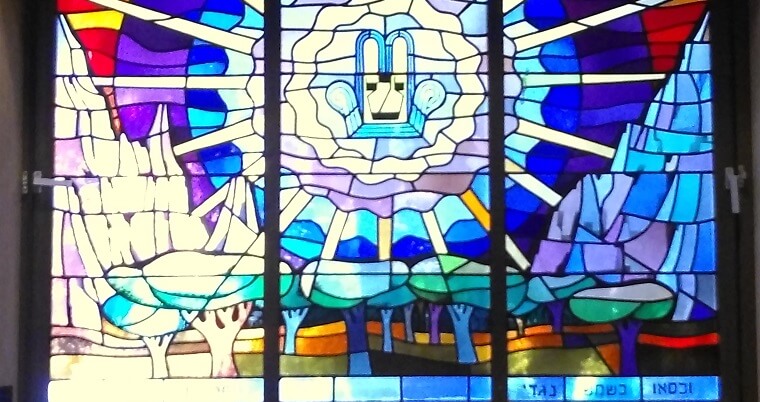
Stones in the Tabernacle
Thus far, we have explored how the Tabernacle was constructed in accordance with the blueprint of the world and the universe, encompassing representations of various forms of life: humans, animals, plants, and inanimate objects. In preceding chapters, we delved into the depiction of the plant and animal kingdoms within the Tabernacle. Now, our focus shifts to the inanimate realm, beginning with the presence of stones and subsequently metals. Within each section of the Tabernacle, there existed a notable representation of a specific form of life. In the Ezra (courtyard) where sacrifices were offered, the predominant presence was that of animals. In the hall, where incense was burned, the plant kingdom took center stage. Lastly, in the Holy of Holies, the focal point was the inanimate world, exemplified by the Tablets of the Covenant and the gold used in crafting the Kaporet—the lid of the Ark of the Covenant—as well as the covering of the walls and the Cherubim.
Stone serves as an archetype that resides within us, symbolizing eternity and divinity, attributed to its hardness, unchanging nature, and resemblance to bones that endure beyond death. According to Eliade, the roughness and solidity of stone render it a Hierophony—a divine revelation—manifesting as an absolute form of existence belonging to the eternal and sacred realm, distinct from the temporal and mundane. Stone embodies the steadfast reality of divinity and the enduring continuity of the world, contrasting with the cyclic renewal symbolized by trees, which represent the sacred power inherent in the cycles of life.
Stones have held sacred significance across cultures since ancient times. In prehistory, they took the form of prominent rocks with distinctive shapes or unique textures and compositions. Later, they were manifested as standing stones, stone circles, dolmens, and menhirs (erect stones). Additionally, stones were utilized as altars and tombstones, serving to demarcate a sacred space and represent a deity. This characteristic is evident throughout the land of Canaan, particularly in desert regions, and is shared among the ancient Semitic peoples. Consequently, representations of deity through stones were found in the Holy of Holies of Canaanite temples that predated the Temple in Jerusalem. Sometimes, these representations comprised several stones or two stones—one narrow and upright symbolizing the male principle, and the other flat and wide symbolizing the female principle.
One manifestation of the sanctity attributed to stones in the ancient world was through stelae—tall and wide stones upon which laws, dedications, commemorative inscriptions, and more were inscribed. For instance, the Babylonian King Hammurabi famously engraved his laws on stone stelae. Pharaohs recounted their achievements on stone stelae. Some stone stelae’s were inscribed with spiritual and esoteric knowledge. Occasionally, the stone itself upon which these inscriptions were recorded was precious stone like sapphire or regarded as miraculous.
According to Jewish sages, the initial tablets of the covenant, those broken by Moses, were crafted from sapphire stone and inscribed by the hand of God. Subsequently, after Moses shattered them, he hewed the second tablets from stone. Upon ascending the mountain a second time, God inscribed the Ten Commandments upon them with His finger. These second tablets were then preserved within the Ark of the Covenant alongside the fragments of the first tablets, serving as the heart of the Temple. Positioned above these tablets, which can be likened to stelae, was the Kaporet made of gold—the lid of the ark—on top of which the two cherubim resided, with the glory of God dwelling between them. It could be said that the stones of the tablets of the covenant acted as an anchor for the divine presence, just as standing stones (Matzeva) did in ancient Canaanite temples for the deity.
The realm of stones is as rich and varied as that of flora and fauna. This diversity is evident in the 12 breastplate stones of the high priest, comprising 12 precious stones of varying types. These stones were utilized to commune with the glory of God, which dwelled between the two cherubim, and upon which the names of the tribes were engraved. When the High Priest entered the Holy of Holies with a question, the letters of the tribe names emitted a supernatural light and provided him with the answer.
The precious stones adorning the high priest’s breastplate were activated by the Urim and Thummim placed on his heart. While it’s uncertain what these were exactly, they might have been a scroll with the name of God or even the stones themselves. Nevertheless, these gemstones in the breastplate are reminiscent of those described in the Garden of Eden, where “there is bdellium and the onyx stone” (Genesis 2:12). Additionally, on the high priest’s shoulders rested two large onyx stones inscribed with the names of the 12 tribes. The nature of the onyx stone remains unclear. As for bdellium, although it’s not mentioned in the Tabernacle, it was linked to one of its functions: prophecy.
Following the construction of the Temple in Jerusalem, the significance of stones heightened, particularly as the Holy of Holies was situated above the foundation rock of the world. The Altar and the entire structure were crafted from stone, but further details on this will be discussed later.

Metals in the Tabernacle
The Sacred architecture of the Tabernacle prominently features three metals: copper, silver, and gold, which are present in various components. The pillars encircling the courtyard featured copper bases and silver rings, while inside the courtyard the Altar and the water basin were made out of copper. The Tabernacle’s walls rested on silver bases, each weighing 50 kg, with acacia wood planks covered in gold serving as the walls themselves. Consequently, the walls had a silver foundation topped with gold. This pattern extended to the five columns at the Tabernacle’s entrance and the four columns at the entrance to the Holy of Holies. The sacred objects housed within the Tabernacle were predominantly made of gold, including the Menorah, the Showbread table, the incense Altar, and the Ark of the Covenant. Additionally, golden and silver trumpets were used in the rituals.
The transition from copper outside the Tabernacle to gold inside it mirrors the alchemical process of refinement and transformation. The pinnacle of this progression is represented by the Kaporet above the Ark of the Covenant and the Menorah, both crafted from pure gold. The transition from copper on the exterior to silver and finally gold as one approaches the Holy of Holies symbolizes ascending levels of Sacredness. According to the alchemical teachings, human life is viewed as a journey of development and transformation from a state akin to base metal to one resembling gold.
In Judaism Gold is regarded as an essential element linked to the Garden of Eden, as referenced in Genesis 2:11: “And the gold of that land is good.” This suggests that the original state of humanity, before the occurrence of original sin, bore qualities akin to gold. Given that the construction of the Tabernacle marked a pivotal event symbolizing the commencement of correction from the fallen state of humanity, it is natural that gold played a central role in this process.
Gold, being a noble metal that does not tarnish or corrode, holds symbolic significance reminiscent of the sun. Its sanctification by humans dates back to prehistoric times, but its importance is particularly emphasized in Egypt, where it is revered as the “flesh of the gods,” signifying the divine presence. In the context of the Tabernacle, the gold was contributed by the daughters of Israel as a remedy for Eve’s transgression in the Garden of Eden. According to Jewish Sages, the sole purpose of gold’s existence in this world is its utilization in the construction of the Tabernacle and the Temple.
Silver, akin to gold, is a noble metal evocative of the moon, and its sacredness dates back to prehistoric times. The interplay between gold and silver mirrors the relationship between the sun and the moon. In Egyptian temples, gold is often linked with the sun, while silver is associated with moon deities like Thoth in Egypt or Sin in Sumer. This connection is further illustrated by the discovery of silver plates dedicated to the Moon God in the ancient temples of Hatzor, the largest city in Israel during the Canaanite period, predating the exodus from Egypt.
Copper, a metal harder than silver and gold, especially when alloyed with other metals like bronze, is renowned for its durability, capable of being beaten without damage. This resilience led to its association with correction and atonement, as it can be polished despite rusting, unlike iron which absorbs rust. The similarity between the words “copper” and “snake” suggests a connection between copper and the serpent in the Garden of Eden. When the Israelites were afflicted by snakes, Moses crafted a copper serpent for their healing. Copper’s mending properties relate to the earthly realm, being utilized in the creation of bronze tools and implements. While gold and silver are linked to the spiritual, copper symbolizes the physical body. Easily mingling with other metals and simple to process, copper is found in the earth’s veins, its distinctive hue tinged with green.
The reparative quality of copper, along with its significant electrical conductivity, held magical significance, making it suitable for use in the Altar and water basin in the Tabernacle’s courtyard. The distinction between gold and copper is evident in their respective purposes: inside the Tabernacle, incense was burned on the golden Altar, symbolizing a spiritual connection through scent, while in the courtyard, animals were sacrificed on the copper Altar. These sacrifices, along with plant offerings, served as acts of atonement for sins and expressions of thanksgiving.
The 56 pillars encircling the Tabernacle courtyard featured copper sills, each weighing 34 kg. Along with the copper Altar and water basin, this amounted to 3.5 tons of copper within the Tabernacle, much of which came from women who donated their mirrors for this purpose. The association between copper and mirrors suggests a connection to the planet Venus, symbolizing beauty. The women of Israel recognized that true beauty is spiritual rather than physical, contributing to their act of rectification for the sin of the Garden of Eden.
One explanation for the abundance of copper among the Israelites, who had recently fled Egypt, is that they borrowed gold, silver, and copper vessels from their Egyptian neighbors before departing at God’s command. This act could symbolize extracting the energy contained within these metals from Egypt. Continuing this analogy, casting these metals into a new mold parallels the transformation of ancient religious beliefs into a new religious paradigm—Monotheism—distinct from that of Egypt. While copper in Egypt was employed for external purposes, such as making mirrors, among the Israelites, it was utilized for internal purposes through sacrifices and the worship of God.
The extensive use of metals to cover the wooden planks and pillars and to craft the vessels served several purposes. Firstly, aesthetically: as the Tabernacle was enclosed in darkness, the polished golden walls reflected the light of the Menorah, creating a luminous ambiance. The Ark of the Covenant, adorned with gold, emitted a spiritual radiance. Secondly, energetically: metals, known for their conductivity, could channel spiritual energy effectively. If the Tabernacle functioned as an energetic apparatus amplifying the presence of the Ark of the Covenant and the glory of God between the cherubim and above the structure, then the strategic use of metals and their placement is logical. From an energetic perspective, it explains the presence of copper column sills on the Tabernacle’s exterior, transitioning to silver sills on the interior. Similarly, the appearance of silver rings on the outside and gold on the inside of the Tabernacle fence aligns with this understanding. While there may be other interpretations, viewing these changes through an energetic magical lens provides a coherent explanation.
Art and craft
While Moses was on the Mountain, God specifically commanded him to engage the craftsman Bezalel, described as “a man full of wisdom, understanding, and knowledge,” for the construction of the Tabernacle. Why did God specifically mention Bezalel by name?
The name Bezalel signifies “in the shadow of God,” suggesting that the closest resemblance to the act of Creation is through the endeavor of art, which can be seen as an echo of Creation itself. True artists dwell in God’s shadow, drawing their inspiration directly from Him. They embody universal truths through their art and craftsmanship. Indeed, according to the Jewish Sages, Bezalel was profoundly knowledgeable in the mysteries of letters, numbers, and it is worth noting, colors and shapes as well. This expertise empowered him to construct the Tabernacle, fashion the sacred vessels, and tailor the garments for the priesthood.
Regarding Bezalel, it was noted that he possessed wisdom, understanding, and knowledge. But what does this entail? “Hochma” (wisdom) and “Bina” (understanding) are two of the top three sefirot on the tree of life, which, along with the “crown” sefira, comprise the trio related to the human head and the three ‘mother letters’—core influences in the alphabet. Wisdom and understanding signify two distinct modes of thought: logical and associative, verbal or visual, corresponding to the brain’s two hemispheres (left and right). Although the world was crafted through the lower seven sefirot, its conception stemmed from the top three. Bezalel engaged with the tangible world, yet his mind aligned with the divine. Moreover, he embodied the wisdom of the heart.
It was noted that Bezalel possessed wisdom, understanding, and knowledge. But what do these terms entail? In Kabbalah, “knowledge” signifies the conjunction of wisdom and understanding, acting as an intermediary phase that bridges the three upper sefirot with the lower seven. Bezalel likely mastered the art of melding the two higher forms of thought, wisdom and understanding, to manifest them in his craftsmanship. From a tangible perspective, he was adept in working with materials like gold, silver, and copper, as well as with stones and wood. He could concoct oils and incense. What set him and his lineage apart was their unwavering dedication. Bezalel, son of Uri, belonged to the lineage of Nachshon ben Aminadav. His father laid down his life in defiance of the sin of the golden calf.
Bezalel followed the directives of God and Moses, yet he possessed the ability to imbue his creations with artistic quality, which may have also contributed to his choice. He was imaginative and guided by his intuition and the inner call of his heart, while also being capable of executing plans effectively and thinking logically. He worked alongside his assistant, Oholiab son of Ahisamach, and with the entire community of Israel under Moses’ leadership, they constructed the Tabernacle over several months. Upon completion, a cloud enveloped the structure.
The covenant and the promise
The Tabernacle was not isolated; it was positioned at the heart of the Israelite camp in the wilderness, and upon their arrival in the land of Israel, it emerged as the focal point of tribal life, serving as a venue for gatherings, offerings, sacrifices, and pilgrimage. Throughout the desert journey, the Levites encamped around the Tabernacle, while the broader community of Israelites encircled them, organized into twelve tribes. Each cluster of three tribes was oriented towards one of the cardinal directions, reminiscent of the twelve bulls that supported the sea in the Temple.
The Tabernacle served as the dwelling place for the covenant between the people of Israel and God, playing a crucial role in maintaining the covenant and the blessings that followed. In Leviticus (26:3), it is stated that adherence to the commandments will result in timely rainfall, bountiful harvests, and safety for the Israelites in their land. This verse, among others in the Bible, suggests that the presence of God in the Tabernacle and Temple would lead to blessings upon the land. These blessings would manifest through natural phenomena, improved human relationships, and the individual’s ability to connect spiritually, contingent upon the observance of the laws outlined in the Ten Commandments.
The religious-magical concepts in other ancient religions and cultures were similar in many ways. The presence of gods in Sumerian temples, for example, was believed to bring blessings to the land. Similarly, the Egyptian god Osiris was said to cause wheat to grow, but this occurred only if his rituals and worship were faithfully observed, including the adherence to moral commandments. In this light, the covenant and promise between God and the people of Israel can be understood not just from a messianic-moral standpoint but also from an energetic-magical perspective. This interpretation is not to say it is the only correct one, but it offers a deeper comprehension of the role of the Tabernacle and later the Temple.
If God’s presence is manifested through the cloud hovering over the Tabernacle, and this presence is summoned to earth by constructing the Tabernacle or later the Temple, then it’s reasonable to suggest that such energy creates an energy field extending tens of kilometers from its location. This field aids in the growth of plants, supports animal husbandry, helps humans to connect with their virtuous qualities, and acts as an energetic-magical shield for the land, somewhat similar to a pharaoh’s curse.
From an energetic-magical perspective, the Tabernacle, followed by the Temple and the Ark of the Covenant within them, were seen as types of energetic machinery that generated a blessed energy field around the Land of Israel. For this machinery to function continuously, it required upkeep through the efforts of the Priests and Levites in the Tabernacle and the Temple. Moreover, the efficacy of this work was contingent upon the moral conduct of the people of Israel. In the realm of magical science, where it’s believed that thought materializes, negative or low-energy thoughts within the Tabernacle’s energy field could lead to its weakening.
For instance, within the sacred area influenced by the presence of the Tabernacle at Shiloh or the Temple in Jerusalem, if many individuals exhibit greed, despite the commandment “Thou Shalt Not Covet”, this creates a disruption in the high spiritual energy, potentially leading to its weakening or corruption. From this perspective, one might comprehend the stringent laws in the Torah, which may seem harsh from an external viewpoint (such as stoning). The concern is the disruption to the spiritual energy, particularly if issues are not addressed when they are minor and are permitted to escalate.
The Tabernacle raises intriguing questions: How are the spiritual energies of our thoughts connected to weather or natural phenomena? Could the collective moral conduct of a large group of individuals have a moderating effect on nature, as implied in the Torah? To the devout, who see God’s governance in every detail of life, this association, while not described as “Magic,” is manifest, notably in rituals like rain prayers. The crucial issue here is the nexus between the material and spiritual dimensions. Jewish mystical thought delves into the significance of the Tabernacle in examining this connection.
The essence of the Tabernacle was the Tablets of the Covenant. The covenant itself could be seen as a few overlapping covenants : the first one is between God and all human beings and is called “the covenant of the sons of Noah” (symbolized by a rainbow), the second covenant is between God and Abraham in which he was promised the land of Israel and that his seed will be multitude, the third covenant is between God and the people of Israel at Mount Sinai revelation, where they we promised to be chosen people if they accept the Torah and keep Gods commandments, and the fourth covenant is between God, Aaron and his descendants, in which they promised to serve in the sanctuary, and thereby become its Priests and upholders. All the covenants were present at the Tabernacle and Temple in one form or another, and this made them universal rather than local.
Of all the covenants, the covenant at Mount Sinai, represented by the Tablets of the Covenant, was the foremost. The profound significance of the Mount Sinai revelation was the onset of redemption, not just for Israel but for all humankind. This process begins by establishing a divine presence on Earth that can direct and guide humanity through the people of Israel, epitomizing the true essence of being a “Light unto the nations.” The construction of the Tabernacle, followed by the Temple, was designed as a key instrument in making the people of Israel a Light unto the nations.

Tabernacle travels
The Tabernacle’s journey with the Israelites through the desert is remarkable in itself. One can only envision how, at each new location, the Tabernacle was reconstructed at the center of the camp: the wooden planks linked together, the Altar filled with local soil, and the cloth sheets laid atop the framework, only to be disassembled later and reassembled at the next site. Each time, the various components of the Tabernacle were transported on carts pulled by oxen, while certain items, like the Ark of the Covenant, were carried on the shoulders of the Priests and Levites.
Upon entering the Promised Land, the Tabernacle was initially stationed for 14 years in Gilgal, likely near Jericho, marking the period of land conquest. After completing the conquests, the Tabernacle was transferred to Shiloh, where it served as a quasi-permanent structure for the next 369 years. In Shiloh, not only did the tribes convene to allocate the land among them, but it also evolved into a central pilgrimage site for the Israeli people. Shiloh became a focal point for gathering and worship, a place where war decisions were made, and national religious festivals were celebrated.
After the Israelites’ defeat at Afek, the Philistines captured the Ark of the Covenant and took it to the Temple of Dagon in Ashdod, then on to the cities of Gath and Ekron. However, the victors’ celebration quickly turned to distress, as calamities struck wherever the Ark was taken. Consequently, after seven months of turmoil, the Philistines decided to remove the Ark from their lands by sending it on a cart to Beit Shemesh, where it also brought about a plague. Having reached their limit, the Philistines then placed the Ark on a cart drawn by oxen and sent it off to Kiryat Yearim. There, the Ark stayed until King David moved it to Jerusalem, intending to construct a Temple. Meanwhile, he placed the Ark in a provisional tent on Mount Moriah.
The Philistines’ triumph in the Battle of Afek led to their capture and subsequent destruction of Shiloh, leaving the settlement abandoned. Consequently, the Tabernacle was reestablished in the priestly city of Nov, likely located in what is now Shu’afat, north of Jerusalem, albeit without the Ark of the Covenant, which remained at Kiryat Yearim. Thirteen years later, the Tabernacle was relocated to Gibeon, where it operated still without the Ark, allowing sacrifices to be made throughout the country, not just at the Tabernacle. Upon the construction of the Temple, the Tabernacle in Gibeon was dismantled, and its remains were interred beneath the site where the Temple was erected on Mount Moriah, to which the Ark of the Covenant was eventually brought from Kiryat Yearim.
The glory of God – Shekinah dwelled between the two cherubim atop the Ark of the Covenant, and since all occurs according to the will of God, it prompts the question: for what reason did the Shekinah permit the Ark of the Covenant to be taken to the Philistine cities of Ashdod, Gath, and Ekron? Why did the Ark allow itself to “fall captive”? And why wasn’t the Ark of the Covenant returned to the Tabernacle in its new locations at Nob and Gibeon, but instead remained in Kiryat Yearim?
It seems the Ark favored Shiloh and Jerusalem over Nob and Gibeon, possibly due to the sacred geography of these places. A visit to the picturesque site of Shiloh unveils one of the reasons the Ark of the Covenant was drawn to it: Shiloh nestles in a valley encircled by mountains on all sides, mirroring Jerusalem’s geography. The circular shape, an archetype of the sacred, is also reflected in the word “Gilgal,” where the Tabernacle resided after entering Israel, further hinting at this preference.
After Shiloh’s destruction, the Ark sought another dwelling, favoring Mount Moriah in Jerusalem for its similar sacred geographical features: a hill in a valley encircled by mountains. This time, however, there was an intention to enhance its conditions, transitioning from a wooden structure to a magnificent stone edifice. After centuries of wandering in the desert, a prolonged sojourn in Shiloh, and an excursion abroad (to the cities of the Philistines), it was time to settle. The people of Israel were ready for a new phase in the manifestation of the Sacred: the Temple in Jerusalem.


