
This is a rudimentary translation of articles from my book “Goddess Culture in Israel“. While it is far from ideal, it serves a purpose given the significance of the topic and the distinctiveness of the information contained. I have chosen to publish it in its current state, with the hope that a more refined translation will be available in the future.
Einan Natufian Village in the Hula Valley
The Hula Valley, located in the northern part of Israel within the Syrian-African Rift, stands out as one of the most conducive areas for human settlement due to its rich and welcoming environment. Characterized by its abundant water springs, plentiful fish in the lake, and diverse animal life in the swamps, this region has been a magnet for ancient humans since their earliest presence on Earth. Consequently, recent archaeological discoveries in the valley have unveiled significant remnants of ancient cultures, including what is believed to be the oldest village known to the world.
At the Benot Ya’akov Bridge site, situated in the southern part of the Hula Valley where the Mountainous Jordan River starts, remains of a Homo erectus dating back 780,000 years were found. These findings are particularly significant as they represent the earliest evidence outside of Africa of human ability to control fire for protection and cooking. Additionally, the site has unveiled remains of ancient and colossal elephants that once roamed the Jordan Valley. Visitors interested in seeing what these elephants looked like, along with other discoveries from the site, can explore the Museum of Ancient Humans located in Kibbutz Ma’ayan Baruch at the northern end of the valley.
The Ma’ayan Baruch Museum houses significant artifacts marking the dawn of human presence in Israel and the onset of agriculture. However, its primary focus is on showcasing a collection from the Natufian village of Einan, located in the southwest of the Hula Valley. The museum’s exhibits feature a wide array of items, including stone tools, figurines, burial remains from the Natufian culture, and a plastered human skull dating back to the early days of agriculture. Architecturally designed to resemble a large cave, reminiscent of ancient human dwellings, the museum is divided into two main sections: one dedicated to archaeological finds and the other to ethnographic displays illustrating the lifestyles of contemporary primitive societies. This juxtaposition enriches visitors’ understanding, offering a vivid tableau of life in early hunter-gatherer communities, paralleled by the practices of modern tribes that maintain similar ways of life.
The Einan village, established around 15,000 years ago, stands as a landmark in human history as the world’s first known permanent settlement. This village featured round structures embedded in the ground, constructed from plant materials like straw and wood, each with a central fire pit and surrounded by basalt mortars, a hallmark of that era. These dwellings, measuring 3-4 meters in diameter, were likely residential spaces. Among these, a larger semi-oval structure with a 7-meter diameter was found, its roof supported by evenly spaced wooden pillars. This structure is believed to have served a communal or ceremonial purpose, possibly functioning as an ancient temple—the first of its kind. Here, the tribe’s elders and wise women might have convened for ceremonies and communal decisions. A notably large basalt crater, found adjacent to this building, suggests communal drink preparation for public gatherings. It’s conceivable that these gatherings involved consuming sacred, perhaps psychoactive, beverages, accompanied by music, drumming, and ritualistic practices.
In Einan, significant burial sites have been uncovered, shedding light on ancient customs and the early domestication of animals. One notable grave is that of a woman buried in a fetal position, with her left hand under her forehead and her right hand raised above her head, touching a four-month-old puppy’s skeleton. This finding represents the earliest evidence of animal domestication and suggests beliefs in an afterlife. Another grave belonged to a man adorned with a bead necklace, seated in a meditative posture reminiscent of practices seen in Eastern traditions. This pose, similar to one found in a 9,000-year-old settlement in Serbia, has led some to speculate that he was a spiritual figure or “guru” who may have died during meditation.
The use of red ochre in several graves and the discovery of offerings like deer antlers indicate ritualistic burial practices. Interestingly, many graves were located beneath house floors and covered with lime, pointing to a deep connection between the living spaces and the dead. Over time, burial customs evolved, including the removal of certain bones or the skull, a practice that persisted into the era of Goddess worship. This evolution in burial methods reflects changing religious beliefs and attitudes towards death and the afterlife.
Adjacent to the Einan site lies another significant archaeological location from the early period of the Goddess culture, known as Bismuth. Many artifacts from Bismuth, including those displayed in the Ma’ayan Baruch Museum, feature figurines of a Goddess with a notable emphasis on the genitals, represented in a triangular shape—a form of geometric art. This stylistic focus suggests that women likely played a central role in managing these ancient prehistoric villages. Their knowledge of plant cultivation, animal domestication, cooking, and medicine preparation possibly contributed to the elevated status of the mother Goddess figure within these societies. The artifacts and figurines from Bismuth thus reflect a societal reverence for femininity and the nurturing roles associated with the divine feminine or mother Goddess.
Hayonim Cave
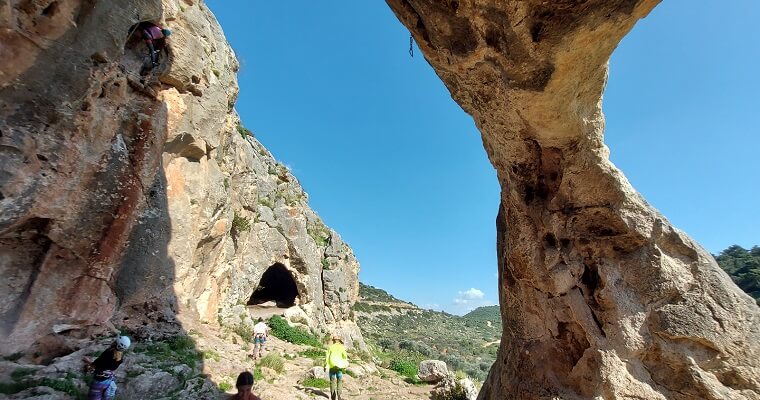
Dorothy Garrod was instrumental in uncovering the Natufian culture, a discovery that paved the way for the identification of other sites from this period. Among these, the Hayonim (Pigeon) Caves stand out as particularly significant. Nestled in a lush green valley opposite Mount Gamal (Camel) in the western Lower Galilee, the caves are situated on a rock ledge, a little above the valley floor. Towering cliffs, rising tens of meters high, feature two large openings leading into these expansive caves.
At the entrance to the eastern cave of the Hayonim Caves, visitors are greeted by a fenced gate. Beyond it, steps and an iron pathway, supported by pillars, lead into the cave’s depths. Below the iron railing, archaeological excavations reveal various settlement layers, reaching down to about 15 meters. These excavations, initiated in 1965, are concentrated in the cave’s exterior portion, within an entrance hall. Deeper inside, another hall is bathed in abundant light, thanks to a circular opening letting in skylight at its apex— a feature similar to that found in some Carmel caves, suggesting the Natufians’ preference for such cave designs. This inner chamber resembles a mystical bell in shape and is frequented by pigeons fluttering in and out through the ceiling aperture, which inspired the cave’s name, the Pigeon Cave. Additionally, numerous bats can be observed clinging to the ceiling.
The rock ledge extending from the eastern (Pigeon) cave meanders towards the west, leading to another cave entrance. Further along, at the ledge’s terminus, there lies an open area enclosed on three sides by cliff walls. The cliffs to the west, facing south, form a magnificent and expansive natural stone arch. This arch offers a stunning vista of Mount Gamal (Camel) to the south. It’s speculated that this arch might have originally been the entrance to a cave that has since collapsed. Regardless, the present configuration of the freestanding arch is visually striking. Along the rock ledge, one can also find artificial alcoves carved into the rock by ancient inhabitants, adding to the site’s historical and archaeological intrigue.
Adjacent to the alcoves, on the southern side of the rock ledge, stands a distinctive and sizable white stone that bears resemblance to an altar, noted for its central break. Atop this stone, a carved niche is oriented towards the silhouette of the nearby Mount Gamal (Camel). The stone’s alignment with the double-peaked mountain leads me to believe it served as an altar for plant offerings. Such mountains were revered in ancient times as they evoked images of the waxing or waning moon (or horns), symbolizing the feminine principle. Worship sites were often strategically positioned to face twin-peaked mountains so that the sun would rise, reach its zenith, or set between the peaks on specific dates, and I suspect that was the intent here as well. This topic will be further explored in the chapter on the Vagina cave in Deir al-Asad, but it’s worth noting here that other examples of mountains with dual peaks, symbolizing the feminine principle, include Muharka in the Carmel range, Mount Meron, and Mount Karkom in the Negev. These sites exemplify the deep spiritual connection ancient cultures had with the landscapes and celestial movements.
Adjacent to the altar, on the southern side of the rock ledge, notable formations in the cliffs near the caves bear a resemblance to the female anatomy, similar to those observed in the Carmel and Nahal Amud Caves, oriented towards the south to allow sunlight to “enter” them. As previously discussed, sexuality held a sacred status in the era of early humans, symbolizing the union between the celestial and terrestrial, the sun and the earth. The earth was revered as a nurturing mother, requiring the sun’s masculine energy for fertilization. This theme recurs in other Natufian sites, like the Witch’s Cave in Nahal Hilazon, where natural rock formations also evoke the image of the female form. Such observations underscore the profound connection ancient cultures perceived between fertility, the earth, and cosmic forces, with these natural formations and human-made structures serving as tangible expressions of these beliefs.
The western cave features a notably large entrance that leads to a spacious interior, illuminated by an opening in the ceiling, akin to the eastern cave and other Natufian locations. Additionally, the upper portion of one wall extends outward, featuring another opening through which a beam of light penetrates at specific times of the day, illuminating certain areas within the cave. During my visit in the late afternoon, the sunlight was positioned perfectly to cast a ray that highlighted an interior alcove of the cave. This striking interplay of light, entering through the wall’s opening, is not only impressive but also mirrors a motif found in other prehistoric caves, potentially symbolizing the concept of male energy fertilizing the female.
In the eastern Hayonim Cave, archaeologists uncovered small round structures believed to be the earliest constructed buildings globally. However, their precise function remains uncertain. With diameters ranging from 1 to 2 meters, they seem too small for family dwellings. These structures feature stone walls at the base, with some containing fireplaces. One theory suggests they may have served as ceremonial sweat lodges, akin to those found among indigenous peoples like the Indians. Another possibility is that they functioned as birth houses, resembling those discovered in Lepenski Vir, Serbia.
Numerous stone and bone tools, including implements crafted from animal horns, were unearthed within the cave, alongside jewelry and beads fashioned from polished bone. These artifacts were often discovered in burial contexts. Skeletons adorned with bead chains on their arms, waists, and heads were a common find. Notably, one grave contained a woman positioned in a straight reclining posture, with a belt adorned with dozens of perforated fox fangs around her waist—a testament to the sophisticated drilling techniques employed. In other graves, individuals were interred in the fetal position, symbolizing a rebirth into the afterlife. Occasionally, skulls were found separated from the rest of the skeleton—a practice reminiscent of the Goddess culture observed elsewhere in the region. This symbolic act suggests a belief in the cyclical nature of life and death, with the head symbolizing a seed to be planted in the ground to nurture the soul’s journey into the realm beyond.
Among the fascinating discoveries in the Hayonim Cave are engravings found on stone slabs and the rock surface itself. One notable engraving depicts a ladder, interpreted by some as a symbol representing the passage of time. Additionally, intricate networks of dense, parallel lines adorn other surfaces, suggesting a possible representation of a spiral motif. Another intriguing engraving portrays a horse, offering further insight into the artistic expressions of the ancient inhabitants. These enigmatic depictions provide valuable glimpses into the symbolic language and cultural practices of the Natufian people.
One grave in the Hayonim Cave yielded a remarkable discovery: the skeletal remains of a man accompanied by those of a dog, reminiscent of a similar burial of a woman and a dog found in Einan from the same period. This finding represents the earliest evidence of animal domestication. Artifacts found in the cave, such as small sculptures crafted from animal bones and jewelry fashioned from animal teeth and bones— including the fangs of predators— illustrate the significance of animals in the culture. Additionally, the cave’s engravings of animal paintings suggest a deep reverence for these creatures. These artistic expressions hint at a shamanic society where rituals involving the spirits of animals played a central role in religious practices.
Archaeologists posit that the findings in the Hayonim Cave signify the onset of permanent settlement and early agricultural practices. They suggest that these caves were selected due to their suitability for human habitation and their location in an area capable of sustaining a sizable population. Inside the caves, arrangements were made for comfortable living spaces, with structures constructed to accommodate the community’s needs. Additionally, the terraces and rock ledges near the caves served as living areas for the inhabitants. Life in this community revolved not only around hunting but also gathering, and possibly small-scale farming. Furthermore, evidence suggests advancements in crafts and tool production, indicating the potential establishment of the site as a regional center for manufacturing tools and artifacts. The presence of early animal domestication further supports the notion of a transitioning lifestyle towards settled agricultural practices.
I speculate another perspective on the purpose of the Pigeon Caves. Rather than solely serving as residential spaces, I propose that they may have functioned as pilgrimage sites or cave temples, imbued with spiritual significance and associated with healing and reverence for Mother Earth. Integrating the sanctity linked to nearby Camel Mountain, these caves could have served as centers for craft production and jewelry making, activities often intertwined with religious practices in ancient times. Discoveries such as bone vessels adorned with symbolic motifs, along with the presence of burial grounds, lend credence to this hypothesis, suggesting a deeper spiritual dimension to the caves beyond mere habitation.

The vagina Cave in Majd al Krum
Caves held profound significance in the prehistoric Goddess culture, symbolizing the womb itself. Consequently, Vagina-shaped caves were revered and consecrated in various regions worldwide. These caves, often natural formations or sometimes polished by ancient hands, featured openings resembling female genitalia, with interiors shaped like a uterus. People of the time ventured into these caves to undergo a symbolic rebirth. Many of these sacred sites were illuminated by a ray of sunlight on specific days, symbolizing impregnation of Mother Earth. Additionally, these caves often served as places of initiation, where shamans—both men and women—undertook healing and divination rituals aided by intoxicating plants, inducing ecstatic states. Typically, these caves housed chambers or spaces for contemplation, alongside nearby or overhead places of worship.
The Tzurim Reserve escarpment, situated between the upper and lower Galilee, spans from the Acre plain in the west to Rosh Pina in the east, reaching heights exceeding 1,050 meters at its peak (Mount Ha’ari above Beit Jan). South of this geological feature lies the Beit Hakerem Valley. In ancient times, this valley and its overlooking escarpment held sacred significance for the worship of Goddesses. Abundant in springs, medicinal plants, vineyards, and unique landscapes, the south-facing escarpment—with its multitude of caves—likely served as a focal point for religious rituals. In my interpretation, some of these caves may have functioned as Sacred Vagina caves in antiquity, embodying the reverence for feminine divinity within the natural landscape.
Near Deir al-Asad, nestled amidst the cliffs of the Tzurim escarpment, lies the Khider cave, enveloped by a structure adorned with three arches—a prominent landmark visible from various points in the valley. This site holds deep spiritual significance for both Druze and Muslims, serving as a sanctuary for solitude, healing, and prayer. According to tradition, the revered saint Khider, known for his miracles, prayed within this cave, where legend has it that he caused a small spring to gush forth from the walls. Prior to its veneration by Muslims (and possibly by Christians and Jews), the site likely held sacred importance for pagan Canaanites, echoing a common pattern observed in many locations worldwide. Before that, it may have been revered within the ancient matriarchal Goddess culture, underscoring its enduring spiritual resonance across diverse religious traditions.
Above the cave dedicated to the revered prophet Khider lies another cave, its entrance obscured by the surrounding structure, making it difficult to discern. However, its opening faces south and bears the unmistakable shape of a vagina. On the shortest day of the year, a ray of sunlight penetrates this cave, casting its glow upon the cliffs below, evoking imagery of fertilization and renewal. Adjacent to these two caves, forming part of the same complex, is a larger cave likely used for ceremonial purposes. This pattern mirrors similar sites around the world where caves shaped like vaginas are often accompanied by larger caves suitable for gatherings and worship. At Khider Cave, this larger space likely hosted rituals involving music, drumming, and dancing, contributing to its spiritual significance and communal importance.
While some may dismiss the notion of the cave adjacent to Khider Cave as merely fanciful, it becomes more challenging to refute the significance of another vagina-shaped cave located a few kilometers away, nestled amidst the cliffs between Majd al Krum and Deir el Asad. Positioned prominently amidst a cluster of rocks, its opening distinctly resembles the shape of a vagina. Local folklore surrounding this cave tells of demons and the belief that women who enter will remain infertile. These narratives likely originated from ancient traditions that revered the site as a sacred space for enhancing fertility. However, with the advent of monotheistic religions, such pagan beliefs were often demonized or distorted, leading to the inversion of their original significance.
The vagina-shaped opening is natural, but it’s possible that the ancients played a role in enhancing its design. The cave, resembling the womb, extends inward into a chamber within the mountain, located a few meters inside. Marks on the walls suggest that this inner chamber was partly carved. Accessing the cave requires climbing the cliffs or descending a ladder positioned on its roof.
The inner chamber and corridor leading to it can accommodate several people. Additionally, the cave has crevices on its east side, one of which terminates at a rock face with a long, narrow slit aligned with the sunrise on the shortest day of the year. Another branching leads to additional openings in the rock face, allowing light rays to penetrate inside. Above the entrance corridor, a wide and large opening in the roof leads to a platform situated a few meters above. This platform allows access to the rock surface overlooking the Beit Hakerem valley. Upon reaching the rocky surface, to my surprise, I stumbled upon what appeared to be a hand-carved altar positioned right above the cave’s entrance. Situated on the most prominent rock outcrop, it offers a commanding view of the landscape. At its center, there’s a distinctive alcove oriented towards the crescent shape formed by two hilltops on the opposite side of the Beit Hakerem valley.
My hypothesis presents a compelling interpretation of the cave’s purpose, suggesting it served as a site for initiation and ceremonies. People would descend into the cave through the opening in the ceiling or ascend via the side rock ledge, participating in rituals on specific days when sunlight, moonlight, or stars illuminated the interior, symbolically impregnating Mother Earth. Following or during these ceremonies, participants would ascend to the rock surface above the cave to engage in further rituals. Offerings such as olive oil, milk, or wine might be poured onto the altar, along with first fruits or vegetables. Candles would be lit, and the ceremony would be accompanied by ecstatic dancing, singing, and musical instruments, typical forms of Goddess worship.
It is conceivable that the cave or the surface above it served as a venue for Sacred marriage ceremonies symbolizing the union between the masculine and the feminine, the sky and the earth. The blessings bestowed during these ceremonies may have been believed to have a beneficial impact on the fields in the valley below. The cave might have also been utilized for rites of passage, symbolizing rebirth and transition to the other world, hence its folkloric association with demons. Interestingly, the contemporary perception of the cave as a place of demons could be interpreted as a reversal of its ancient connection to the Goddess and blessings of fertility.

The Witch’s Cave in Nahal Hilazon
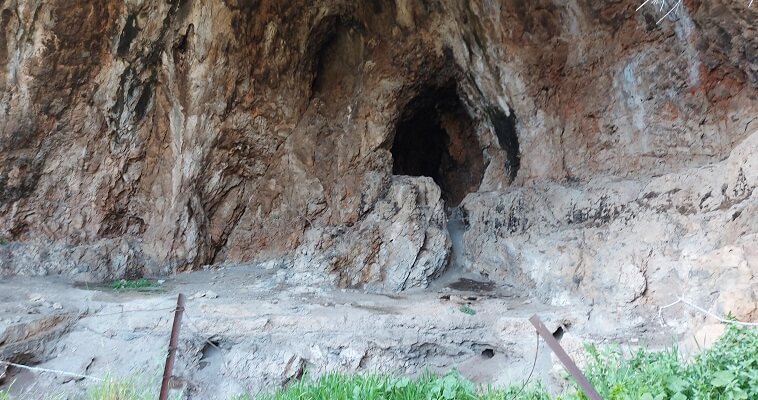
The Witch’s Cave lies just a short distance from the Hayonim Caves, about a ten-minute drive away, and is even closer to the Vagina Cave, a mere five-minute drive. This region of the Lower Galilee is rich with prehistoric sites, sacred locations, and caves believed to have been used by priestesses during the era of the Goddess culture. Nestled amidst the scenic and lesser-known Nahal Hilazon, not far from the settlement of Shorashim, the cave is situated on the cliffs of the valley. Positioned within a vast depression resembling a chair carved into the southern slope of the Mountain, it sits approximately one hundred meters above the stream channel. While the ascent to the cave may pose some challenges, the breathtaking scenery makes the journey well worth the effort.
In front of the Witch’s Cave, across the valley, stands a Mountain with a distinctive double peak. Facing eastward, the entrance to the cave is oriented towards this Mountain. On a particular day of the year, the sun ascends between these twin peaks, symbolizing the union of male and female energies—an important concept revered by ancient civilizations. This celestial event not only signifies unity but also illuminates the darkness of the cave, symbolically fertilizing the earth with its radiant light.
Adjacent to the Witch’s Cave and within its confines, are rock ledges, while its inner chamber boasts a sizable opening resembling a vagina, leading into a narrow, elongated cavity reminiscent of a womb. This vaginal aperture widens at the top, allowing the first rays of sunrise to penetrate and infuse the space with male energy. Looking outward from within the cave, one perceives the outer opening taking the form of a woman’s head. These remarkable features, whether naturally occurring or perhaps assisted by human hands, were certainly observed and revered by ancient peoples. It’s speculated that a particular woman, likely considered a witch, chose to dwell in this cave, drawing pilgrims from across the Galilee. Its selection may have been influenced by its unique setting, the distinct depression in the rock walls, the vaginal opening within, the woman’s head shape at its entrance, and its alignment with the Mountains, sun, and stars.
Since 1995, with a significant acceleration from 2011 onwards, archaeologist Lior Grossman led crucial excavations within the cave. These excavations unveiled a grave believed to belong to a witch dating back 15,000 years to the Natufian culture era. The grave consisted of a large circular pit carved into the cave floor. Within this pit, positioned in a seated posture, was the remains of a 45-year-old woman about one and a half meters tall. Remarkably, her body exhibited structural deformities, which according to shamanic beliefs, might have been associated with healing powers. The pit itself was meticulously prepared, featuring an oval shape lined with layers of mud, stone slabs, dirt, and clay. At its base lay various items including a deer antler, a block of red ochre symbolizing blood, particularly that of menstruation and childbirth, a piece of chalk, and a fragment of a basalt vessel, likely utilized for potions and divination. Additionally, three turtle shells and three oysters were carefully positioned, signifying the triple aspects of the Goddess: maiden, mother, and crone.
Once all these mystical objects were meticulously arranged on the pit floor, they were carefully covered with a layer of ashes and dirt. Atop this layer lay the body of the witch, positioned in a seated posture, leaning against the side of the pit. Her left leg and arms were directed towards the center of the pit—a significant detail. Interestingly, in subsequent magical traditions, such as those depicted in the tales of Solomon, witches or wizards were often placed in a similar seated position after death, sometimes holding a magic rod in their hands. This practice was believed to deceive malevolent spirits, making them think the deceased individual was still alive and thus driving them away.
Magical objects were carefully positioned around the witch: a foreleg of a wild boar lay next to her right arm, symbolizing the Goddess; whole turtle shells were strategically placed under her head and pelvis. Her body was then covered with stones, upon which other mystical items were arranged: a cow’s tail (wild cows were present at that time), the tip of a golden eagle’s wing, a tiger’s bone, and the skulls of two martens. In addition to these natural objects, various artifacts were included: two oyster pendants, a bone cutter, a scraper, part of a basalt bowl, a pebble, and even a Human foot. Surrounding her body were eighty-six broken and slightly charred turtle shells. Finally, remnants of a meal—likely a ritual offering in honor of the witch—consisting of animal bones, broken pottery, and ashes, were scattered over the pit. Once the pit was filled, a large triangular stone was placed atop it, serving as a symbolic tombstone.
The witch’s grave was situated at the heart of the witch’s cave, surrounded by numerous other graves belonging to men, women, and children. These additional burials, found to be of a later date, suggest that the cave initially served as the witch’s dwelling. Her burial marked the beginning of its significance as a pilgrimage site, as subsequent generations sought to be interred near the revered woman.
There’s little doubt in my mind that the Witch’s Cave served as a place of reverence and worship. Across the globe, we find traditions of prophetess witches dwelling in caves atop lofty peaks, drawing pilgrims who bring offerings. In the Galilee, the Witch’s Cave was once the abode of a renowned witch, whose memory had faded into obscurity until recent archaeological endeavors brought her back into the limelight. It’s interesting to note that the snail, a creature associated with the moon and femininity, holds symbolic significance. The Hebrew name “Hilazon,” meaning snail, was bestowed upon the valley due to its abundant snail population, offering another potential reason for the witch to have chosen this locale for her residence.

Treasure Caves in Samaria
Henri Breuil’s exploration of prehistoric caves in France and Spain revealed that galleries adorned with paintings were typically situated in the deep and remote sections of the caves. He interpreted these locations as temples, sacred spaces dedicated to worship. Descending into these depths required effort, akin to a rite of passage into another realm, especially since the entrances were often narrow and concealed. Recent discoveries in Israel have uncovered caves exhibiting similar temple-like features, with deep, distant galleries yielding surprising artifacts and insights.
In the Samaria region, researchers uncovered two expansive stalactite caves, harboring concealed inner sanctums akin to temples. While no rock paintings have yet been discovered within, the findings are nonetheless extraordinary. Within the depths of Kana Cave, archaeologist Zvika Tzuk made a remarkable discovery: eight gold and electrum rings dating back over 6,000 years, alongside flint tools, beads, and pottery fragments from the era of the Goddess culture. The gold, believed to be the world’s oldest of its kind, was unearthed within an inner chamber accessible only through a narrow passage.
In the remote recesses of Zarda Cave, situated just a few kilometers from Kana Cave, archaeologist Michael Freikman made a parallel discovery: a ninth gold ring, alongside two carnelian stone cylinders. These treasures were found beneath stone slabs carefully positioned within a subterranean chamber, buried at a depth of 37 meters. Accessible only through narrow passageways and tunnels, some requiring the use of ladders, this chamber lies in perpetual darkness, unsuitable for human habitation.
In the upper level of this cave, evidence of human habitation was discovered, yet the location of the treasures was two levels lower, mirroring the placement of painting galleries in ancient caves of France. Freikman posits that this positioning is intentional, suggesting that the treasures were not hidden but offered as tribute to the gods and aids for passage to the underworld. He draws upon the legend of the Sumerian Goddess Inanna, who traverses seven gates into the underworld, shedding her adornments along the way until she confronts her sister Ereshkigal, queen of the underworld, stripped bare before her death and subsequent resurrection. Freikman suggests that the descent into the depths of the earth induces sensory deprivation, distorting perceptions of time and space, facilitating shamanic experiences of trance and altered states of consciousness. He proposes that individuals descending into these “temples” sought to undergo similar experiences, possibly aided by intoxicating plants. The treasures left behind, therefore, formed part of a ceremonial ritual aiding their transition to the otherworld [3].
Prof. David Lewis-Williams, a South African archaeologist and anthropologist renowned for his study of Bushmen paintings in caves and rock shelters [4], posits that many of these ancient artworks are symbolic representations of altered states of consciousness and the shamanic journey. He delineates three stages in this process: first, geometric shapes such as points, zigzags, grids, curves, and meanders emerge. In the second stage, the mind imposes familiar interpretations onto these shapes, giving rise to visions reflective of the individual’s cultural context (e.g., animal figures for hunter-gatherer societies). In the third stage, the shaman transcends the boundaries of the familiar and ventures into the realm of the unknown, undergoing a symbolic death and rebirth. During this phase, the shaman experiences hallucinations and journeys to otherworldly realms, receiving insights and knowledge. Lewis, drawing from both archaeological evidence and laboratory experiments, identified a common motif in this stage: the passage through a narrow tunnel, vortex, or canal, reminiscent of the experiences reported in near-death encounters.
According to Freikman, the journey through narrow and dark cave tunnels leading to hidden temple chambers mirrors the third stage described by Williams. Freikman suggests that ancient societies, such as those of the Goddess culture, operated under a shamanic framework and believed in accessing alternate realms of existence through altered states of consciousness. This prompts a deeper exploration of shamanism: Mircea Eliade, in his seminal work “Shamanism: Archaic Techniques of Ecstasy,” [5] delves into the topic, focusing on the traditions of the Asian steppes and the Turkish Altai. Eliade posits that shamanism represents humanity’s original religious expression during the hunter-gatherer era (Paleolithic). He defines shamanism as a comprehensive system encompassing religion, magic, and mysticism, emphasizing its role as a “technique of ecstasy” centered on the concepts of spiritual death and rebirth.
The shamans fight the forces of evil, black magic and protect the world. They are experts in the Sacred and holy, able to see what others cannot. The shamanic trance has a unique ecstatic character. And so Eliade writes: One must remember the dramatic nature of the shamanic trance, which is a performance that has no counterpart in the world of ordinary experiences. The demonstration of magical ability (playing with fire and other ‘miracles’) reveals another world, the legendary world of the Gods and magicians, the world where everything is possible, the world where the dead come back to life and the living die in order to be resurrected, a world where a person can disappear and reappear at the same time, where the ‘laws of nature’ have been suspended and where an incredible superhuman freedom prevails.”
The discovery of treasure temples within the caves of Samaria dates back to the twilight of the Goddess culture, marking the Chalcolithic period. However, the tradition of establishing temples in the innermost recesses of caves likely extends much further into antiquity. Another pertinent example is the Cave of the Twins near Beit Shemesh, where archaeologists uncovered a hewn pool and a space dedicated to the worship of the Greek Goddess Demeter. Yet, it is reasonable to surmise that the site held sacred significance in much earlier epochs.

[1] Some say that as a result, the stomach expended less effort to digest the food, and therefore more blood and energy could be freed up for the benefit of brain development.
[2] Like the Shiva Lingam Caves in India that have rocks inside that look like a male genitalia.
[3] [3] Freikman, M. (2017). Into the Darkness: Deep Caves in the Ancient near East. Journal of Landscape Ecology, 10(3), 81-99.
[4] Lewis-Williams, D. J. (2002). A cosmos in stone: interpreting religion and society through rock art. Rowman Altamira.
[5] [5] Eliade, M. (2020). Shamanism: Archaic techniques of ecstasy (Vol. 76). Princeton University Press


