The Mysterious beginning of World history
Over 5,000 years ago, in certain regions across the globe, humans transitioned from village life to establishing large cities inhabited by tens of thousands of individuals. These urban centers featured priests, kings, markets, artisans, clear social hierarchies, wealth disparity, temples, palaces, educational systems, laws, and taxation. It raises the question: why would anyone prefer city living over the traditional village setting, where each person owns their property, enjoys a secure and independent food source, experiences relative prosperity, equality, and cooperation, feels connected to nature and animals, celebrates a rich tapestry of folklore and festivals, possesses a strong sense of community belonging, and adheres to lifestyles that have been successful for millennia?

Venturing into cities, humans estranged themselves from their primordial nurturer, Mother Earth. The onset of the agricultural revolution, which began 6,000 years prior to the rise of civilizations like Sumer and Egypt, marks what I refer to as the “goddess culture” era. This period encompasses both the Neolithic (9,000–4,500 BC) and Chalcolithic (4,500–3,200 BC) ages. During the “goddess culture” times, humans lived in closer harmony with nature, enjoying periods of peace and prosperity. Villagers were in tune with the cycles of spring and autumn, winter and summer, and formed connections with the animals and plants they domesticated, sharing a communal existence. The wilderness was just a step away from their homes. People joyfully sowed and harvested, fostering a society that was harmonious and largely free from unnecessary conflicts. Leadership was often in the hands of priestesses and prophetesses who consecrated crafts and offered wisdom and guidance to their communities. The great goddess presided over various facets of human life, particularly those concerning birth, fertility, and death. Sexuality was revered, as were the arts, including music, dance, painting, pottery, sculpture, weaving, spinning, and later, metallurgy. Aesthetics was valued and nurtured.
Thus, at the close of the goddess culture era (the Chalcolithic period, 4500-3200 BCE), the rural settlements in the Land of Israel reached their zenith. Numerous settlements flourished in areas that would later become uninhabited, with regions like the Negev and the Golan dotted with small agricultural villages. The villagers of these areas erected monumental megalithic structures, such as the Rujum Hiri stone circle in the Golan and the Ramat Saharonim temples and tumulus field in the Negev. These constructions evidence the villagers’ capacity to collaborate on large-scale projects that demanded significant labor.
What, then, triggered a shift from this longstanding status quo? Why did the goddess culture, which had thrived in peace and harmony across the land for millennia, cede to the emergence of a new cultural paradigm? Why did the people move away from numerous independent villages, some quite large, to form kingdoms and cities? What catalyzed the dawn of historical time as we recognize it today, along with all its accompanying developments? What drove the creation of major urban centers like Uruk in Sumer, Memphis in Egypt, and Arad in Israel, leading to the rise of a complex society segmented into classes and professions?
War’s role in human history emerges with the establishment of cities and the onset of recorded history, albeit limitedly and not universally. It notably intensified with the invasions by nomadic Indo-European and Semitic peoples towards the end of the 3rd millennium BC, driven by rulers’ ambitions for power, and competition for trade and resources. However, there’s no evidence suggesting that war is an inherent aspect of human societies or a natural state of humanity. Across different regions of the world, history reveals extended periods of peace and prosperity, free from conflict over vast areas and times, such as the initial 1,500 years of Egypt’s history.
The critical issue is whether leaders wielding power choose to use it for societal benefit or for personal gain and power accumulation. As Thucydides observed, the thirst for power is insatiable, leading to conflicts, while a strong moral commitment can inspire leaders towards peace. Religion’s role is pivotal, capable of either fostering fanaticism and violence or serving as a force for balance and harmony, striving to replace chaos with order. The nature of the religion matters; the religious outlook in ancient Egypt and Sumer was mostly one of profound, community-oriented faith content with its lot, thus favoring peace over warfare.
The disappearance of the goddess culture and the beginning of urbanization and human history in Israel and the fertile crescent have nothing to do with the beginning of wars. Such a process may have happened in other parts of the world in later times (for example in the Balkans), but in the Middle East 5,500 years ago the change was due to the appearance of New gods who brought with them a new religion, a perceptual change that enchanted humans, and which I call “magical culture”. This was a development, which can be called “natural”, of human social and spiritual evolution, and we will write and elaborate about it in the following chapters.
Religious revolution, appearance of gods from the Sky
The inception of cities was closely tied to the erection of grand temples and other religious edifices, such as the Mastaba in Egypt or the Ziggurat in Sumer, serving as dwellings for the newly revered gods, located in areas steeped in religious lore. Religion was the cohesive force that bonded communities and legitimized authority. Whereas previously a shaman might have guided the placement of homes or farming practices, now kings and priests, acting on divine mandate, made these critical decisions. Laws sanctified by the gods stipulated where dwellings could be constructed, with enforcement carried out by representatives acting under the divine authority of the ruler. The encircling walls of these nascent cities served not just as defensive structures but also as markers delineating the boundary of a new sacred order. These territories, consecrated to the gods and anchored by a temple symbolizing a primordial mound rising from the waters of chaos, signified order’s triumph over chaos. Thus, the city emerged as a microcosm of the cosmos, its very existence justified by the sacred precincts it housed.
The dawn of historical societies marked a departure from the egalitarian Goddess culture to one defined by social stratification, class distinctions, and an uneven allocation of power and resources, all legitimized by emergent religious beliefs. This era saw the establishment of a full-time priesthood, moving away from the communal shamans who toiled in the fields alongside their communities and played roles in ceremonies. Instead, a distinct class of priests emerged, dedicated solely to temple life and sustained by the contributions of others. Similarly, rulers, or kings, often regarded as belonging to a separate lineage, were deemed to have divine rights and superior status as representatives of the gods.
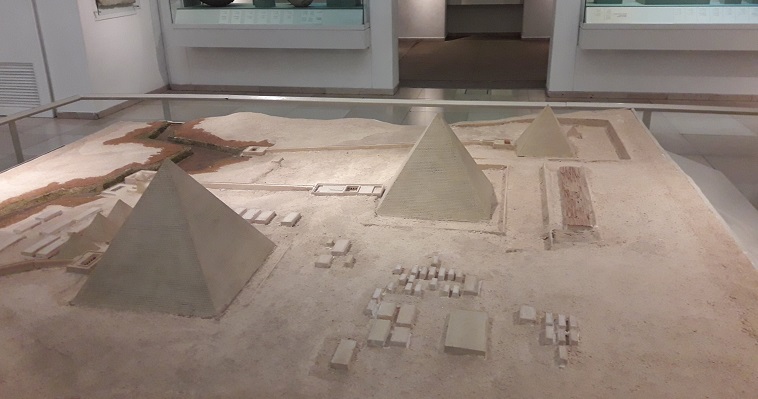
The term “religion” encompasses diverse expressions of faith and spirituality. The new religion that materialized with the onset of recorded history differed significantly from the preceding goddess-centric worship. The deity-centric religions, whether focusing on Osiris in Egypt or the Anunnaki in Sumer, introduced human communities to urban living and laid the foundations for the first historical societies. This shift in religious orientation from earth to sky inspired the construction of temples mirroring the heavens, such as the ziggurats and pyramids, serving as earthly embodiments of celestial realms.
The congregation of tens of thousands of individuals in a single location (the city) for the first time in history fostered a collective subconsciousness, an aura still palpable upon entering a modern metropolis. This collective mindset paved the way for the emergence of intricate and sophisticated ideas, culminating in the invention of writing. This milestone, marking the beginning of recorded history, was primarily a religious endeavor rather than an economic tool for temple administration, as some historians suggest. Writing was deemed a divine communication; it was believed that the gods themselves bestowed writing upon humanity, initially used to extol them, and subsequently to document the societal laws and decrees they communicated through rulers (kings and priests).
Language predated writing, and the richness of prehistoric vocabulary is left to speculation. The earliest texts already contain abstract notions like “vague” or “shallow,” derived from natural comparisons, suggesting that Neolithic humans possessed advanced cognitive and linguistic capabilities. This capacity for analogy allowed individuals to transfer insights from one aspect of life to another, enhancing their intellect with observations from the natural world. This intellectual tradition is evidenced in the sophisticated cave paintings from tens of thousands of years ago, symbolic figurines, and a system of symbols used in decorations (such as on urns), which might represent an early form of communication.

Magical civilization
In contemporary society, we are often taught that physical location is secondary to the emotions in our hearts and the thoughts in our minds. In essence, the emphasis is on whether we are in tune with the muse, God, or a universal intelligence—what exactly we are connected to. This mindset and cultural expression, which I refer to as “mystical culture,” was notably introduced by Moses at Mount Sinai. Judaism played a pivotal role in disseminating this ideology globally, further propagated through Christianity and Islam. As articulated in the Torah, specifically Deuteronomy 6:6-7, “Love the Lord your God with all your heart and with all your soul and with all your strength. These commandments that I give you today are to be on your hearts.” This directive, centered around the Ten Commandments, emphasizes that they should be internalized and adhered to through the power of love. Thus, Judaism has contributed a moral and mystical worldview to the world, serving as one of the twin pillars of Western culture alongside the logical-scientific tradition and artistic sensibilities of ancient Greece.
In contrast, within the ancient civilizations of Egypt and Sumer, merely harboring love for God in one’s heart, though significant, was insufficient. These cultures, polytheistic in nature, required specific actions to forge closeness with their pantheon of deities, rooted in the practices of magic. The thoughts and feelings of individuals were influenced by external factors: the architectural design of their surroundings, the color of the walls, the attire and adornments they wore, the completion of purification rituals, the utterance of correct incantations, and more. In essence, a person’s inner life was shaped by the external world, from the celestial alignments to the earthly materials encountered. This magical worldview, considered a science of the invisible realms, possibly originated from profound cosmic order concepts but gradually devolved into superstitious beliefs in charms and the evil eye. Consequently, it is often regarded by contemporary perspectives as primitive and inferior.
The ancients firmly believed in the existence of worlds parallel to our own, considering these realms as pivotal to their lives. Governed by gods, these dimensions were intertwined with the energetic aspects of the human being, like the spirit and soul. The foundation of all existence was thought to reside in these spiritual worlds, subject to laws that dictate the physical realm. This notion is evident in Egyptian and Mesopotamian religious beliefs, manifesting in a range of disciplines from astrology and numerology to areas bridging the mystical and the logical, such as music, architecture, and art.
With the advent of recorded history, Egyptian and Sumerian cultures developed intricate magical systems that elucidated the purpose of human existence and provided guidance on structuring their surroundings. Central to these systems were the deities, seen as both simple anthropomorphic and zoomorphic representations and as deeper embodiments of cosmic forces and principles. These sophisticated religious philosophies were instrumental in the rise of cities—a novel form of human habitation—and the evolution of educational systems, writing, mythology, music, poetry, and notably, a new form of religion that promoted the construction of temples as sanctuaries for the gods, centers for worship, and the institution of priesthood.
The introduction of these new ideological frameworks and principles of magic fostered the emergence of a hierarchical society, welcoming the establishment of rulers, kings, priests, institutional norms, and legal frameworks by the populace. The new governance model wasn’t forcibly applied from the top down; rather, the novel religious and magical principles advocating for a divine law system and moral conduct pleasing to the gods prompted the creation of legal statutes governing human affairs. Urban development would have been unattainable without the collective goodwill, cooperation, and concerted efforts of the entire community. The foundational principles of law, values, and customs within these nascent cities didn’t emerge arbitrarily as mechanisms of control wielded by monarchs. Instead, they arose organically from the grassroots, marking a departure from past practices, manifesting in a sudden and comprehensive transformation.
Outer space intervention
The esteemed prehistory scholar Pierre de Chardin, who was both a mystic and a Catholic priest, suggested the existence of a future focal point (termed the “Omega” point) that magnetizes the evolution of humanity through a network of love and spiritual connections. According to him, we are all progressing towards an evolutionary new phase for both Earth and mankind, where a novel realm of thought will emerge. In this realm, individuals will transcend their egos to unite with a higher cosmic consciousness. If this vision holds for the future, then the emergence of the first cities and the dawn of history can be viewed as early steps in this grand evolutionary journey. For millennia, humans have coexisted in harmony with nature and Mother Earth. However, there exists within humanity an element that transcends terrestrial confines, often referred to as the spirit or soul. After centuries of maternal nurturing, humanity has reached a pivotal moment to embark on an exploration of our intrinsic connection to the cosmos beyond Earth—to the universe or, metaphorically, the sky.
Today’s urban society represents an artificial habitat where the night sky is illuminated by electric lights, and people traverse distances with speeds once deemed supernatural (via trains, planes, and cars—barring traffic congestion). The climate is controlled by air conditioning, among other modern conveniences. The genesis of the first cities marks the onset of humanity’s journey to its current state, increasingly detached from the Earth. However, this evolution shouldn’t be viewed solely through a negative lens, despite its drawbacks. The rapid development of history, cities, and culture over a few thousand years shifted human focus skyward—to the universe and the gods—beyond just Mother Earth. This shift in religious perspective catalyzed the emergence of our contemporary consciousness and, should there be a guiding force in the cosmos, may usher in a future evolutionary leap.
De Chardin discusses the notion of an ethereal, abstract, and spiritual force influencing the course of world history, suggesting the presence of an evolutionary impulse (which some may call God) guiding humanity. However, some propose an alternative theory involving tangible external intervention—either by extraterrestrial beings or by lost civilizations—contributing to the creation of the first cities and the inception of recorded history. Flinders Petrie, hailed as the pioneer of systematic archaeology, puzzled over the sudden emergence of ancient Egyptian culture, which seemed to appear fully formed without preceding incremental stages. He speculated that this sudden cultural bloom could be attributed to the arrival of a distinct group from another part of the world, possibly bearers of a sophisticated and unknown civilization. This group, he theorized, became the dynastic race in Egypt, distinguishable by their uniquely shaped skulls, divergent from those of the native Egyptians.

The urban revolution
Gordon Childe, a seminal figure in archaeology and anthropology, introduced the concepts of the “agricultural revolution” and “urban revolution.” His work, which slightly drew upon Marxist theories, emphasized material inventions and means of production as central to historical progression.
Childe posited that the 4th millennium BC witnessed significant advancements in agriculture that paved the way for the urban revolution. The domestication of the ox and its harnessing to a plow—initially crafted from wood—provided a powerful labor force previously unavailable, enhancing field cultivation techniques, including deep plowing to deter weeds before winter’s onset. Innovations such as crop rotation and augmented manure application enriched the soil, supporting sustained cultivation in a single locale. The development of the wheel and axles facilitated the creation of carts, drawn by oxen (or donkeys), which broadened the scope of agricultural land. Moreover, the advent of bronze enabled the production of robust metal implements, including tools for cutting, tilling, and turning the soil (plows). These advancements, among others, significantly multiplied agricultural output, leading to substantial food surpluses.
Childe suggested that the generation of food surpluses played a crucial role in the formation of temple cities, which served as central hubs for the collection and storage of agricultural yield. These temples functioned as institutions where harvests were amassed, documented, and later distributed under the priests’ directives. Surrounding these temple cities, communities of craftsmen emerged, whose sustenance was closely tied to the temple’s economy. Governance of these cities fell to priestly kings, who formulated laws and amassed unprecedented levels of power. The advent of writing was a direct response to the administrative needs of managing these temple cities. Childe posited that when a population reaches a certain critical mass and density, such that it cannot rely solely on agriculture for subsistence, this scenario invariably catalyzes the dawn of civilization, leading to urban development and the inception of writing.
In his scholarly work, Childe differentiates between “savages”—nomadic hunters with a population density of one person per ten square miles—and “barbarians”—early farmers with a density of two or more people per square mile. He further differentiates between early agricultural communities and the first cities and kingdoms, where the population density averages thirty individuals per square mile. Childe notes that Neolithic villages housed several hundred inhabitants and were prone to relocate periodically. In these communities, farmers primarily produced food for their immediate families, with minimal surpluses used for bartering. The absence of specialized labor meant that everyone was capable of crafting their own tools and garments, leading to a lack of social hierarchy and specialization. This ancient agricultural society was characterized by a communal spirit, as all members engaged in similar activities and faced common challenges. Cooperation was not only structured but also enriched by rituals performed at sacred sites during specific times of the year, fostering a form of conformity Childe describes as a “mechanical” partnership.
In regions like Egypt, Mesopotamia, the Indus Valley, and China, the advent of river agriculture and the implementation of irrigation canals not only generated substantial agricultural surpluses but also introduced a novel organization of labor. Technological innovations such as the plow, the wheel, the cart, bronze tools, and enhanced methods of crop rotation significantly amplified productivity by up to thirty times. This surge in productivity, coupled with population growth, led to the establishment of permanent settlements of professional craftsmen in the vicinity of temples, who previously roamed from village to village. Consequently, this process laid the foundations for the emergence of cities, which eventually grew to accommodate tens of thousands of inhabitants.
It is plausible to suggest that a significant portion of the ancient city populations remained engaged in rural activities. However, alongside them existed specialized groups such as transport experts, craftsmen, and priests. Each inhabitant contributed a portion of their produce as a tax to a deified entity, represented by the temples, priests, and king. The priests served not only as divine intermediaries but also as administrators of the temple estates, which comprised a considerable share of the agricultural land. Craftsmen received their sustenance from the temple’s central stores, moving away from a barter system to living under divine sponsorship. The priestly class, rulers, and other high-ranking individuals received a larger share of resources, thereby forming a ruling elite who, while not engaged in manual labor, played roles in societal organization and oversight. To facilitate this, they developed methods for record-keeping and calculation, leading to the invention of writing. This breakthrough in communication paved the way for the advancement of sciences like astronomy and mathematics, as well as the creation of religious texts.
Temples served both as the focal point for gathering surplus agricultural yields and as the rationale for tax collection. Each Sumerian city boasted a temple dedicated to its deities and a ziggurat, symbolizing the cosmic mountain, the birthplace and dwelling of the gods. These sites were the cradles of state institutions, where laws were inscribed and judicial proceedings were held. They also hosted the earliest educational establishments. Markets, workshops, and central granaries were situated adjacent to the temples, with rulers’ palaces and permanent residences for sanctuary servants and various governmental and economic officials nearby.
The agricultural surplus enabled the export and import of goods, making trade a cornerstone of these emerging civilizations. Consequently, some craftsmen received raw materials from distant lands and were paid a steady wage by the state for their productions. This system made them reliant on the state, aligning their loyalties with it rather than with tribal affiliations. A network of interdependent citizen groups within the cities emerged, their cohesion and mutual support underpinned and fortified by religious faith.
Childe’s observations illuminate the evolution of religion alongside the emergence of cities. Hunter-gatherers perceived divinity in nature, crafting depictions of animals and plants, whereas ancient farmers venerated the goddess, embodying their spirituality in abstract symbols and human forms. However, within the temples of urban centers, deities were portrayed as human-like figures descending from the heavens—legendary beings both akin to and distinct from us. Childe elucidates that the advent of urbanization and recorded history heralded the development of various art forms, including painting, sculpture, decorative arts, sacred architecture, music, dance, and notably, writing and literature.
Clarke posits that with the increasing complexity of life, there emerged a greater reliance on intangible forces, leading to the evolution of religion. He identifies the emergence of royal dynasties, the formation of unified territorial kingdoms, and notably, the phenomenon of warfare as critical drivers of civilization’s development. Clarke views warfare as playing a dual role in cultural evolution: it was both a consequence of social advancement and a contradictory force against it, yet also a catalyst for progress. The simultaneous development of destructive capabilities alongside constructive abilities underscores a contemporary challenge: harnessing the technology of destruction for humanity’s welfare and steering the formidable energies unleashed over 5,500 years of history towards further progress and enlightenment.
While Clarke offers an optimistic outlook on human evolution, his examination of historical evidence is critiqued for being incomplete. He overlooks older inscriptions found in Egypt (such as the Narmer Palette), which predate the commercial tablets from Uruk’s Temple, leading to inaccuracies in his historical analysis. Specifically, he mistakenly suggests that cities developed before the advent of new religious practices and temples, whereas evidence indicates the contrary. Childe’s materialist interpretation of history also faces scrutiny. The enduring question remains: What catalyzed humans to generate surpluses after millennia of living with contentment and gratitude for what they had? A significant shift in paradigm was necessary for such change. Even today, traditional societies exist that neither store nor produce food beyond their immediate needs, let alone engage in trade. The reasons behind the establishment of cities globally require a deeper exploration, as evidenced by the study of early urban development in Israel at the dawn of history.
What does the beginning of history mean?
As we embark on this exploration, it’s crucial to revisit and refine our understanding of the transition from prehistory to history—from villages with cultures closely connected to nature to cities where culture and religion flourished.
In the era of Goddess cultures, a farmer could, in theory, settle anywhere, cultivating wheat, barley, and beans, participating in seasonal religious gatherings for barter, and enjoying natural resources like clay and stones. However, with the onset of history, the freedom to settle wherever one wished vanished, along with the trade networks associated with sacred sites. Instead, cities emerged, governed by elites, underpinned by systematic laws and resource distribution, institutionalized religion, and a web of societal interdependencies. The dawn of history introduced new ways of living and technological advancements, yet integration into the new societal framework was necessary to reap these benefits. Land ownership transitioned to divine rights held by city-states, with profound implications. Humans resided in settlements (cities) characterized by complex organizational structures, necessitating individuals to find their place and fulfill their predetermined roles within this new social hierarchy.
Philip Graham posits that during the Goddess culture era (the Chalcolithic period), societies were structured egalitarianly, with elites holding significant power solely in religious contexts and at specific times. These elites engaged in everyday labor for their sustenance, similar to the rest of the population. This social framework, according to Graham, lacked the capability to foster urban development. With the advent of recorded history, however, hierarchical systems of governance emerged around temples, coupled with an elevated emphasis on warfare. These shifts enabled the mobilization of labor for communal benefit and the establishment of a society governed by laws and regulations, where some forms of authoritarian organization derived legitimacy from religious innovations. Essentially, kings governed as embodiments of the new deities, acting as their earthly representatives.
This introduction of a novel power dynamic disrupted a society that had previously been balanced and harmonious, both internally and with its environment, persisting unchanged for centuries. Alternative theories suggest this disruption resulted from interactions with advanced extraterrestrial civilizations (interpreted as gods), who imparted new civilizational practices to humanity and were regarded as the highest authority. The transfer of their charismatic authority to kings and priests, who acted as their intermediaries, established the foundations for societal hierarchies and class distinctions, driven by the differences between these “alien” visitors and the indigenous populace.
The emergence of new divine figures profoundly impacted beliefs about the afterlife, religious practices, and burial customs. During the Goddess culture, death was viewed as a natural part of life’s cycle, with resurrection and possibly reincarnation as central beliefs. The transition to the afterlife was not feared but welcomed as a positive transformation, leading to rebirth. Consequently, graves from this period contain offerings and artistic creations. However, with the advent of gods (whether real or mythical), humanity’s gaze shifted upwards to the heavens, moving away from the comforting embrace of Mother Earth. Initially, only a select few were deemed worthy of ascending to the heavens, leaving the majority to fade into oblivion after death, especially in the context of Sumer. This shift engendered a dichotomy between two classes of beings and two realms of existence, framing the world as a battleground between light and darkness, a stark departure from the joyous unity celebrated in Goddess culture.
The deity of the Goddess era was the Great Mother—nature and the planet itself—embodying both physical and spiritual realms that one could connect with for continued existence. Humanity was intrinsically linked to the stones, plants, and elements, with the belief that one’s essence merged with these natural components after death, ensuring a form of eternal life. However, the arrival of the gods introduced the possibility of an afterlife in mystical realms, a promise that remained elusive for most.
In Goddess culture, rituals, masks, dances, and sacred music facilitated a union with the great spirit, allowing the soul to traverse dimensions in life or in death. Existence was inseparable from the natural world, allowing for continuity beyond death. Yet, the transition to urban life and the worship of new deities severed this connection, ushering humanity into a celestial domain governed by alien entities. This change diminished human stature, offering only a remote hope of divine ascension. In a sense, humanity was exiled from the paradise of Goddess culture, embarking on an arduous quest for a celestial home, far removed from its earthly origins, but with a promise of development.