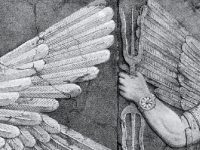
Below is an amateur translation of the introduction to my book “The Coming of the Gods,” which delves into the origins of history in Israel. It spans from the emergence of the first cities like Arad and Megiddo to the settlement of the Israeli tribes. This history review intertwines with significant developments in Egypt and Mesopotamia, emphasizing religious beliefs and traditions. It also entertains the notion that civilization may have been influenced by aliens or lost civilizations of the past..
introduction
The book “The Coming of the Gods” delves into one of history’s greatest enigmas: the dawn of civilization. It explores the sudden emergence of the first cities and states around 5,500 years ago, a significant departure from millennia’s of village life centered around agriculture and worship of the Mother Goddess. The ancient goddess culture thrived on harmony, prosperity, and egalitarianism, with decision-making shared among all members of society. However, a seismic shift occurred as humans transitioned to urban living under the rule of priest-kings. This transformation gave rise to religion, law, writing, trade, and the pursuit of wealth. Society became defined by cultural identities, deities, and heroic figures, with temples and palaces serving as focal points. Markets flourished, taxes were levied, and specialization became the norm. These profound changes challenge conventional understanding.
The advent of writing, the establishment of the first cities and kingdoms, heralded the dawn of “history,” marking a departure from the preceding era of “prehistory.” Sumer and Egypt, situated on opposite sides of the Land of Israel, were among the world’s first civilizations. Archaeologists grapple with the puzzle of how such advanced societies seemingly emerged out of nowhere. Moreover, these civilizations achieved remarkable heights of development in their early centuries, followed by a gradual decline. For instance, the construction of the ziggurat in the city of Uruk dates back to the 4th millennium BC, while the grand pyramids of Egypt were erected as early as the Third Dynasty, with no subsequent replication of this technological feat.

Subsequently, questions emerge: Could the inexplicable leap in evolution be attributed to external intervention, such as extraterrestrial beings from space who visited Earth and aided in the development of the first cities? Or perhaps visitors from a submerged land like Atlantis, representing a lost, advanced civilization of antiquity? Ancient accounts speak of gods descending to Earth to impart knowledge of writing, craftsmanship, architecture, pottery, metallurgy, agriculture, and other skills to humanity. Could there be some truth to these narratives?
In Hebrew, there’s a saying that man is a reflection of his homeland’s landscape, which holds true. However, I would add that man is also shaped by his cultural landscape. Many people in the 21st century possess only a superficial understanding of the cultures that came before them. Understanding our origins is crucial, but equally important is comprehending our destination. Our past experiences accumulate to form the foundation of our culture, connecting us to a broader human continuum. Recognizing this collective journey of humanity empowers us to envision where we are headed.
As individuals, we are shaped by the ongoing evolution of our culture. Though it may be challenging to grasp within our individualistic society, Aristotle noted that humans exist within four frameworks: family, village, state, and humanity. The question arises: Is human civilization evolving toward a predetermined goal? Should it be? The Enlightenment movement of the 19th century believed so, envisioning humanity progressing towards an era of enlightenment and reason, leaving behind the darkness and ignorance of the Middle Ages for a brighter future of prosperity and advancement. However, following the upheavals of the 20th century, this optimism waned. Yet, is it possible that this progression is indeed unfolding? From my perspective, progress should be viewed through a spiritual lens.
For instance, Pierre Teilhard de Chardin, a prehistorian and philosopher of the early 20th century, delved into the origins of humanity (he discovered Peking Man) and proposed that human civilization is progressing toward a pinnacle of awareness and consciousness. Rooted in deep Christian faith, he envisioned a future “Omega” point, a gravitational center guiding and interconnecting events with threads of love. To Chardin, the world is both material and spiritual, drawn by the Omega point towards evolution, which he associated with Jesus or rather, Christ consciousness. Exploring the past, he argued, reveals this same network of divine love at work, often referred to as the hand of God.
I find resonance with de Chardin’s theory in certain aspects, setting aside its Christian connotations. When observing the evolution of Homo sapiens—our global spread, the emergence of art, language, and the shift to agrarian lifestyles—it’s clear that these developments are more than mere coincidence. Similarly, the dawn of human civilization and recorded history, with the rise of cities, temples, writing, and complex societies, constitutes a remarkable phenomenon.
This book explores this “miracle,” a pivotal moment in human history where individuals transitioned from village life to urban centers, ushering in a sophisticated society marked by division of labor, legal systems, written communication, organized religion, bustling markets, and governance by kings and priests.
The transition is not immediately apparent, requiring a retrospective journey to comprehend fully. About 5,500 years ago—and in some pockets of the world even today—human existence revolved around small, close-knit villages. Here, individuals cultivated their own sustenance, coexisting harmoniously with nature, fellow beings, and themselves. The worship of the Mother Goddess was central, with pilgrimages to natural sacred sites (megaliths) and festivities honoring agricultural cycles. Societies were matriarchal, devoid of warfare or violence, contrary to common assumptions—as elucidated in my book on Goddess Culture in Israel. Life was characterized by stability, contentment, and a sense of familiarity.
From the dawn of history to the arrival of the Israelites in the land, spans a vast period of over two thousand years, shrouded in mystery and sparse documentation, particularly concerning the beliefs and spirituality of the ancient inhabitants of the region. Yet, amidst this ambiguity, traces of highly developed cultures and remarkable artifacts endure.
The book before you delves into this enigmatic era in Israel’s history, seeking to unravel its mysteries. It endeavors to address questions like: What existed here during the construction of the great pyramids in Egypt? Who were the Canaanites, and what were their religious beliefs? Did the Egyptian spiritual traditions and grand temples leave a mark in this land? The book explores the beliefs and spiritual practices of the ancients, delving into various alternative historical theories and topics such as sacred architecture, astrology, archaeoastrology, ley lines, and more.

Archaeologists and historians often fail to draw connections between events in Israel and contemporaneous developments in Egypt or Mesopotamia. From the perspective of Israeli archaeology, it can appear as though we inhabit a separate realm devoid of ties to the spiritual and magical practices of the Egyptians, the astrology of the Babylonians, the celestial deities of the Hittites, and so on. This narrow view sometimes portrays ancient Israel as a landscape dominated by strife, war, primitive pagan rites, and exploitation until the advent of monotheism with the arrival of the Israelites. “The Coming of the Gods” aims to rectify this limited perspective by exploring the spirituality of our pagan ancestors and their connections to neighboring civilizations.
For instance, throughout much of this extensive era, the magnificent pyramids of Egypt stood in all their grandeur. The journey from Israel to Egypt, lasting about a week or two, was a common pilgrimage, with many travelers, including biblical figures like Abraham, beholding the awe-inspiring pyramids. Yet, where do we find mention of the pyramids in the Bible or other ancient texts? What influence did they exert, and is there a correlation between alternative theories regarding their construction and the history of the Land of Israel?
Egyptians, including pharaohs, ventured to the Land of Israel, prompting inquiries into their impact on local religion, culture, city-building, and temple construction. Did Egyptian spiritual teachings about the human energy fields find expression in Canaanite belief systems? Given Egypt’s preoccupation with the afterlife and its elaborate burial customs, how do these influences manifest in burial traditions in the Land of Israel, if indeed they exist?
I hold archaeologists in high regard, given my upbringing with a mother who served as a senior archaeologist in the Antiquities Authority. I had the privilege of learning from legendary figures in Israel’s archaeological community. However, it’s time to broaden our perspectives and explore Israel’s place in the larger context of cultural and human development. We should consider Israel’s connection to planetary, and perhaps even extraplanetary, influences. While the existence of giants (Nephilim) and the sons of God described in the Bible remains uncertain, what is undeniable is the sudden emergence of a magnificent religious, cultural, and spiritual development spanning over two thousand years—a largely unexplored and unknown period in Israel’s history.
There are numerous books in Hebrew about the history of the Land of Israel, particularly within Jewish and Zionist contexts. However, there’s a notable absence of literature that delves into the emergence of religious beliefs and the development of ancient spiritual traditions over the first two thousand years of civilization, from the dawn of history until the arrival of the Israelites. What’s lacking even more are books that take a universal approach, emphasizing the significance of the sacred. Even among the few existing works in this realm, references to alternative theories are scarce, and when present, they often lack critical examination and rely on dubious facts and studies. This is where the uniqueness of the book lies: it offers a wealth of knowledge and well-founded research, some of which is innovative, from a universal perspective that underscores the importance of spirituality and religious sentiments in human society and existence. The quest for religious experience and meaning has always held a central role in people’s lives, particularly in ancient times.
The book “The coming of the Gods” is part of a series focusing on spiritual traditions, the evolution of cultures, and the unfolding history of religion in Israel. It delves into the emergence of deities and the consequential shifts that sparked the onset of civilization and historical epochs, including a subsequent golden age spanning two millennia. In a previous installment, I explored prehistory and the advent of the goddess culture in Israel. Subsequent volumes will unravel mysteries surrounding the Temple in Jerusalem, the rise of Christianity and Islam, the Chivalric movement, Sufi mysticism, and more.
I trust that this book will enrich your understanding of the historical tapestry of this sacred land, particularly its early epochs. May it foster a deeper appreciation of humanity’s collective journey, nurturing a sense of connection and belonging to a broader human narrative that transcends time and place. We are fortunate to live in an era where we can glean insights from the past, shaping our future trajectory through historical inquiry and reflection.
English Bibliography
Eliade, Mircea. (2001) History of Religious Beliefs and Ideas Part I.
Eliade, Mircea. (2003) Patterns in Comparative Religion.
Daniken, Erich von. (1971) Chariots of the Gods: From the Conscience of the Future to the Mysteries of the Past, II. Chericover, Tel Aviv.
Horon, Adia Gur. (2000) Kedem and Arab: Canaan – the history of the land of the Hebrews, Dvir.
Freud, Sigmund. (2009) Moses the Man and the Monotheistic Religion, Resling.
Kempinski, Aaron. (1993) Megiddo: Canaanite city-state and Israeli state center, the United Kibbutz.
Shafra and Klein, Yaakov. (1996) In Those Distant Days: An Anthology of Ancient Near Eastern Poetry, am Oved.
Thierry de Chardin, Pierre. (2005) The human phenomenon, Nimrod.
Adams, M. J., Finkelstein, I., & Ussishkin, D. (2014). The Great Temple of Early Bronze I Megiddo. American Journal of Archaeology, 118(2), 285-305.
Barkay, G. (1996). A Late Bronze Age Egyptian Temple in Jerusalem? Israel Exploration Journal, 23-43.
Bauval, R. and Gilbert, A. (1995). The Orion mystery: unlocking the secrets of the Pyramids. Minerva, London.
Goren, Y., Na’aman, N., Mommsen, H., & Finkelstein, I. (2006). Provenance study and re-evaluation of the cuneiform documents from the Egyptian residency at Tel Aphek. Ägypten und Levante/Egypt and the Levant, 16, 161-171.
Burrows, E. (1935). Some cosmological patterns in babylonian religion. The Labyrinth, 43-70.
Clark, G. (1946). From savagery to civilization. Cobbett Press, London
Childe, V. Gordon. “The urban revolution.” The town planning review 21.1 (1950): 3-17.
de Miroschedji, P. (1999). Yarmuth: The dawn of city-states in southern Canaan. Near Eastern Archaeology, 62(1), 2-19.
Freikman, M., & Marco, S. (2021). Myth written in stone. The submerged monument in the kinneret sea in the light of the ugaritic myth of aqhat. Time and Mind, 1-15.
Freikman, M., & Nagorskaya, A. (2017). Megalithic Architecture in Judea and the Shephelah: New Evidence from Kfar Uriyya and Nahal Timna. STRATA: Bulletin of the Anglo-Israel Archaeological Society, 35
Gardner, S. L. (2002). The sun, moon and stars of the southern Levant at Gezer and Megiddo: Cultural astronomy in Chalcolithic/Early and Middle Bronze Ages. The University of Arizona
Haas, J. (Ed.). (1990). The anthropology of war. Cambridge University Press.
Hestrin, R. (1987). The Lachish Ewer and the’Asherah. Israel Exploration Journal, 212-223.
Hooke, S. H. (1953). Babylonian and Assyrian religion (p. 35). Hutchinson’s University Library
Kempinski, Aharon. “Early Bronze Age urbanization of Palestine: Some topics in a debate.” Israel Exploration Journal (1983): 235-241.
Kramer, S. N. (1963). The Sumerians: their history, culture, and character. University of Chicago Press
Kramer, S. N. (1972). Sumerian mythology (Vol. 47). University of Pennsylvania Press.
Kramer, S. N. (1981). History begins at Sumer: Thirty-nine firsts in recorded history. University of Pennsylvania press.
Lamy, L. (1989). Egyptian mysteries: new light on ancient knowledge. Thames and Hudson, New York, N.Y.
Langdon, S. (1919). Sumerian Liturgies and Psalms (Vol. 10). University museum.
Lapp, P. W. (1968). Bab edh-Dhra’Tomb A 76 and Early Bronze I in Palestine. Bulletin of the American Schools of Oriental Research, 189(1), 12-41.
Mazar, A. (2011). The Egyptian Garrison Town at Beth-Shean. In Egypt, Canaan and Israel: History, Imperialism, Ideology and Literature (pp. 155-189). Brill.
Michell, J. (1983). The new view over Atlantis. Thames and Hudson, London
Patai, R. (1990). The Hebrew goddess (3rd enl. ed. / foreword by Merlin Stone.). Wayne State University Press.
Paton, L. B. (1910). The Cult of the Mother-Goddess in Ancient Palestine. The Biblical World, 36(1), 26-38.
Paz, S., & Greenberg, R. (2016). Conceiving the City: Streets and Incipient Urbanism at Early Bronze Age Bet Yerah. Journal of Mediterranean Archaeology, 29(2).
Paz, Y. (2011). ‘Raiders on the Storm’: The Violent Destruction of Leviah, an Early Bronze Age Urban Centre in the Southern Levant. Journal of Conflict Archaeology, 6(1), 3-21.
Philip, G. (2003). The Early Bronze Age of the southern Levant: a landscape approach. Journal of Mediterranean Archaeology, 16(1), 103-132.
Richard, S. (1987). Archaeological sources for the history of Palestine: The Early Bronze Age: The rise and collapse of urbanism. The Biblical Archaeologist, 50(1), 22-43.
Salavert, A. (2008). Olive cultivation and oil production in Palestine during the early Bronze Age (3500–2000 BC): the case of Tel Yarmouth, Israel. Vegetation history and Archaeobotany, 17(1), 53-61.
Schwaller de Lubicz, R. (1977). The temple in man: Sacred architecture and the perfect man / R.A. Schwaller de Lubicz; translated by Robert & Deborah Lawlor ; illustrated by Lucie Lamy.
Sitchin, Z. (1991). The 12th Planet (Book I). Simon and Schuster.
Sitchin, Zachariah and Labvi, Ben Ami. Translator and editor (2006). The Star of the Nephilim: Documented and amazing proof about the antiquity of the Earth and the extraterrestrial ancestors of man.
Zuckerman, S. (2010). “The City, Its Gods Will Return There…”: Toward an Alternative Interpretation of Hazor’s Acropolis in the Late Bronze Age. Journal of Near Eastern Studies, 69(2), 163-178.